Using copy 🖊 and images 📸 to make a great web page
Need to improve your content or web copy? Get in touch to have a chat about how I can help.

Why I want to be intimidated
Intimidation. It’s a funny concept, isn’t it? When you say someone intimidates you, you’re usually referring to one of two meanings:

Intimidation. It’s a funny concept, isn’t it? When you say someone intimidates you, you’re usually referring to one of two meanings:
- The person was acting in a threatening, aggressive or abusive manner that scared you: ‘He came up to me in an intimidating way and asked me for the money back’
- The person made you feel uncomfortable with their confidence: ‘The way she walked into a room made me feel intimidated’
What’s the difference between these two meanings? Well, in the first understanding of the word, the person is actively and consciously aiming to belittle the other person in some way.
For the purposes of this article, this isn’t what I want to focus on.
The Oxford Dictionary defines intimidation ‘to frighten or overawe’. Frightening someone is of course not how we want to behave, but what’s wrong with awe? And how can you have too much of it?
When used in an informal, social context, the other meaning of intimidation can be in a passive sense-one person wasn’t doing anything in particular, it is perhaps just their confidence and the way they communicate, or what they are communicating about, that could intimidate someone.
‘I was at this networking event and there were a lot of doctors and lawyers, and I felt really intimidated’
What is this person saying here?
They are saying that their confidence made them feel inadequate.
In this context of using the word, I think that is no bad thing. Why?
Because feeling intimidated by people in this way is a choice.
The usual way we react when we feel intimidated is to shrink back — to close down our body language, to blush, or to lower our voice or our head perhaps.
But what if you became conscious of when people provoke those reactions in you, and instead used it as a tool to fuel your own growth?
I’ve recently got back from a two month stint working in Las Palmas, Gran Canaria, where I met lots of remote workers and digital nomads. Some of these people were so on top of their game and creating their best life that it intimidated me a little.
However, I loved it. I hadn’t felt intimidated like that for a while, and it made me think about the potential value of what intimidation could do for us if we actually sought it out.
What if you aimed to make friends with people that ‘intimidated’ you?
What if you chose a partner that sometimes ‘intimidated’ you?
I don’t believe ‘over-awe’ is necessarily a bad thing. An unbalanced perception maybe, but at the same time, that feeling is telling you something important. There is something about that person you respect or admire. More often than not, it’s their level of confidence about something in comparison to yours.
This is no bad thing. It’s alerting you into spaces your soul can grow, if you so choose of course.
Think about situations you could put yourself in that might make you intimidated or uncomfortable. Do you get intimidated by beauty, intelligence, wealth, achievement or talent?
How could you decide to use these opportunities differently?
Also, what about people that you might intimidate? For me, once I decided to reframe my perception of intimidation, I decided that if someone is intimidated by me, that shouldn’t mean I should shrink back. No, in fact, quite the opposite- it’s about learning to be comfortable with it.
As humans we naturally don’t want to make others uncomfortable, when the truth is, we all need a little discomfort in order to stretch into the best versions of ourselves.

Quick fire tips on how to work remotely (webinar)
My tips on becoming a remote worker or freelancer working with remote clients.

10 lessons I’ve learned in building a Top Rated profile on Upwork
Love it or hate it, the world’s largest freelancing platform Upwork has given millions around the world the opportunity to work from home. Or the beach. Or a train. Or a cafe (whatever floats your boat, really.)

Love it or hate it, the world’s largest freelancing platform Upwork has given millions around the world the opportunity to work from home. Or the beach. Or a train. Or a cafe. (whatever floats your boat, really.)
When I started my remote work journey, I just wanted to earn online. I was prepared to do anything it took, as long as it meant I didn’t have to spend my time commuting or sat at a desk for nine hours a day, with people I didn’t especially connect with.
Over the last three years, I’ve been with Upwork since it transitioned from its predecessor, Elance, and I have earned the ‘Top Rated’ badge on my profile, allowing me to benefit from lower fees, and gain many invitations to apply for jobs.
I now earn a decent rate as a Top Rated Freelancer, and whilst I may not be on the site forever, I am grateful to the platform for giving me a doorway to travel the world and earn online.
There’s no doubt about it, there’s certainly the good, the bad, and the ugly on this platform, but once you figure out how to use it best, you can certainly reap the rewards.
Here’s the lessons I’ve learned so far on my journey.
Start low, but aim high
If you really want to get your foot in the door, start applying for work that might be paying a bit less than where you want to be. Ultimately you’ll end up there, so keep applying. You want to build up a solid portfolio and get some good reviews; that’s your first aim.
2. Get into 'Beast Mode': use all of your credits
You can always earn on Upwork by going into what I like to call ‘Beast Mode’. You have 60 job credits in which to spend, why not use them all in one month? They won’t roll over, so spread them out by applying to a couple of jobs each day.
3. If it looks too good to be true, it probably is
I think the biggest reason why a lot of people get their fingers burnt on this platform is because there are unfortunately, a lot of unscrupulous people on this platform. My rule of thumb is ‘If it looks too good to be true, it probably is!’. I turn down about 80% of the jobs I am invited to interview for, because I do not have a good feeling about the client. I am extremely picky now who I work with, and so I check the following:
Are they payment verified?
How many jobs have they awarded before?
Do they have a good profile rating? (read their reviews)
Is the brief easy to understand? Do they use weird language or ask you to do a big task for free in your application? (If so, RUN.)
Do you get a feeling like you can trust this person? Try to do a bit of digging on their site and maybe exchange a few messages, especially before you are awarded the job.
4. Use the filtering system to weed out jobs
Upwork also gets a bad rap because there are lots of low paying jobs on the site, and indeed I'd say about 70% of the jobs posted aren't great. But they’re not low paying if you’re in India or the Philippines; this is a global platform and of course there are going to be clients that want to get the lowest possible rates. But you don’t want to be working with them. Create your own filter by using keywords, payment verified, and define your level (whether they want beginner, intermediate or expert). If you do an ‘Advanced Search’ you can create your filter and save as many as you want.
5. Create a niche
Obviously there’s loads of graphic designers, copywriters, and marketing experts on Upwork. So if you fall into one of those categories, it might be a good idea to create a niche for yourself in one of those areas that you can use as your header title.
So for example if you work in content marketing your title could be ‘Brand Storyteller’, if you’re a copywriter, you could be ‘Direct Response Copywriter’, and if you’re a Graphic Designer you could be ‘Expert Social Media Content Designer’. This just gives you a little edge and makes you stand out.
6. Be positive, responsive, and professional
When you’re working online, all people have to go on is your profile. They may try to see if they can find you on Linkedin or Twitter to have a nosy, so make sure you are professional.
If someone doesn’t know you, then they need to be able to trust you. Make sure you’re polite and you respond to things quickly. I try and respond to any query or message that comes through the platform within 24 hours, even if it’s a ‘sorry I’m away and I’ll get back to you later’. Upwork rewards you for being engaged on their platform, and offering a timely service.
7. Personalise your proposals
It’s easy to send out blanket proposals to prospective clients, but if you do that, you’re not going to get very far. It’s important to personalise - just one or two sentences will be sufficient. If you have a link to their website and you’re applying for a copywriting job, you could mention a blog you liked or just one thing you feel they could improve. It goes a long way. Also, be friendly! You’re not speaking to a robot, so don’t be afraid to show a bit of personality.
8. Offer an initial call, and always reiterate the brief to your client
It’s best to have a quick call before you agree to any work. This may or may not be paid (sometimes the client will set up a trial job), but if you don’t mind spending 30 minutes on a video chat, it will make all the difference. It’s essentially like an interview - you’re figuring each other out, and getting to know each other. It’s a time to set expectations, as to timescales, working relationship, and scope of work.
It’s absolutely vital to reiterate the brief to a client on Upwork, especially after a call. I always jump on the messenger immediately and say ‘It was great to chat to you just now. As discussed I will…’ and then outline any actions either side for each party.
You want to make sure you have understood the brief correctly, and in order to be paid through Upwork, you need to have proof that you have agreed on certain terms. As a side note, when you are applying for fixed price jobs, always state how much you are willing to do. If it’s a brochure for example, you might lose money if you end up doing eight rounds of amends. By being clear at the outset what the cost involves, there’s no nasty surprises for either you or the client.
9. Stick to the rules (for the most part)
If you’re using Upwork’s platform, the fact is you have to play by their rules. They are strict, and the way they operate is not always kind to the freelancer. Have a read through their terms and conditions. Communication is key to them, and you could get penalised for something as simple as not adding a description to your time tracker. (For hourly jobs, you download their tracker which screenshots your work). The time tracker is not liked by some people, but I actually like it, because I have a tendency to bounce between many tasks, tabs and ideas, and the tracker gets me into a focused, productive zone.
10. Be consistent
If you’re consistent, you will thrive on Upwork. You need to be earning something to maintain your public profile, or they will pause it. A shame for freelancers maybe, however it's important for them because they want only the most responsive people on the platform. A lot of people don't want to wait - they want to hire the same day or that week. So even if you get one small job a month whilst you’re scaling the freelance ladder, it will be lucrative for you. Be consistent with your feedback too, and even if it wasn’t the best contract in the world, be polite and focus on the facts in your review.
In summary, Upwork freelancing isn’t for everyone, but it could be that first rung on the ladder to freedom. If you put the work in, imagine where you could be in a few years time (working out of a hammock in Bali, anyone?)
Remote work here you come!
I share freelancing and remote work tips in my practical workbook, Freedom Seekers.

3 reasons why you should use your unconscious mind in your business

Using your unconscious mind in your business is essentially creating a visual representation of where you'd like to go, who you'd like to be, and the lifestyle you would like to create.
This January, I attended a Vision Board Workshop at Restation Coworking in Las Palmas.
I'm an advocate of using the mind and emotions to orientate yourself towards the things you would like to experience in life. In fact, it's one of my primary focuses for 2018.
In addition to writing your goals down, I encourage my clients to also cement these goals by creating a vision board. By utilising these methods, you're harnessing the unconscious mind.
Why use the unconscious mind in your business growth plans? It's not all 'woo woo' fluffy stuff as some may believe! Here's a few reasons.
The unconscious mind thinks in pictures
The unconscious mind is primarily visual; because it is emotive. By utilising imagery, you're telling the unconscious mind 'focus on this.' You've heard the phrase 'a picture speaks a thousand words' and to the unconscious mind it's true. We react quicker to visual responses with our sympathetic nervous system, which activates our 'fight or flight' response. So by making a vision board, we are giving our mind a direction, a bit like programming a Sat Nav.
The unconscious mind responds to programming
We have various different brain wave states, and the more relaxed we are, the more we open our unconscious mind.
We're usually in a Beta state when we're working and planning our business goals. The next one, Alpha, is when we're extremely relaxed. It's a slower mode of consciousness, and it is also attributed to flashes of creative inspiration.
Repetition is the way you can 'program' your mind, and it's for this reason it takes usually 21 days of doing anything before it becomes a habit. So we need to take charge of our brains.
Did you know you can hack your brain? This fascinating interview with Steven Kotler talks about using altered states of consciousness to help us to achieve our goals.
The unconscious mind rules your behaviour
Making a vision board or programming your mind through repetition isn't some fluffy new-age exercise. Your unconscious mind is responsible for your behaviour. In fact, it's estimated by neuroscientists that over 90% of your responses are unconscious, meaning that many of the decisions we think we are making aren't so 'conscious' after all.
Overall, as Steven Kotler says, the 'altered states of consciousness' field is a huge, growing industry (worth 4 trillion dollars), and we're just on the periphery of what we can do with our minds. It's the next level in human evolution.
At the moment, I'm experimenting with using the alpha state just before sleep to listen to this excellent 'Just Be Glad' by Christian D Larson as I fall asleep feeling the emotions of my desires.
Have you successfully used your mind to produce results in business or otherwise? I'd love to hear more.

Eating vegan and healthy in Las Palmas
When travelling and working on the road, you want to be as healthy as you can when ‘nomading’, right? After watching What The Health on Netflix last year, I’ve attempted to go vegan. I use the word ‘attempted’ because I’ve not been entirely, 100% successful.

When travelling and working on the road, you want to be as healthy as you can when ‘nomading’, right? After watching What The Health on Netflix last year, I’ve attempted to go vegan. I use the word ‘attempted’ because I’ve not been entirely, 100% successful.
However I’m ok with that, and I’m aiming for a 80-90% plant based diet instead of being too strict with myself.
So when I travelled to Las Palmas in Gran Canaria to check out their thriving coliving and coworking scene, I naturally wanted to eat as healthily as I could during my two month 'digital nomad' stay.
On the advice of my lovely friend Mary, I downloaded the free app Happy Cow, which showed me the best vegan and vegetarian restaurants in Las Palmas and the surrounding area. I tried out quite a few of them, and here's my thoughts:
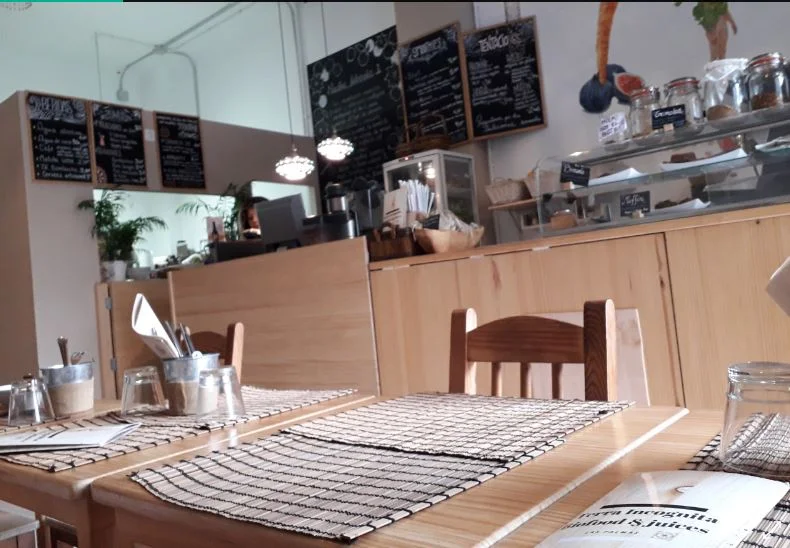
Terra Incognita is a lovely little place at the end of Las Canteras, that specialises in healthy living and biofood. Their menu is in Spanish, but there’s a lovely waitress that is happy to translate if you like. Drinks are plentiful here, and include fresh juices, kombucha, matcha and chai lattes. The incredible food on offer included vegetarian burger, quinoa salad, zucchini noodles, and AMAZING vegan desserts. I highly recommend the chocolate muffins, which are also gluten-free and low sugar!
They’re open during the day, and not the evening, so a great spot for lunch. The average price for lunch is 7 EUR, and you can get their ‘Menu Del Dia’ for 12 EUR, which includes a starter and a main course. There’s no outside seating but they have wifi, so you can take your laptop and work in the beautiful surroundings.

During my two months in Las Palmas, I probably paid Bioloco a visit at least twice a week. It’s that good. Classed as a ‘cruelty free bar’, it sells an array of healthy salads, vegan burgers, tapas style foods, and lots of delicious drinks, including gluten free beer.
Bioloco is a few minutes walk from Las Canteras beach and has a pleasant but basic decor, as clearly the emphasis here is on the food. It’s also the place of many nomad socials and meetups, so expect to find yourself here at some point. The food is incredible value for money; a small protein power salad (pictured) set me back just 3.80 EUR.

Casa Ari is not specifically a vegetarian/vegan joint per say, but I had to include this place, because if you’re on a budget and love Indonesian food it’s worth giving this place a try. You can get a HUGE plate of Nasi Goreng for just 5.50 EUR, and you can also get takeout for just an extra 0.50 EUR.
It’s a small place that is popular with the locals, and ran by a husband and wife team. The lady is Indonesian and cooks up an array of mouthwatering dishes, from Bami Goreng to Coconut curries with tempeh or tofu. There’s also wifi available so you can stay connected. If you need this food but can't be bothered to leave your Airbnb/coliving space, try Canary Flash who will deliver to your door.
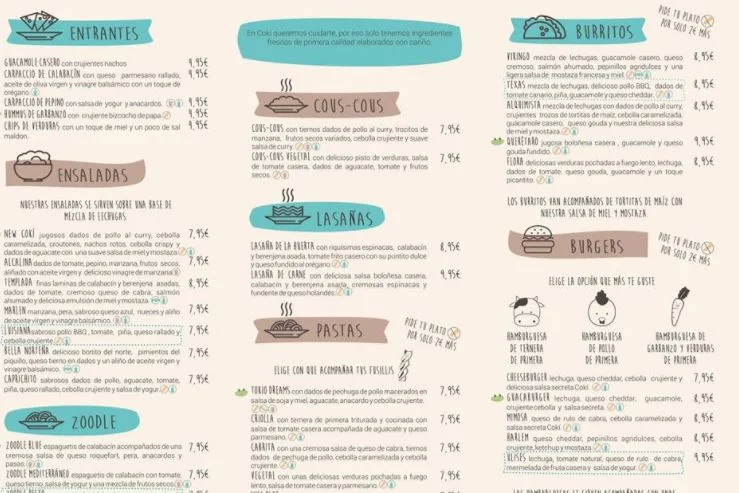
Coki is an unassuming but impressive eatery just off Mesa Y Lopez, which offers a large menu filled with burgers, burritos, noodles and salads. What’s great about this place is that it clearly marks allergies and vegan options on the menu, so you can see which meals are gluten, nut or lactose free.
I had the same thing every time I visited, which was three times! I had the pesto zoodles, which were zucchini ‘noodles’ covered in pesto and topped with walnuts, served cold. Expect to pay roughly 9 EUR for a main. Coki can get quite busy on the evenings and weekends so pre book if you are coming in a large group.
Come Mi Gira? Gelatario Naturale
On one of my first few days in Las Palmas, it was pretty hot and I fancied an icecream. I made my way to this tiny gelato shop near Mesa Y Lopez, and wasn’t disappointed.
The italian owner was super-passionate about his ice-creams which he made with almond milk, and proceeded to feed me with all manner of samples from pistachio to chocolate orange. I wasn’t complaining!
You can get cones or tubs of gelato, starting from 2 EUR. Yummy!
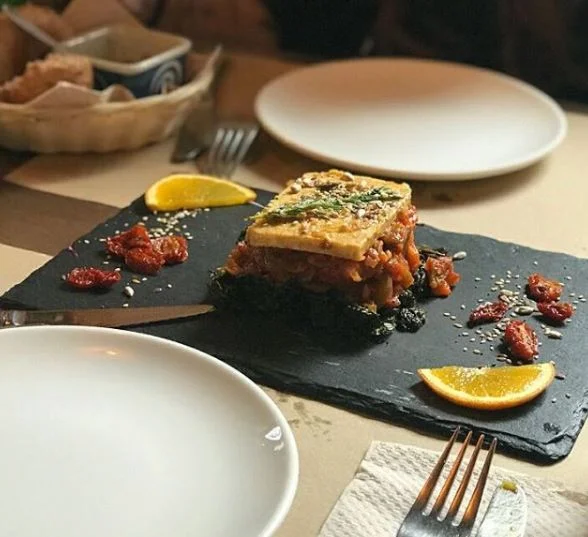
I was told by several people that this place was a vegan delight, and I wasn’t disapointed. I went there on a Thursday night, which is tapas or ‘pinchos’ night in Vegueta. I went all out with a few pinchos to start - caramelised aubergine being one of them (2 EUR), and then I went for a ‘tempeh tower’ (around 12 EUR), which was delicious, although not large in comparison to other meals I’d had around Las Palmas.
I finished off with the equally impressive vegan tiramisu - which made for a lovely, guilt free evening. We sat outside with blankets and this really is the best way to soak up the social atmosphere in Vegueta on a Thursday night. Prices at La Hierba Luisa are more expensive than others; expect to pay 20-25 EUR for a three course meal, which is still excellent.

Smoothie Galaxy is not a restaurant, but a cafe. Although this place isn’t primarily vegetarian or vegan, I had to include it because it’s so healthy. Choose from an array of smoothies, from carrot, ginger and lemon to mango, papaya and strawberry - all created before your eyes and handed to you in a HUGE carton holder, available to drink indoors or take away. There’s also a selection of small sandwiches to eat in their cafe, or granola bowls topped with fruit if you fancy a healthy breakfast.
Prices here are very reasonable; expect to pay 3.50 EUR for a medium smoothie.
Another few that I heard were very good but did not try personally were La Dulce Boutique (raw vegan food in Las Palmas) and Zoe (Vegueta).
So what did I make of the vegan and healthy living options in Las Palmas?
All in all, Las Palmas has a thriving vegan and health food scene, which is continuing to grow. There are plenty of gluten and dairy free options available if you look for them, and there are many events which focus on ethical living or veganism for digital nomads. You'll be spoilt for choice!
8 ways to stand out on social media in 2018

You know how many people practically live on Instagram, right? Maybe you're one of them.
To stand out on social media in 2018, it’s all about following the golden rules - building a trusted community that:
- know who you are
- like who you are
- love what your business is about.
Here's some stand-out tips to attract more followers to your tribe in 2018:
1. Consider your visual marketing strategy
The growth of Instagram, Pinterest and Snapchat means that beautiful photos are likely to get more engagement. Have you developed your brand moodboard, and made your brand beautiful?
2. Hire a photographer
It doesn’t have to be anyone expensive; just someone to record moments of your day. They can follow you around with a camera and record or snap some of the most interesting moments (unboxing new products, having a business meeting, speaking at a corporate event). Just don’t allow them to become your Instagram Husband…
3. Document your unusual experiences
Did you go for a flotation tank session after work? Meet a business contact who knows someone famous? Had a funny moment on public transport? Whatever the story, by sharing something unusual, it not only connects you to your audience but provides an interesting story. The more humorous the better!
4. Relate
On social media, it pays to share your innermost thoughts and opinions on something when posting a photo. This works well on Instagram stories or Snapchat as you can write your text over the top. For example (‘I’m loving that ladies boots. Wonder if we can sell them online?') It helps build a connection as it gives your audience an insight into the way you think. Here’s some of the most hilarious snapchat stories from Bored Panda.
5. Follow hashtags
Now you can follow hashtags on Instagram, it’s worth compiling 15-20 hashtags relevant to your brand that you’d like to follow. Comment on their media and start a conversation. For example, I follow #remotework #digitalnomad and #nomadlife on Instagram.
6. Be positive, but realistic
Everyone likes to get a little boost in their day by reading a positive story or seeing a picture of something uplifting. Don’t make your imagery TOO perfect though, as you may be at risk of being inauthentic. Emma Stone made a very valid remark about the ‘facade’ of social media, and how we need to keep that in mind.
7. Give knowledge
Always give more than you receive when promoting your business online. It's a really great idea to share some knowledge and added value, so that the person sees you as someone who is genuinely trying to help them. I love how Boho Utopia share their positive ethos and knowledge with customers on Instagram.
8. Utilise themes or content pillars
Content themes or 'pillars' as they are also known, are related to the themes behind your business, and are useful when deciding what to post. For example:
Educational, Behind the Scenes, User Generated, Influencer Takeover could be a few different ways you categorise your content. Here’s an example of a great Behind The Scenes post from WeWork.
Whether you're just starting out or have had channels for a while, there's always more we could be doing on social media.
It can be all consuming. So always remember to pause, and breathe.
Have these tips helped you in your business? What's the best engagement you've ever had on social media? Share your stories below!

Freedom is our basic nature
We all want to be free. Free to express ourselves, free to be ourselves, free to love fearlessly, and freedom to make our own decisions.

We all want to be free. Free to express ourselves, free to be ourselves, free to love fearlessly, and freedom to make our own decisions.
So many of us don’t feel free, for whatever reason. We feel trapped in a job, or in a relationship, or even within the prison of our own emotions - trapped within the confines of feeling down on ourselves or lacking in something, whatever that might be.
However, the well known dance song states, everybody’s free to feel good.
So many of us place our freedom on something external to us, but in truth freedom is a decision. It is a matter of consciousness, a way of thinking, or rather, a state of being.
What I mean is that we are all free in every moment, to choose to enjoy our life, and our state of being.
The only reason we may be unhappy is because we do not believe, that we are 100% responsible for our freedom, and that the enjoyment of life depends solely on our inner state of being.
Happiness is about feeling free on the inside. It is about a beautiful, non-attached, joyous embracing of whatever is in your present experience, right now.
It is not about the past, or the future- it is not about living in your mind.
In fact, living in your mind creates more problems than it solves.
Freedom is about the full and total conscious awareness of this moment, this experience right now, and enjoying the sensations of being in this moment, this moment in time and space, that will never ever happen again.
When you start to look at life in this way you realise that time is a construct that humans have designed that fundamentally limits our happiness. By using our minds to project ourselves backwards into the past, or forwards towards the future towards some memory or some imagined future experience, we block all happiness that is available to us right now.
And we block our feelings of freedom.
In order to become free, in order to release unhappiness and step into a happier way of living, you must come out of your mind and into your heart.
The heart doesn’t measure. The heart doesn’t over-analyse. The heart just beats. It just is.
Excerpt from upcoming book, The Magic Ingredient
My current book is Freedom Seekers
Don't sell, connect

Last night I was relaxing in the bath watching one of the lovely Annie Tarasova's Youtube videos, and an ad played halfway through it.
'ARE YOU LIVING YOUR DREAM LIFE? I've had twenty years on the corporate ladder and I managed to escape the 9-5. You can do it! I've created a webinar which will show you how!' (Yadda, yadda, yadda).
These kinds of salesy ads just don't inspire me to buy the product or service.
Why? Because they are trying too hard.
Imagine if you were looking for a relationship and on your first date you heard something along the lines of:
'I was in a bad relationship, but now I have turned my life around. I have a really great job, lots of friends, I'm not bad looking, I do LOADS of hobbies and activities, my family are really nice...'
You'd probably run a mile, right? As much as we are interested in buying a product or service and seeing it's results or benefits in our lives, if we are solely focused on that when we share content then we lose the connection to the customer. Why? Because we've lost the human connection.
The old style of advertising is dead. Kevin Roberts, former CEO of Saatchi and Saatchi agrees, noting that business is now about creating a movement of people with shared values. (He calls them 'lovemarks.')
Here's some tips for connecting more with customers:
1. Focus on what you love
If you're running a business you hate, you're not going to connect with your audience, because you're just doing it for the money. The infamous and beautiful Desiderata poem by Max Ehrmann includes the line
'Especially do not feign affection.'
If your hearts not in your business, then no one else's heart will be either.
2. Share your values and enthusiasm
Sian Conway, founder of Ethical Hour, and Jennifer Lachs, founder of Digital Nomad Girls Community, have successfully built an online tribe by focusing on their values and enthusiasm to help others who are passionate about the same things as them. It's not easy building up a tribe, and consistency and integrity are key, but constant momentum means you'll eventually reap the rewards.
3. Find others that think like you
Carrie Green, founder of the Female Entrepreneur Association, gives excellent advice on building a community on social media. To build a community it starts from connecting with others that have had the same problem as you.
You set up your business or service for a purpose - what is that purpose? By knowing your 'why', you'll be able to seek out others that are looking for the same thing.
4. Don't be afraid to be different
If you get ridiculously excited about something that some other people find bizarre, then take heart that they are not your tribe of people. You'll do better business when you show more of who you are, because likeminded people will resonate, and those that don't will fall away. I've found this difficult in the past but am now recognising the value and power of being different when it comes to creating content.
5. Help others selflessly
If you're posting on Quora purely to get a link or promote your business, people will sense that. There's nothing wrong with that of course, but you'll attract a more loyal, consistent following if you genuinely go out of your way to help. I love Andy Lopata's approach to this. He's a really nice guy and really wants to see people do better at growing their business.
Here's one of Annie's beautiful videos.

Tips for intentional living
Intentional living is about using the knowledge of mindset and vibrational energy to consciously place your attention on experiences you would like to have.

Do a quick search on Youtube for ‘intentional living’ and you’ll find a host of videos about using Do a quick search on Youtube for ‘intentional living’ and you’ll find a host of videos about how to create the lifestyle you desire.
Intentional living is about using the knowledge of mindset and vibrational energy to consciously place your attention on experiences you would like to have.
Hang on a minute, isn’t this what self development books have been telling us for years?
Kind of.
Humanity has explored a lot over the last few decades about the power of a positive mindset, but intentional living explores more than that; it’s about utilising your energy, which is your emotional tone.
This means that rather than getting frustrated in traffic and trying to ‘think positively’, you actively align yourself by getting into a different energetic state. It’s about changing your emotional frequency so you not only have a better experience, you are happier too!
I’ve read and researched extensively on this subject for over ten years, but have only just begun to practice it. Here’s some tips from those who have seen it work in their lives:
1. Meditate
Eckhart Tolle talks about the value of meditation and how slowing down your mind can lead to more positive results in your life. I see the mind a bit like a treadmill. We can crank it up to a fast pace (and it’s pretty much at running speed for most of us), but we need to train ourselves to slow it down and give ourselves a breather.
Why? Well when you are caught up in mind, it’s harder to create. You slip back into fear because the mind is perceiving, judging, and thinking. It will tell you ‘you can’t do that!’ or ‘maybe you should try this’.
When your mind is calm, you are centered in awareness, which is peaceful and balanced. From here, decisions can be made with clarity, and above all, intuition.
2. Create through sensation
Intentional living is made up of thought and feeling. Say you’d like to visit a certain place. Not only is intentional living about preparing your mindset for this experience through positive affirmations and unconscious self belief, it’s also about conditioning the body.
Neville Goddard talks about the power of feeling when creating by using our senses energetically. What do I mean? Well, instead of just thinking of a beach for example, we utilise our minds and bodies to consistently sense the feeling of our toes in the sand, the sun on our backs, the salty sea smell in the air.
Neville himself made it his life’s work to practice this and he developed some astounding results once he had practised it with consistency. He found that when the mind and body are relaxed, so in meditation or just before sleep, is when this worked best.
We can only assume this is because the energetic impressions were seeping into the unconscious mind, which may have a part to play in creating our reality.
3. Let go
As humans it is natural to have desires, says Esther Hicks. However we can get so caught up in the ‘having’ of what we want that we create a dischord within ourselves and a disharmony.
Say for example you wanted a particular job. You were well qualified for it, and knew it was possible for you to have, but you really, really, really wanted the job. You got so over excited when thinking about it, that the fact that you didn’t have it produced a sort of craving feeling in your stomach and a restlessness that you’re ‘not there yet.’
If you think about our bodies as musical instruments, then we’d be tuning ourselves to the opposite of what we wanted. Osho, the indian spiritual teacher, says ‘if you relax, it comes. If you relax, it is there. If you relax, you start vibrating with it.’

This has been the hardest one for me to do, as I naturally start to get excited and clinging when things are moving in a positive direction.
To let go means to be calm and chilled about it. Like ‘I have that dream job, it’s cool’ feeling in your stomach. It comes from knowing you can be happy with or without that experience in your life.
Are we more powerful than we think? Can we use our thoughts and emotions to attract experiences into our lives? You can read all the books and watch all the videos in the world, but your experience will be your best teacher. Try it for yourself - I’d be interested to hear your results!