
Location independent working: 15 reasons to go remote
Are remote workers really happier? The research is mixed, often looking at either ends of the spectrum — those remote workers who are employed, and work at coworking spaces, or those self-employed freelancers who work on their own, travelling between Airbnbs or work spaces.

‘With freedom, books, flowers and the moon, who could not be happy?’ said Oscar Wilde.
And as a modern city worker, these things may feel far from your grasp. You want some more time back for yourself. Time to read, time to be in nature, time to just stand still, take a deep breath, and fully appreciate where you are.
Right?
You might have visions of travelling around the world. Or spending more time at home with your dog. Or fitting more training sessions in for your upcoming marathon. Or simply just having the satisfaction of hitting that snooze button in the morning a few more times.
Whatever your motivation is for remote working, there may be some other added benefits you haven’t considered.
So if you’re considering making the leap towards remote work, here’s 15 thoughts to ponder.
1. Improved mental health
Are remote workers really happier? The research is mixed, often looking at either ends of the spectrum — those remote workers who are employed, and work at coworking spaces, or those self-employed freelancers who work on their own, travelling between Airbnbs or work spaces. As with all things, it appears to be a balance — between having the time to do your own things (more time to exercise, cook/eat better etc) and connecting with others socially. Human connection is vitally important for happiness; it’s important we don’t lose sight of that when we’re finally free of the 9–5. But remote work offers us the opportunity to be more in control of our wellbeing.
2. Less traffic congestion
How much time do you spend sitting in your car in a given week? A month, or a year? By working remotely, not only will you benefit from not having to sit in a traffic jam for hours on end, the environment benefits too. America’s remote workforce currently saves carbon emissions offset to the equivalent of 91 million trees.
Of course, if those same workers are catching lots of planes and travelling around the world it’s not beneficial, so if you’d still like to protect the planet you can search for ways to offset your emissions from air travel.
3. Increased creativity
This all depends on how you make the most of the opportunities remote work brings. Harvard’s E. Glenn Dutcher says: ‘There are times when the home — or the coffee shop or the library — is a much better place to work than the office. For certain types of creative work, you have to be in your favorite room, or listening to your favorite music, or sitting in your favorite chair with your cat on your lap. No other environment will do.’
Personally, I don’t do much creative work at home. My best work came after a 2 month stint in Las Palmas, where I met some innovative and inspiring people. Just being around other likeminded digital nomads seemed to evoke my creative potential. You have to find what works for you.
3. Better physical health
Want to take a 2 hour break to go running in your local park? Well you can, if you’re a remote worker. . A CoSo survey found that 35% of remote workers were getting more exercise than before. Of course, if you’re sitting working in bed all day in your pyjamas, your physical health may decline! With more time on your hands, you can spend that wisely by focusing more on exercise if you so choose.
4. More time to learn/read/research
Even though you always look busy at your office job, there are times when you’re planning your weekend/reading the news/watching the odd cat video and more, isn’t there?
When you’re working remotely, you naturally have time to do more research and learning in a designated area.
Want to research coworking spots? Now you have the extra hour free, that one that you used to spend commuting. Want to learn a new language? Go ahead, because you can choose your hours if you’re a remote freelancer.
5. Productivity hacks
In this section, I was going to mention that remote work could make you more productive, but that’s not always the case. What it most definitely can do is make you lucidly aware of your own motivation and productivity. If you aren’t motivated in the office, chances are you won’t be when you’re working on your own either. Unless there’s certain things you need in order to be productive.
For me, the right productive environment equation looks something like this:
room full of creative entrepreneurs + nice office with comfortable chairs + unlimited tea and biscuits + some good techno to listen to on my headphones (or Mozart if I need to really concentrate) = productive Kerry. For you it might be peace and quiet and an ocean view. For someone else it might be late night on the sofa, when the kids are asleep. Find out when and how you are most productive, and then structure your remote work options around that.
6. Fewer business overheads
Years ago, remote work was called ‘hot desking’. You usually ‘hot desked’ at random offices, and basically had the same experience as an office worker, except for maybe increasing your monthly step counts as you hopped from from desk to desk. American Express noted savings of $10–15 million once it explored its remote work options. If saving money is a priority, location independence could be an option for you.
7. Less sick days
Got the sniffles and fancy a duvet day? Well, hauling yourself out of bed and into an office where you’re likely to spread your germs around has always been the road more travelled when it comes to work. One of the greatest pleasures about remote work in my opinion is that you can take it easy when you have a cold. There’s so much subtle pressure to come into the office when you’re under the weather (‘it’s only a cold’), but now you’re location independent you can snuggle up, make yourself a vitamin c drink, and stay indoors until it has passed. Research by Stanford University shows you’re less likely to have sick days though as a remote worker, so even better!
8. Less reliance on ‘the system’
The way we do things is changing. We no longer have to do things in the way society dictates. Globalisation and technology have freed us from being fixed to our location, and even our loyalties to employers or to brands. We are in control of our working lives now more than ever — of how we work, of when we work, and that means we can start to become self sufficient in more areas than just work, too.
9. More time to travel
You know the feeling. You’ve finally wound down after a week (maybe even two weeks) lounging on the sunbeds in some foreign sunny location, and now it’s time to head back to work. With remote work, you can travel more — not just to grab some more sunshine, but to meet new people, explore new cultures, and get inspiration. Every time I travel, I always get inspired. You don’t even have to go far from home (I’m writing this from a fantastic little cafe in my spiritual home of Chorlton, Manchester, and am staying in an Airbnb whilst visiting friends).
10. Time with loved ones
This reason alone is worth it to me. I haven’t got any fancy statistics here, but needless to say the value of spending more of your life with people that matter to you is inherently soul gratifying. Last week my sister had a baby, and we got the message at the drop of a hat that we could go and see her in hospital. I could rearrange my workload to meet my new niece Rosie along with my two nephews, a truly special moment in my life that I will always remember. You can’t put a price on that.
11. Cost savings for our healthcare system
Professor Cary Cooper notes that a lot of stress-related illnesses are caused by long working hours, and calls for shorter or more flexible working hours as a way to improve wellbeing. It’s difficult to quantify, but imagine the cost savings for the NHS if we all felt a bit happier and less stressed with our lives, as we had a good work-life balance.
12. More time to innovate and problem solve
This is a HUGE one for me, and a real driver as to why I’m so passionate about promoting balance in our work life by working remotely. When we are overloaded or busy, our brains are predominantly in a detrimental state of consciousness. It’s well documented that we get our best ideas when we are in the bath or shower, as Headspace notes. The reason for this is because we are in an alpha state of consciousness, a slower brain wave state which allows for increased creativity. If your brain is always on ‘go’ (i.e. a stressful mode), you’re actually in a state of self-sabotage, because you won’t be able to take in any other information or reflect mindfully on what you are doing.
13. More opportunity to be mindful
Remote work allows you to be with yourself more. It allows you to be more mindful, if you let it. You get to choose. It’s all about your work boundaries and how you choose to look after yourself.
If you’re a remote worker, do you fill yourself with guilt if you’re away for more than 5 minutes on Slack?
In my first remote employed job, I had a manager who would jump on me if I didn’t respond to our client’s email within 5 minutes. He was stressed (despite sometimes working from his villa in Spain), and it made me stressed. I was like an eager tennis player, always ready to pounce on an email or an action, and it was then I decided I had to wave goodbye to the project management life. It just didn’t suit me. Companies such as Intel and Google are into mindfulness as a leadership practice, and for good reason.
14. Time for errands and ‘life admin’
What’s a girl to do if she wants her hair done, nails painted, has a dental appointment and wants to post her friend’s birthday card? Remote work, that’s what. After visiting Bali and unfortunately contracting what doctors thought may be Guillean Barre Syndrome, I was in a bad way, having just got out of a wheelchair. I had a shit ton of appointments. Doctors. Tropical Disease Clinic. Neurologists. Physiotherapy. And because I wanted to help myself as much as I could, I did Acupuncture. Yoga. Flotation Therapy.
Plus of course, when you’ve been through the ringer, you just want to pamper yourself; to look and feel good. Remote work allowed me to do all of these things — work could take a back seat whilst I focused on my wellbeing. Yes, I was just keeping myself afloat financially, but I wasn’t additionally stressed about focusing on work when I needed to look after myself. I’m so incredibly grateful for that.
15. A greater sense of personal autonomy
Most of all, remote work can give you your life back. I can spend my lunch going to the local fruit and veg market, rather than a hurried supermarket run after work. I have more energy, because I work less (about 25–30 hours a week). I can focus on personal goals and creative pursuits. I have time to go in the garden and water the plants and vegetables. I can drive to see a friend on a Tuesday afternoon when the roads are quiet. I don’t get an anxious dread on a Sunday or exhilaration on a Friday afternoon. I have made friends in different countries.
Most of all, I am happier. Of course, there are downsides that crop up — loneliness, lack of motivation and financial instability being the main three as a remote freelancer- but all of these are wholly under my control. I can decide to meet a friend for coffee, go somewhere to invigorate my energy, and work that bit harder to overcome these obstacles.
I am free to make mistakes, but I am also free to create the life I want.
Convinced you yet?

The power of gratitude-based marketing for your brand

Two tiny words mean the world to customers:
thank you.
When it comes to building customer loyalty, gratitude is the holy grail.
Have you ever received a personalised thank you from a business? If so, how did it make you feel?
Offering that personal touch to our customers after a purchase may seem like a small gesture, but it can go a long way in boosting our relationship with our customers, making them feel appreciated and valued.
In today’s digital age, customers are overwhelmed. Their brains process, on average, a staggering 34gb of online information a day. Our human relationships have become online and digitised- chatbots and ai have overtaken real-time, face to face interactions.
Out of all the ways you can say thank you, offline approaches are becoming increasingly more powerful as a way to surprise and delight your customer - after all it’s easy to insert <name> into a thank you email on Mailchimp, isn’t it?
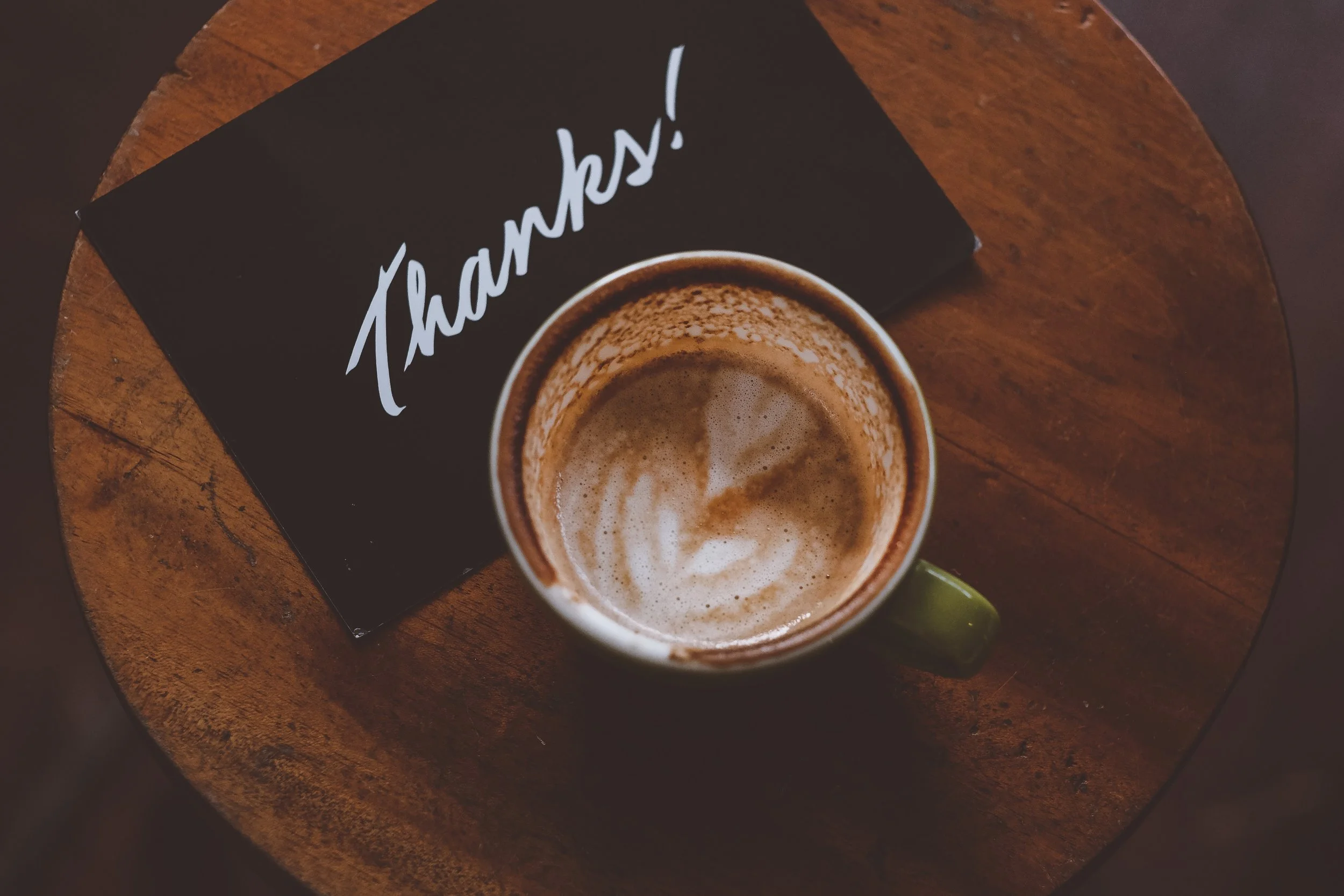
“Thank you notes are effective because they’re a bit of a lost art. Think about the last time you actually sent a handwritten letter, instead of quickly firing off an email or a Facebook message. Those mediums allow for incredible efficiency, but a handwritten card goes beyond the ephemeral nature of our digital inboxes and creates something tangible and meaningful” - Shopify
Why are thank you letters so effective at building customer relationships?
They’re different:
By doing something that most of your competitors wouldn’t have the inclination or the time for, you’re standing out from your competition. To take a step that to some may seem old-fashioned, you’re adding a thoughtful touch to any customer that purchases from you.
Everybody likes feeling appreciated:
Handwritten notes are the ultimate way to build customer loyalty, and even brand champions. Your customer is spending valuable time and money interacting with your brand, so by showing your appreciation you’re far more likely to boost their loyalty to you, and continue shopping with you.
Can help boost engagement:
Writing handwritten notes to customers can only serve to strengthen the relationship you have with them. You need to ‘surprise and delight’ in order to boost engagement, and that’s why taking the time out to write a personal thank you note will impress your customer. You’re not just a number to them; you’re a human who you’re interested in building a relationship with.
Aim for hearts, not wallets:
In a recent Forbes article, they note that:
The emotional response that is most likely to drive loyal behavior, according to Boncheck, is gratitude.
It’s really a no-brainer that gratitude increases loyalty.
When your partner thanks you for taking the bins out, it feels good, doesn’t it? That’s the power of appreciation, and it’s no different when building a relationship with our customers.
Thank you notes are likely to be re-shared online:
A handwritten note, if done well, looks cute, and is a true rarity in today’s age. That kind of personal touch will not only get talked about, it’s more likely to get shared on social media - further leading to more valuable and positive exposure for your business.
Rectifies poor experience:
Writing a thank you note to your customers strengthens the emotional bond you have with them. At present, they’re probably just indifferent to your brand, and those lukewarm to disengaged customers will be easily won back just through showing you care.
Drives profits
This kind of ‘gratitude-based marketing’ is not just a passing fad. According to the Pareto principle, 20% of your customers drive 80% of your profits, so it makes sense to focus on cultivating that relationship with them will drive profits. Why? Generosity pays off. Not only will it make those important 20% more likely to buy from you, it will increase sales of referrals from these people, too.
Gives a memorable finish to an interaction:
Hex, a fashion tech accessory brand, made it’s name on Instagram after sending 13,000 personalised handwritten notes to customers thanking them for the purchase. Your customer has been with you along the sales funnel - from seeing an ad about your product, right through to purchase, so this approach really sweetens their overall shopping experience with you.
More human, and thoughtful:
Above all, in today’s digitised world, writing thank you notes to your audience shows that you’re making the effort. In an age where it’s so easy to fire off an automated thank you email, a written note is a gesture that feels human, authentic, and real.
Driving customer loyalty by writing handwritten thank you notes (or these cool letters from Pensaki) could be one of the most cost-effective marketing strategies in today’s digital world.
After all, you can’t buy loyalty - you have to earn it.

Making My First $500 With Medium.com's Partner Program

I must admit, when I first heard about Medium, the online publishing platform many years ago, I thought it wouldn’t take off. An article site for people to share ideas?
How is this going to be more popular than people sharing content on their own blog or on social media, I thought?
But this year I have reconsidered that thought.
Good content on the web is hard to come by, and there are a lot of people churning out articles just for the sake of it. I find that on Medium you find ideas of a different nature - they’re just on the edge of the current zeitgeist to be relevant; yet not so far ‘out there’ to not appeal to a broad audience.
As of last year, Medium had 60 million monthly unique readers. That’s too big to ignore.
Medium established their Partner Program last year in order to encourage more writers. Essentially, your articles are behind a paywall ($5 a month for readers), and you can receive ‘claps’ (the equivalent of likes) in return for payment.
The more claps you get, the higher pay - simples!
Of course, starting to earn is about learning Medium’s platform inside and out - something I am still doing, but I have learned a lot so far, and would like to share what I have learned with you.
Write about topics that you have experience in AND that would help others
My article on the emotional side of freelancing got picked up by the Medium editors, and they put it on the homepage. It got me over 5.5k claps, and a fair amount of new followers. I just wrote about my own experience here, and I was surprised by how many people it helped.
Learn how Medium likes to present content
Medium likes to make things look pretty. It pays to learn their editorial guidelines, and read a few of their most-read articles to see the style, tone, and formatting.
Don’t be afraid to be vulnerable
Hiding will get you nowhere on Medium. The best articles are personal stories that are real, raw and authentic.
Be a good writer
Obvious point maybe, but before Medium, I thought I was a decent writer. Now, I realise I have a lot of work to do. The quality of writers on there are incredible. The best writers can take an idea in their heads and articulate it in such a way that you are captivated, learn something, and can revisit the idea or thought again and again.
Use Medium as a way to hone your craft.
Study the best writers. Notice that how they write is like a stream of their consciousness, clear, and structured, and always returns to the central point.
Don’t go for what you think the audience will like - write what you want to write
There are some articles I’ve written and then made unlisted, simply for the fact that I felt that they weren’t coming from a good place within me. By that I meant writing topics that I thought I should write about, rather than ones that I actually feel that are right for me to write about. Writing is all about feeling inspired. If you’re faking that inspiration or just trying to copy what’s ‘on trend’ to write about, it will come across. Medium is all about authenticity.
Write regularly
I’m trying to write at least once a week, even if I’m not 100% happy with the articles (nothing’s perfect, right). I see it as a way to practise my writing, and also as a testbed to test the content with my audience - what kind of articles do they most resonate with? By writing regularly, you’ll come to learn not only the types of people that are on Medium, but also perfect your own writing style.
Titles and images are VERY important
What is your piece saying? Sum it up in your title. Or give the audience a teaser; a lead in to an interesting idea. Make it something that you would click on if you saw it on there. Also, think about the visual element. You can be fun and use .gifs, but I like to use photos that are a metaphor for what I’m actually writing about. Don’t be afraid to change it if you’re finding that you’re not getting the engagement you expected.
Realise their audience is vastly different to other platforms
People who read on Medium want to better themselves. In fact, they are people quite committed and dedicated to their own personal growth. When I first posted my freelancing article on other platforms, it got one or two likes from my social networks. I could have thought (as I used to think) that my writing wasn’t valuable or didn’t help anyone, but the truth is it just needed the right platform to be appreciated. The Medium platform may not be right for you or your business, but the partner program is a good way to test the waters.
Link your social channels back to Medium
From that one featured article, I’ve had people contact me through Twitter, add me on Linkedin, and ask for my work to be published in their magazine. Medium is powerful! Don’t underestimate the power of connecting back with your Medium audience on other platforms. Build relationships with those people - these people get what you’re about!
Submit your stories to online magazines that publish on Medium
This is something I haven’t really explored too much, but I have three publications on Medium whom I can submit my articles to, and it will go out to their followers, thus increasing my overall reach. I’m going to search for more online magazines that fit who I am and what I write about.
Summary
From Sept-Oct, I earned just over $514. Not a huge amount, but not bad for what I essentially see as a enjoyable pastime. The total hours I spent writing? Probably no more than 4. But that’s not the point. The point is I am writing about things I love and getting paid for it.
Here’s a copy of my most recent Medium report. It’s shortened slightly as I have a lot of articles on there now, but as you can see, the majority of income came from one article.


For now, I will continue to focus on growing Medium as one of my income streams by writing through their Partner Program. I believe it’s an exciting time for Medium, and it’s clean and simple platform and app means that it can only go from strength to strength.
Do you have questions about writing on Medium, or building a remote freelance career? Get in touch to see how I can help.
The Emotional Side of Freelancing

There are so many articles out there about how to get freelancing right, and there is so much to think about: the invoicing, the client communication, the hustle, the accounts, and more.
What I have learned in three years of working as a freelancer is that it can be an emotional rollercoaster, too. Just like an actual rollercoaster, freelancing can be immensely thrilling, exciting, and sometimes can make you feel a little bit sick. Without management or HR to review your work, and without a regular salary in place or colleagues to bounce ideas off of, those dips and twists in your work life can throw you emotionally if you don’t know how to handle them.
Yet, despite the rollercoaster, working as a freelancer has helped me become more emotionally stable. As a freelancer, I am my business. This means I have to stay grounded, consistent, and calm as I go about my work. I have also needed to develop and maintain a steady sense of peace, because freelancing, by nature, can be so uncertain and unstable.
I have always wanted to work for myself, and that, so far, has meant tackling every issue that has annoyed me about jobs I’ve had in the past. I’ve had many stomach-churning moments in this process, and have experienced a lot of positive moments and accomplishments as well. The positives make the lifestyle worth it, and how you deal with the stomach-churning moments — let’s call them dips — ultimately determine the success of your business. Here are some of the dips I have seen come up pretty regularly in my experience as a freelancer:
When the work (seems like) it’s drying up
I have noticed that freelance work often comes in cycles and correlates pretty heavily with your mindset. Panicking about paying the bills and the fact that no one you reach out to with ideas seems to be getting back in touch just won’t help you. I have learned to embrace the fact that I experience cycles of really busy periods, along with bouts of time when things feel a bit quieter, or when contracts naturally come to an end.
When work dries up, you need to remind yourself why you started. Did you want to work for just one person, on a never-ending, boring business? Of course not! You like the variety freelancing brings because it means you get to work on lots of small projects. Sometimes these last six months, and sometimes they don’t — that’s a good thing.
Don’t be afraid when things feel stagnant — maybe it just means that it’s time to get creative and go to the next level.
Plus, you love the thrill of the hustle! As a freelancer, love of the hustle is part of your nature. Whether you’re sending out proposals or chasing down projects, you can’t let the uncertainty behind the hustle destabilize you emotionally. I’ve realized that, though it may feel a little scary to get back on the saddle after enjoying a nice six to eight months of steady income, you have to remind yourself that looking for new opportunities helps you grow. I like to think about the hustle that comes from periods where I’m low on work like walking into a sweet shop. There, I get to look through a variety of options and search for exactly what will feel tasty and satisfying.
Don’t be afraid when you’re tested like this and things feel stagnant — maybe it just means that it’s time to get creative and go to the next level.
When you start to feel lonely
As a remote freelancer, sometimes you get lonely. Sure, you may be surrounded by other great freelancers if you’re part of a co-working space, or have more leniency in your schedule to meet friends for coffee, but when it comes to running your business, you’re on your own.
My advice? Get help when you can.
Realize that no man is an island. The beauty of living in today’s world is that there is an answer to every problem you have, including lack of community. You just have to find that answer.
Here’s the positive angle on difficult clients: They can build your emotional resilience.
I’ve also learned that loneliness can often come when you’re not focusing your efforts on the right things. Maybe you feel alienated because the work just isn’t the right fit for you, and does not engage you enough to be a real stepping stone on your journey.
Ultimately, we’re all learning about ourselves, so practicing patience with yourself is something that you’ll definitely get tested on as a freelancer. Try to find and build community wherever you can.
Dealing with difficult clients
These can come in all shapes and sizes. Some examples of difficult clients include those who are unresponsive whenever you reach out, some that just don’t seem happy with your work (regardless of how many edits or changes you make), or others who are simply taking advantage of you and have not yet paid you.
Here’s the positive angle on difficult clients: They can build your emotional resilience. Thankfully, I now rarely deal with them, because I’ve learned to be very careful about who I work with, but I do find it interesting how we can often attract clients who, unintentionally, may help us resolve an area of growth we may need.
Once, for example, I got burned when I was asked to do a fairly large package of copywriting work for a brand’s birthday campaign. Time was of the essence, and I delivered a newsletter, promo copy, emails, and some product descriptions over the course of a few days.
It is easy to put the client on a pedestal and to put yourself underneath that pedestal. But it doesn’t have to be like this, even if you’re a new freelancer.
I had asked for a deposit up front, but as the launch of the brand was “imminent,” (or so I was led to believe), I let it go when the company didn’t pay me immediately. Surprise, surprise: To this day I still have not been paid and the brand itself has gone AWOL.
This was the first time something like this happened to me, but it was a good test and helped me shape aspects of my work, including my boundaries, what I should and will insist upon, and what I decide is acceptable for me as a business owner.
Many freelancers can make mistakes like this when they start out, simply due to a lack of confidence. It is easy to put the client on a pedestal and to put yourself underneath that pedestal. But it doesn’t have to be like this, even if you’re a new freelancer. Learn not to let others take advantage of you. Holding your own when it comes to dips like these can ultimately make you stronger.
Marketing yourself
Ironic as it may sound, though I am a marketer, I really do not enjoy marketing myself. I don’t mind sharing my articles, but I don’t want to become a sales channel on social media for my business. It doesn’t feel right to me — I’d rather just use my platforms to share what I am interested in, and be myself rather than pushing “a brand.” Branding myself feels too confining.
As a freelancer, you are allowed to have a wide range of interests and skills and to use your social media to promote them. I have learned that, by being a little more personal and focusing away from pushing a brand, you may connect with the types of people you want to work with anyway.
Freelancing brings an extraordinary sense of empowerment and freedom. You alone are responsible for shaping your destiny.
I recently had a consulting client that contacted me with the following message: “I wasn’t familiar with you before today, but after looking at a few of your tweets I think we might have a few interests in common (I am a Manc with a fondness for raving and healthy living!)”
This message shows me that sharing my interests on social media enabled me to connect with a potential client who was on my wavelength, and who I felt that I could actually help. Yes, I do want to work with people that like raving and healthy living (and no, the two are not mutually exclusive!)
If someone does not seem to understand you, on the other hand, they are not your client. This is something that has taken me a long time to grasp, after working with lots of people who really weren’t the right fit for me. That’s okay, because there have been plenty of others who were.
I’ve spoken about the dips, but what about the highs? And yes, there are many — I wouldn’t have stuck it out as a freelancer this long if not. Along with the benefits of working remotely I’ve written about before, freelancing brings an extraordinary sense of empowerment and freedom. You alone are responsible for shaping your destiny.
Did you earn £4k this month? That was all you. Did you get a positive testimonial? That’s awesome — your communication style is working, and you’re building relationships. Is your brain bursting with ideas, and suddenly you want to write? Great! This means your creativity is being sparked.
So go for it, embrace the rollercoaster ride and the highs and the lows that come with it. Use each positive and negative experience to build emotional resilience and stability. Freelancing can be an emotional journey, but it doesn’t have to own you. Ultimately, it can be a journey where you’ll truly learn about yourself, and realize that you’re capable of more than you ever thought.

10 lessons I’ve learned in building a Top Rated profile on Upwork
Love it or hate it, the world’s largest freelancing platform Upwork has given millions around the world the opportunity to work from home. Or the beach. Or a train. Or a cafe (whatever floats your boat, really.)

Love it or hate it, the world’s largest freelancing platform Upwork has given millions around the world the opportunity to work from home. Or the beach. Or a train. Or a cafe. (whatever floats your boat, really.)
When I started my remote work journey, I just wanted to earn online. I was prepared to do anything it took, as long as it meant I didn’t have to spend my time commuting or sat at a desk for nine hours a day, with people I didn’t especially connect with.
Over the last three years, I’ve been with Upwork since it transitioned from its predecessor, Elance, and I have earned the ‘Top Rated’ badge on my profile, allowing me to benefit from lower fees, and gain many invitations to apply for jobs.
I now earn a decent rate as a Top Rated Freelancer, and whilst I may not be on the site forever, I am grateful to the platform for giving me a doorway to travel the world and earn online.
There’s no doubt about it, there’s certainly the good, the bad, and the ugly on this platform, but once you figure out how to use it best, you can certainly reap the rewards.
Here’s the lessons I’ve learned so far on my journey.
Start low, but aim high
If you really want to get your foot in the door, start applying for work that might be paying a bit less than where you want to be. Ultimately you’ll end up there, so keep applying. You want to build up a solid portfolio and get some good reviews; that’s your first aim.
2. Get into 'Beast Mode': use all of your credits
You can always earn on Upwork by going into what I like to call ‘Beast Mode’. You have 60 job credits in which to spend, why not use them all in one month? They won’t roll over, so spread them out by applying to a couple of jobs each day.
3. If it looks too good to be true, it probably is
I think the biggest reason why a lot of people get their fingers burnt on this platform is because there are unfortunately, a lot of unscrupulous people on this platform. My rule of thumb is ‘If it looks too good to be true, it probably is!’. I turn down about 80% of the jobs I am invited to interview for, because I do not have a good feeling about the client. I am extremely picky now who I work with, and so I check the following:
Are they payment verified?
How many jobs have they awarded before?
Do they have a good profile rating? (read their reviews)
Is the brief easy to understand? Do they use weird language or ask you to do a big task for free in your application? (If so, RUN.)
Do you get a feeling like you can trust this person? Try to do a bit of digging on their site and maybe exchange a few messages, especially before you are awarded the job.
4. Use the filtering system to weed out jobs
Upwork also gets a bad rap because there are lots of low paying jobs on the site, and indeed I'd say about 70% of the jobs posted aren't great. But they’re not low paying if you’re in India or the Philippines; this is a global platform and of course there are going to be clients that want to get the lowest possible rates. But you don’t want to be working with them. Create your own filter by using keywords, payment verified, and define your level (whether they want beginner, intermediate or expert). If you do an ‘Advanced Search’ you can create your filter and save as many as you want.
5. Create a niche
Obviously there’s loads of graphic designers, copywriters, and marketing experts on Upwork. So if you fall into one of those categories, it might be a good idea to create a niche for yourself in one of those areas that you can use as your header title.
So for example if you work in content marketing your title could be ‘Brand Storyteller’, if you’re a copywriter, you could be ‘Direct Response Copywriter’, and if you’re a Graphic Designer you could be ‘Expert Social Media Content Designer’. This just gives you a little edge and makes you stand out.
6. Be positive, responsive, and professional
When you’re working online, all people have to go on is your profile. They may try to see if they can find you on Linkedin or Twitter to have a nosy, so make sure you are professional.
If someone doesn’t know you, then they need to be able to trust you. Make sure you’re polite and you respond to things quickly. I try and respond to any query or message that comes through the platform within 24 hours, even if it’s a ‘sorry I’m away and I’ll get back to you later’. Upwork rewards you for being engaged on their platform, and offering a timely service.
7. Personalise your proposals
It’s easy to send out blanket proposals to prospective clients, but if you do that, you’re not going to get very far. It’s important to personalise - just one or two sentences will be sufficient. If you have a link to their website and you’re applying for a copywriting job, you could mention a blog you liked or just one thing you feel they could improve. It goes a long way. Also, be friendly! You’re not speaking to a robot, so don’t be afraid to show a bit of personality.
8. Offer an initial call, and always reiterate the brief to your client
It’s best to have a quick call before you agree to any work. This may or may not be paid (sometimes the client will set up a trial job), but if you don’t mind spending 30 minutes on a video chat, it will make all the difference. It’s essentially like an interview - you’re figuring each other out, and getting to know each other. It’s a time to set expectations, as to timescales, working relationship, and scope of work.
It’s absolutely vital to reiterate the brief to a client on Upwork, especially after a call. I always jump on the messenger immediately and say ‘It was great to chat to you just now. As discussed I will…’ and then outline any actions either side for each party.
You want to make sure you have understood the brief correctly, and in order to be paid through Upwork, you need to have proof that you have agreed on certain terms. As a side note, when you are applying for fixed price jobs, always state how much you are willing to do. If it’s a brochure for example, you might lose money if you end up doing eight rounds of amends. By being clear at the outset what the cost involves, there’s no nasty surprises for either you or the client.
9. Stick to the rules (for the most part)
If you’re using Upwork’s platform, the fact is you have to play by their rules. They are strict, and the way they operate is not always kind to the freelancer. Have a read through their terms and conditions. Communication is key to them, and you could get penalised for something as simple as not adding a description to your time tracker. (For hourly jobs, you download their tracker which screenshots your work). The time tracker is not liked by some people, but I actually like it, because I have a tendency to bounce between many tasks, tabs and ideas, and the tracker gets me into a focused, productive zone.
10. Be consistent
If you’re consistent, you will thrive on Upwork. You need to be earning something to maintain your public profile, or they will pause it. A shame for freelancers maybe, however it's important for them because they want only the most responsive people on the platform. A lot of people don't want to wait - they want to hire the same day or that week. So even if you get one small job a month whilst you’re scaling the freelance ladder, it will be lucrative for you. Be consistent with your feedback too, and even if it wasn’t the best contract in the world, be polite and focus on the facts in your review.
In summary, Upwork freelancing isn’t for everyone, but it could be that first rung on the ladder to freedom. If you put the work in, imagine where you could be in a few years time (working out of a hammock in Bali, anyone?)
Remote work here you come!
I share freelancing and remote work tips in my practical workbook, Freedom Seekers.

3 reasons why you should use your unconscious mind in your business

Using your unconscious mind in your business is essentially creating a visual representation of where you'd like to go, who you'd like to be, and the lifestyle you would like to create.
This January, I attended a Vision Board Workshop at Restation Coworking in Las Palmas.
I'm an advocate of using the mind and emotions to orientate yourself towards the things you would like to experience in life. In fact, it's one of my primary focuses for 2018.
In addition to writing your goals down, I encourage my clients to also cement these goals by creating a vision board. By utilising these methods, you're harnessing the unconscious mind.
Why use the unconscious mind in your business growth plans? It's not all 'woo woo' fluffy stuff as some may believe! Here's a few reasons.
The unconscious mind thinks in pictures
The unconscious mind is primarily visual; because it is emotive. By utilising imagery, you're telling the unconscious mind 'focus on this.' You've heard the phrase 'a picture speaks a thousand words' and to the unconscious mind it's true. We react quicker to visual responses with our sympathetic nervous system, which activates our 'fight or flight' response. So by making a vision board, we are giving our mind a direction, a bit like programming a Sat Nav.
The unconscious mind responds to programming
We have various different brain wave states, and the more relaxed we are, the more we open our unconscious mind.
We're usually in a Beta state when we're working and planning our business goals. The next one, Alpha, is when we're extremely relaxed. It's a slower mode of consciousness, and it is also attributed to flashes of creative inspiration.
Repetition is the way you can 'program' your mind, and it's for this reason it takes usually 21 days of doing anything before it becomes a habit. So we need to take charge of our brains.
Did you know you can hack your brain? This fascinating interview with Steven Kotler talks about using altered states of consciousness to help us to achieve our goals.
The unconscious mind rules your behaviour
Making a vision board or programming your mind through repetition isn't some fluffy new-age exercise. Your unconscious mind is responsible for your behaviour. In fact, it's estimated by neuroscientists that over 90% of your responses are unconscious, meaning that many of the decisions we think we are making aren't so 'conscious' after all.
Overall, as Steven Kotler says, the 'altered states of consciousness' field is a huge, growing industry (worth 4 trillion dollars), and we're just on the periphery of what we can do with our minds. It's the next level in human evolution.
At the moment, I'm experimenting with using the alpha state just before sleep to listen to this excellent 'Just Be Glad' by Christian D Larson as I fall asleep feeling the emotions of my desires.
Have you successfully used your mind to produce results in business or otherwise? I'd love to hear more.
Don't sell, connect

Last night I was relaxing in the bath watching one of the lovely Annie Tarasova's Youtube videos, and an ad played halfway through it.
'ARE YOU LIVING YOUR DREAM LIFE? I've had twenty years on the corporate ladder and I managed to escape the 9-5. You can do it! I've created a webinar which will show you how!' (Yadda, yadda, yadda).
These kinds of salesy ads just don't inspire me to buy the product or service.
Why? Because they are trying too hard.
Imagine if you were looking for a relationship and on your first date you heard something along the lines of:
'I was in a bad relationship, but now I have turned my life around. I have a really great job, lots of friends, I'm not bad looking, I do LOADS of hobbies and activities, my family are really nice...'
You'd probably run a mile, right? As much as we are interested in buying a product or service and seeing it's results or benefits in our lives, if we are solely focused on that when we share content then we lose the connection to the customer. Why? Because we've lost the human connection.
The old style of advertising is dead. Kevin Roberts, former CEO of Saatchi and Saatchi agrees, noting that business is now about creating a movement of people with shared values. (He calls them 'lovemarks.')
Here's some tips for connecting more with customers:
1. Focus on what you love
If you're running a business you hate, you're not going to connect with your audience, because you're just doing it for the money. The infamous and beautiful Desiderata poem by Max Ehrmann includes the line
'Especially do not feign affection.'
If your hearts not in your business, then no one else's heart will be either.
2. Share your values and enthusiasm
Sian Conway, founder of Ethical Hour, and Jennifer Lachs, founder of Digital Nomad Girls Community, have successfully built an online tribe by focusing on their values and enthusiasm to help others who are passionate about the same things as them. It's not easy building up a tribe, and consistency and integrity are key, but constant momentum means you'll eventually reap the rewards.
3. Find others that think like you
Carrie Green, founder of the Female Entrepreneur Association, gives excellent advice on building a community on social media. To build a community it starts from connecting with others that have had the same problem as you.
You set up your business or service for a purpose - what is that purpose? By knowing your 'why', you'll be able to seek out others that are looking for the same thing.
4. Don't be afraid to be different
If you get ridiculously excited about something that some other people find bizarre, then take heart that they are not your tribe of people. You'll do better business when you show more of who you are, because likeminded people will resonate, and those that don't will fall away. I've found this difficult in the past but am now recognising the value and power of being different when it comes to creating content.
5. Help others selflessly
If you're posting on Quora purely to get a link or promote your business, people will sense that. There's nothing wrong with that of course, but you'll attract a more loyal, consistent following if you genuinely go out of your way to help. I love Andy Lopata's approach to this. He's a really nice guy and really wants to see people do better at growing their business.
Here's one of Annie's beautiful videos.

Remote working: building a location independent career
Would you like to build a location independent career? In Freedom Seekers, Kerry's new book, she shares a list of the latest remote work and freelancing job sites.

Would you like to be location independent and work from somewhere like this?
Working remotely is essentially having a full time job, but instead of being at an office, you can work from anywhere. This gives you the security of a regular salary, but without the commute.
There are remote work job sites springing up all the time; social media is a good place to find the latest jobs (do a keyword search in the search bar of Facebook or Twitter), but here’s a list of 20 helpful websites to get you started.
We Work Remotely (www.weworkremotely.com)
Remote.ok.io (www.remoteok.io)
Working Nomads (www.workingnomads.co)
Remoters (www.remoters.net)
The Gig Economist (www.gigeconomist.co.uk)
Problogger (www.problogger.com/jobs)
Skip the Drive (www.skipthedrive.com)
Flexjobs (www.flexjobs.com)
AngelList (www.angel.co)
Remote Work Hub (www.remoteworkhub.com)
Escape the City (www.escapethecity.org)
Jobpresso (www.jobpresso.co)
WFH.io (www.wfh.io)
No Desk. co (www.nodesk.co)
Work in Startups (www.workinstartups.com)
Power to Fly (www.powertofly.com)
Indeed.co.uk (www.indeed.co.uk)
Remotive (www.remotive.io)
Outsourcely (www.outsourcely.com)
The Muse (www.themuse.com)
Freelancing Sites
On a freelance site, you can offer your skills and get paid - it’s as simple as that.
Whether you’re a writer, a coder, a graphic designer, an accountant or a teacher - there’s a whole host of sites out there to pay you.
It’s not easy though. Don’t expect to apply for a few and expect the money to come rolling in instantly. It takes work. But if you’re committed, here’s a few sites to get you started:
Upwork (www.upwork.com)
Fiverr (www.fiverr.com)
People Per Hour (www.peopleperhour.com)
Cloud Peeps (www.cloudpeeps.com)
Freelancer (www.freelancer.com)
Flexjobs (www.flexjobs.com)
Hubstaff (www.hubstaff.com)
Guru (www.guru.com)
Craigslist (www.craiglist.org)
Contently (www.contently.com/jobs)
Content Creating
If you love being in front of a camera, making videos, then becoming a content creator may be the right step for you.
Content creation can be anything, from creating videos, to books, to podcasts. It takes work though, because to build a following in content, you need to be creating on a consistent basis.
If Youtube or Podcasting is your thing, Patreon (www.patreon.com) is a great place to get sponsored. Patreon is essentially a crowdfunding site, whereby people will sponsor you to generate content.
If you have just a 1,000 paying members, you can be well on your way to funding a lifestyle as a content creator.
Product creation
Sites such as Kickstarter (www.kickstarter.com), Crowdfunder (www.crowdfunder.co.uk), and IndieGogo (www.indiegogo.com) can help you crowdfund a product such as a book, an app, or a new business idea. You can create a product page, set a target for fundraising, and then spread the word far and wide!
The key here is not just to build a great product. It’s to build something that is unique enough and has a certain demand, even if that demand is just 1,000 people. There are a huge amount of books, apps and products out there - how will you make yours stand out from the crowd?
Etsy (www.etsy.com), Amazon (www.amazon.com) or Ebay (www.ebay.com) are great ways to sell products online.
Excerpt from new book on remote work and lifestyle design, Freedom Seekers
The elements of a successful marketing project

When working on any marketing project for your business, there might be several people involved or on hand to help. Even if you're flying solo as an entrepreneur, you'll most likely be needing assistance from agencies, freelancers or contractors.
Marketing projects can be something as small and as simple as creating a new logo, or as complex as delivering a lengthy campaign or an overhaul of a website.
Whether your project is small or large, there's a few elements you need to consider to make it successful and as headache-free as possible:
Resource: When thinking about your project and developing the brief, work out how much resource is needed to fulfil your project by your expected delivery date. Who will be involved, and for how long? What about you- how much will you be involved in the project? If you've commissioned the work, you may have a vested interest, but you might want to employ a project manager to oversee the detail if it's a big piece of work.
Budget: What's your budget? Research the market first by knowing what you should pay for your piece of work. Think about potential amends you may have to the work along the way and how this may impact on budget. Ask questions about budget upfront to your freelancer or agency, and determine how they would like to be paid, so you're clear from the beginning.
Timescales: Depending on the size of the project, a good project can get turned around very quickly - as long as all the other elements are in place. If they're not, the project may lose time because things aren't clear on either side. Have you got a specific date in mind for a book launch, campaign or video release? If so, get some initial ideas of timescales from those in the know, so you can accurately predict how long things will take.
Brief: Have you clearly defined the scope of the project? A good brief should communicate exactly what's required, and by when. That's because the person responsible for delivering the project needs to understand the purpose and function of what you're asking them to create. Whether they're a website builder, copywriter or a graphic designer, agreeing on the brief and scope of work right from the outset will avoid questions and delays further on down the line.
Accountability: By defining clear roles and responsibilities, members of the project team will know exactly where they stand with decision making. For example, if you are happy for a copywriter to be more creative with content, by outlining this at the start they'll know they have the freedom to utilise their skills on your project. Similarly, if you mention to your graphic designer you'd like three iterations of a logo before proceeding, then you're both clear on expectations before the project begins. Who has power to make decisions? If you want to make your team accountable, let them know what you need to know, and what they can just get on with.
Project Plan: If it's a big project, it's helpful to set milestones along the way. Using project management software like Basecamp, Flow or Asana will help all members of the team see how progress is going, adjust the goalposts if necessary, and see where the project may have setbacks or challenges. Tracking a project in this way is not only useful for the lifetime of the project itself; it's also useful to look back on as a historical record.
Communication: Once everyone is on board, regular communication is a must to avoid confusion or miscommunication. This can be anything from a daily or weekly call to a fortnightly email, outlining the project progress and status. By communicating your part in the project to all people involved, you're helping to build relationships, as well as a solid project team committed to your project success.
Do you have a question about project management or need help with your marketing projects? Get in touch for more information.

7 Freelancing lessons learned in 2016

This year, I’ve taken the plunge to do more freelance work; mainly working remotely through sites such as Upwork, and taking on a few local clients. There’s so many things I’ve learned already; so in order for me to remember them and to share them with others, here’s the tips I’ve gained in 2016:
1. Look after your health
It’s been said a thousand times before, but as a freelancer, you are the product. Particularly if you’re a sole trader, as I am. There’s no sick pay, no other employees to lean on - in short, if you’re sick, your business and finances suffer. So looking after your health becomes extremely important. It’s not just about getting enough exercise, eating the right foods and sleeping enough, although these are important. It’s about looking after your mental wellbeing too - noticing if you’re getting stressed, or taking on too much work.
I’ve found I’ve started to develop the art of listening to my body. When’s there’s no clock telling you to go home, you rely on your own internal body clock. Some days I’m just not productive. My energy just ebbs and flows, that is life. Rather than beating myself up about it, I’ll just ensure that I plan my time better another day or switch my location so that I am productive.
I got quite sick this year, with what some doctors diagnosed as Guillain Barre Syndrome. Having the patience to let my body heal has been the biggest challenge for me. I’m not blessed with patience and like to work at break-neck speed, spinning several different hobbies and workloads. Health is now my prime concern, it comes before work every time.
2. Set boundaries
Setting boundaries in general is such a huge and important lesson, and one I’m only just starting to get the hang of. I always felt uncomfortable saying no to people, or limiting my time with them, until I realised that if I was going to look after my health, I had to do this.
I once knew someone that ran his own business, but replied to every email from his client within 5 minutes, worked on weekends, and replied to emails on his holiday. He set a precedent that over time, became the norm. The client became increasingly demanding because he had failed to set boundaries. He was overworked, stressed, and had health problems. I vowed never to get to that stage - it’s not why I decided to work for myself!
When your time is your money, and you are your business, you have to start valuing your time and preserving your energy. If a ‘quick call’ turns into over an hour, or a ‘catch up meeting’ runs over time, you have to either set a strict timeframe, or charge for your time. Or both.
Ironically, when you start to respect yourself and your own time, that’s when others do too.
3. Raise your expectations
Business relationships are really no different from other types of relationships, and it’s been interesting to me how my views on them have changed. Earlier this year, I would have worked with anyone, because my perceived value on my services was that I was still ‘starting out’ and I needed to build my portfolio. That led to me working with people who really weren’t working in the way I like to work. We were mismatched, and I either got projects I didn’t like or I worked with people who I didn’t resonate with.
I started to get clear about what I wanted. I wanted people who were serious about their idea, were demonstrating that in their success, and that were adding value to the world beyond making a profit. I’m now focusing my efforts in working with social enterprises and conscious business, and am meeting some amazing people that I’d actually be friends with rather than just work for.
4. Back up your work
A simple yet crucial lesson! When doing copywriting or content work, I often use Google Drive, as it’s a useful tool for tracking version control and amends, and one that’s easily shared with clients. As I was recently getting to the limit of my storage, I went through and deleted what I thought were a bunch of my old files - until I realised I had permanently deleted a recent client file that we were both using! Luckily I quickly did some digging, and managed to get the deleted item restored by contacting Google. But it has made me appreciate the value of having backups.
5. Set aside a finance day each month
At the end or the beginning of a month, I set aside a day purely for finances and planning. This means I do invoicing, manage any expenses, and look at the work I have coming in, and try to forecast ahead.
A planning day is so vitally important as you’re ‘adjusting your sails’, and reflecting on what is often a hectic lifestyle. If you’re juggling several clients, trying to keep them all happy, you can lose sight of you, where you’re going, and why you’re doing this in the first place. My goal for freelancing wasn’t just financial - it was to build a lifestyle where I am in control of my own time, and to have more of a balance between work and play.
6. Set aside learning time
One thing I almost never did when I was working at companies is set aside chunks of learning time. I figured that if I spent too much time learning and not enough on outputs, my employers would think I was just wasting time if they saw me reading articles online. When in fact, I personally considered learning to be extremely important and key to the growth of a successful organisation.
I get so much out of reading, that it encourages me to grow. It sparks my mind with new ideas and I take bits I resonate with and implement them into my working week. I’ve just added to my bookmarks bar the Hubspot Blog, The Hootsuite Blog, The Freelancers Union and the Buffer Blog. These sites give me some much needed brain food when I’m lacking in inspiration. By setting aside 30 minutes a day for reading, you’re committing to your personal growth by taking daily action.
7. You get what you decide on
My health crisis this year almost forced me to work remotely and go freelance - I couldn’t sit up for long periods, and I did bits at a time, slowly. So for me, it was a blessing in disguise as it’s what I always wanted. When I started to get better, I realised that I was a lot happier when I was in control of when, how and where I worked. So I made a decision that I was going to do this, whatever it took. If it took me working part time, or not having the financial security that other people had, then fine, that was ok. It has been 100% worth it.
There has been a large increase this year in the amount of people going freelance, either working remotely, co-working, or becoming a digital nomad, working and travelling the world. One of my highest values is freedom and this kind of lifestyle suits me. There are drawbacks of course; not being able to predict your cashflow (most frustrating), being lonely at times, juggling lots of work, building up your reputation, wearing lots of hats - but I wouldn’t change it for the world.
Ultimately I’ve realised that if you really want something, you just need to make a firm decision that this is the path you want to take and you’ll deal with challenges as and when they arise.
Here’s to learning even more lessons in 2017!