

Quick fire tips on how to work remotely (webinar)
My tips on becoming a remote worker or freelancer working with remote clients.

10 lessons I’ve learned in building a Top Rated profile on Upwork
Love it or hate it, the world’s largest freelancing platform Upwork has given millions around the world the opportunity to work from home. Or the beach. Or a train. Or a cafe (whatever floats your boat, really.)

Love it or hate it, the world’s largest freelancing platform Upwork has given millions around the world the opportunity to work from home. Or the beach. Or a train. Or a cafe. (whatever floats your boat, really.)
When I started my remote work journey, I just wanted to earn online. I was prepared to do anything it took, as long as it meant I didn’t have to spend my time commuting or sat at a desk for nine hours a day, with people I didn’t especially connect with.
Over the last three years, I’ve been with Upwork since it transitioned from its predecessor, Elance, and I have earned the ‘Top Rated’ badge on my profile, allowing me to benefit from lower fees, and gain many invitations to apply for jobs.
I now earn a decent rate as a Top Rated Freelancer, and whilst I may not be on the site forever, I am grateful to the platform for giving me a doorway to travel the world and earn online.
There’s no doubt about it, there’s certainly the good, the bad, and the ugly on this platform, but once you figure out how to use it best, you can certainly reap the rewards.
Here’s the lessons I’ve learned so far on my journey.
Start low, but aim high
If you really want to get your foot in the door, start applying for work that might be paying a bit less than where you want to be. Ultimately you’ll end up there, so keep applying. You want to build up a solid portfolio and get some good reviews; that’s your first aim.
2. Get into 'Beast Mode': use all of your credits
You can always earn on Upwork by going into what I like to call ‘Beast Mode’. You have 60 job credits in which to spend, why not use them all in one month? They won’t roll over, so spread them out by applying to a couple of jobs each day.
3. If it looks too good to be true, it probably is
I think the biggest reason why a lot of people get their fingers burnt on this platform is because there are unfortunately, a lot of unscrupulous people on this platform. My rule of thumb is ‘If it looks too good to be true, it probably is!’. I turn down about 80% of the jobs I am invited to interview for, because I do not have a good feeling about the client. I am extremely picky now who I work with, and so I check the following:
Are they payment verified?
How many jobs have they awarded before?
Do they have a good profile rating? (read their reviews)
Is the brief easy to understand? Do they use weird language or ask you to do a big task for free in your application? (If so, RUN.)
Do you get a feeling like you can trust this person? Try to do a bit of digging on their site and maybe exchange a few messages, especially before you are awarded the job.
4. Use the filtering system to weed out jobs
Upwork also gets a bad rap because there are lots of low paying jobs on the site, and indeed I'd say about 70% of the jobs posted aren't great. But they’re not low paying if you’re in India or the Philippines; this is a global platform and of course there are going to be clients that want to get the lowest possible rates. But you don’t want to be working with them. Create your own filter by using keywords, payment verified, and define your level (whether they want beginner, intermediate or expert). If you do an ‘Advanced Search’ you can create your filter and save as many as you want.
5. Create a niche
Obviously there’s loads of graphic designers, copywriters, and marketing experts on Upwork. So if you fall into one of those categories, it might be a good idea to create a niche for yourself in one of those areas that you can use as your header title.
So for example if you work in content marketing your title could be ‘Brand Storyteller’, if you’re a copywriter, you could be ‘Direct Response Copywriter’, and if you’re a Graphic Designer you could be ‘Expert Social Media Content Designer’. This just gives you a little edge and makes you stand out.
6. Be positive, responsive, and professional
When you’re working online, all people have to go on is your profile. They may try to see if they can find you on Linkedin or Twitter to have a nosy, so make sure you are professional.
If someone doesn’t know you, then they need to be able to trust you. Make sure you’re polite and you respond to things quickly. I try and respond to any query or message that comes through the platform within 24 hours, even if it’s a ‘sorry I’m away and I’ll get back to you later’. Upwork rewards you for being engaged on their platform, and offering a timely service.
7. Personalise your proposals
It’s easy to send out blanket proposals to prospective clients, but if you do that, you’re not going to get very far. It’s important to personalise - just one or two sentences will be sufficient. If you have a link to their website and you’re applying for a copywriting job, you could mention a blog you liked or just one thing you feel they could improve. It goes a long way. Also, be friendly! You’re not speaking to a robot, so don’t be afraid to show a bit of personality.
8. Offer an initial call, and always reiterate the brief to your client
It’s best to have a quick call before you agree to any work. This may or may not be paid (sometimes the client will set up a trial job), but if you don’t mind spending 30 minutes on a video chat, it will make all the difference. It’s essentially like an interview - you’re figuring each other out, and getting to know each other. It’s a time to set expectations, as to timescales, working relationship, and scope of work.
It’s absolutely vital to reiterate the brief to a client on Upwork, especially after a call. I always jump on the messenger immediately and say ‘It was great to chat to you just now. As discussed I will…’ and then outline any actions either side for each party.
You want to make sure you have understood the brief correctly, and in order to be paid through Upwork, you need to have proof that you have agreed on certain terms. As a side note, when you are applying for fixed price jobs, always state how much you are willing to do. If it’s a brochure for example, you might lose money if you end up doing eight rounds of amends. By being clear at the outset what the cost involves, there’s no nasty surprises for either you or the client.
9. Stick to the rules (for the most part)
If you’re using Upwork’s platform, the fact is you have to play by their rules. They are strict, and the way they operate is not always kind to the freelancer. Have a read through their terms and conditions. Communication is key to them, and you could get penalised for something as simple as not adding a description to your time tracker. (For hourly jobs, you download their tracker which screenshots your work). The time tracker is not liked by some people, but I actually like it, because I have a tendency to bounce between many tasks, tabs and ideas, and the tracker gets me into a focused, productive zone.
10. Be consistent
If you’re consistent, you will thrive on Upwork. You need to be earning something to maintain your public profile, or they will pause it. A shame for freelancers maybe, however it's important for them because they want only the most responsive people on the platform. A lot of people don't want to wait - they want to hire the same day or that week. So even if you get one small job a month whilst you’re scaling the freelance ladder, it will be lucrative for you. Be consistent with your feedback too, and even if it wasn’t the best contract in the world, be polite and focus on the facts in your review.
In summary, Upwork freelancing isn’t for everyone, but it could be that first rung on the ladder to freedom. If you put the work in, imagine where you could be in a few years time (working out of a hammock in Bali, anyone?)
Remote work here you come!
I share freelancing and remote work tips in my practical workbook, Freedom Seekers.

Eating vegan and healthy in Las Palmas
When travelling and working on the road, you want to be as healthy as you can when ‘nomading’, right? After watching What The Health on Netflix last year, I’ve attempted to go vegan. I use the word ‘attempted’ because I’ve not been entirely, 100% successful.

When travelling and working on the road, you want to be as healthy as you can when ‘nomading’, right? After watching What The Health on Netflix last year, I’ve attempted to go vegan. I use the word ‘attempted’ because I’ve not been entirely, 100% successful.
However I’m ok with that, and I’m aiming for a 80-90% plant based diet instead of being too strict with myself.
So when I travelled to Las Palmas in Gran Canaria to check out their thriving coliving and coworking scene, I naturally wanted to eat as healthily as I could during my two month 'digital nomad' stay.
On the advice of my lovely friend Mary, I downloaded the free app Happy Cow, which showed me the best vegan and vegetarian restaurants in Las Palmas and the surrounding area. I tried out quite a few of them, and here's my thoughts:
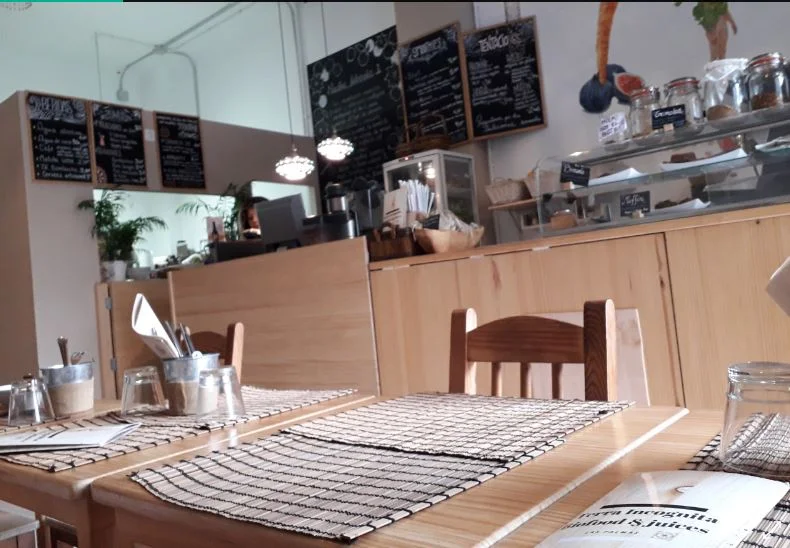
Terra Incognita is a lovely little place at the end of Las Canteras, that specialises in healthy living and biofood. Their menu is in Spanish, but there’s a lovely waitress that is happy to translate if you like. Drinks are plentiful here, and include fresh juices, kombucha, matcha and chai lattes. The incredible food on offer included vegetarian burger, quinoa salad, zucchini noodles, and AMAZING vegan desserts. I highly recommend the chocolate muffins, which are also gluten-free and low sugar!
They’re open during the day, and not the evening, so a great spot for lunch. The average price for lunch is 7 EUR, and you can get their ‘Menu Del Dia’ for 12 EUR, which includes a starter and a main course. There’s no outside seating but they have wifi, so you can take your laptop and work in the beautiful surroundings.

During my two months in Las Palmas, I probably paid Bioloco a visit at least twice a week. It’s that good. Classed as a ‘cruelty free bar’, it sells an array of healthy salads, vegan burgers, tapas style foods, and lots of delicious drinks, including gluten free beer.
Bioloco is a few minutes walk from Las Canteras beach and has a pleasant but basic decor, as clearly the emphasis here is on the food. It’s also the place of many nomad socials and meetups, so expect to find yourself here at some point. The food is incredible value for money; a small protein power salad (pictured) set me back just 3.80 EUR.

Casa Ari is not specifically a vegetarian/vegan joint per say, but I had to include this place, because if you’re on a budget and love Indonesian food it’s worth giving this place a try. You can get a HUGE plate of Nasi Goreng for just 5.50 EUR, and you can also get takeout for just an extra 0.50 EUR.
It’s a small place that is popular with the locals, and ran by a husband and wife team. The lady is Indonesian and cooks up an array of mouthwatering dishes, from Bami Goreng to Coconut curries with tempeh or tofu. There’s also wifi available so you can stay connected. If you need this food but can't be bothered to leave your Airbnb/coliving space, try Canary Flash who will deliver to your door.
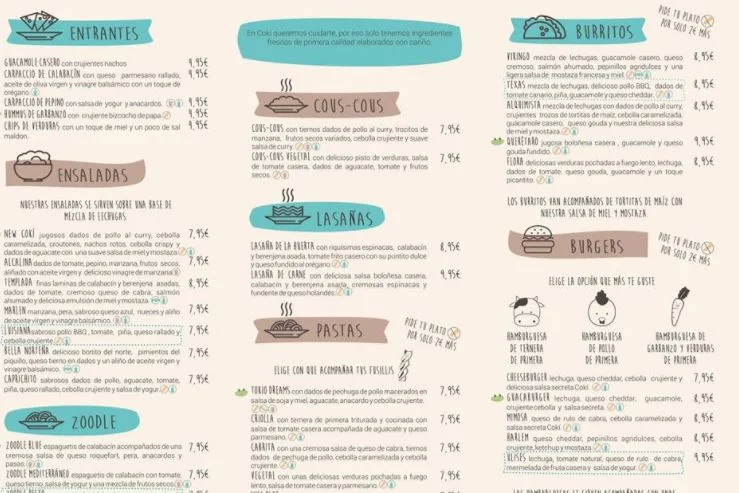
Coki is an unassuming but impressive eatery just off Mesa Y Lopez, which offers a large menu filled with burgers, burritos, noodles and salads. What’s great about this place is that it clearly marks allergies and vegan options on the menu, so you can see which meals are gluten, nut or lactose free.
I had the same thing every time I visited, which was three times! I had the pesto zoodles, which were zucchini ‘noodles’ covered in pesto and topped with walnuts, served cold. Expect to pay roughly 9 EUR for a main. Coki can get quite busy on the evenings and weekends so pre book if you are coming in a large group.
Come Mi Gira? Gelatario Naturale
On one of my first few days in Las Palmas, it was pretty hot and I fancied an icecream. I made my way to this tiny gelato shop near Mesa Y Lopez, and wasn’t disappointed.
The italian owner was super-passionate about his ice-creams which he made with almond milk, and proceeded to feed me with all manner of samples from pistachio to chocolate orange. I wasn’t complaining!
You can get cones or tubs of gelato, starting from 2 EUR. Yummy!
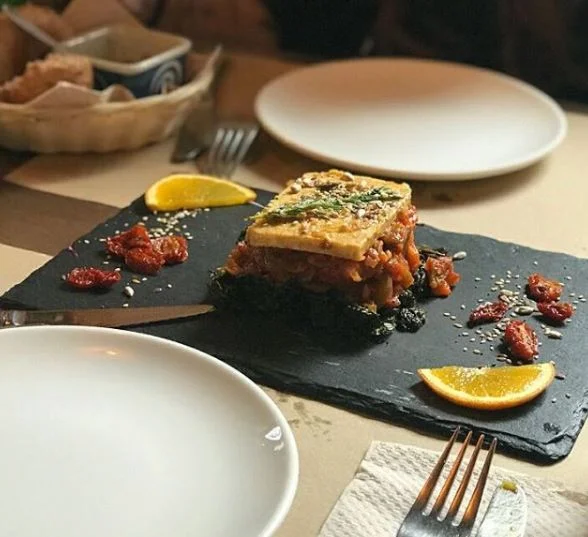
I was told by several people that this place was a vegan delight, and I wasn’t disapointed. I went there on a Thursday night, which is tapas or ‘pinchos’ night in Vegueta. I went all out with a few pinchos to start - caramelised aubergine being one of them (2 EUR), and then I went for a ‘tempeh tower’ (around 12 EUR), which was delicious, although not large in comparison to other meals I’d had around Las Palmas.
I finished off with the equally impressive vegan tiramisu - which made for a lovely, guilt free evening. We sat outside with blankets and this really is the best way to soak up the social atmosphere in Vegueta on a Thursday night. Prices at La Hierba Luisa are more expensive than others; expect to pay 20-25 EUR for a three course meal, which is still excellent.

Smoothie Galaxy is not a restaurant, but a cafe. Although this place isn’t primarily vegetarian or vegan, I had to include it because it’s so healthy. Choose from an array of smoothies, from carrot, ginger and lemon to mango, papaya and strawberry - all created before your eyes and handed to you in a HUGE carton holder, available to drink indoors or take away. There’s also a selection of small sandwiches to eat in their cafe, or granola bowls topped with fruit if you fancy a healthy breakfast.
Prices here are very reasonable; expect to pay 3.50 EUR for a medium smoothie.
Another few that I heard were very good but did not try personally were La Dulce Boutique (raw vegan food in Las Palmas) and Zoe (Vegueta).
So what did I make of the vegan and healthy living options in Las Palmas?
All in all, Las Palmas has a thriving vegan and health food scene, which is continuing to grow. There are plenty of gluten and dairy free options available if you look for them, and there are many events which focus on ethical living or veganism for digital nomads. You'll be spoilt for choice!

Freedom is our basic nature
We all want to be free. Free to express ourselves, free to be ourselves, free to love fearlessly, and freedom to make our own decisions.

We all want to be free. Free to express ourselves, free to be ourselves, free to love fearlessly, and freedom to make our own decisions.
So many of us don’t feel free, for whatever reason. We feel trapped in a job, or in a relationship, or even within the prison of our own emotions - trapped within the confines of feeling down on ourselves or lacking in something, whatever that might be.
However, the well known dance song states, everybody’s free to feel good.
So many of us place our freedom on something external to us, but in truth freedom is a decision. It is a matter of consciousness, a way of thinking, or rather, a state of being.
What I mean is that we are all free in every moment, to choose to enjoy our life, and our state of being.
The only reason we may be unhappy is because we do not believe, that we are 100% responsible for our freedom, and that the enjoyment of life depends solely on our inner state of being.
Happiness is about feeling free on the inside. It is about a beautiful, non-attached, joyous embracing of whatever is in your present experience, right now.
It is not about the past, or the future- it is not about living in your mind.
In fact, living in your mind creates more problems than it solves.
Freedom is about the full and total conscious awareness of this moment, this experience right now, and enjoying the sensations of being in this moment, this moment in time and space, that will never ever happen again.
When you start to look at life in this way you realise that time is a construct that humans have designed that fundamentally limits our happiness. By using our minds to project ourselves backwards into the past, or forwards towards the future towards some memory or some imagined future experience, we block all happiness that is available to us right now.
And we block our feelings of freedom.
In order to become free, in order to release unhappiness and step into a happier way of living, you must come out of your mind and into your heart.
The heart doesn’t measure. The heart doesn’t over-analyse. The heart just beats. It just is.
Excerpt from upcoming book, The Magic Ingredient
My current book is Freedom Seekers

Tips for intentional living
Intentional living is about using the knowledge of mindset and vibrational energy to consciously place your attention on experiences you would like to have.

Do a quick search on Youtube for ‘intentional living’ and you’ll find a host of videos about using Do a quick search on Youtube for ‘intentional living’ and you’ll find a host of videos about how to create the lifestyle you desire.
Intentional living is about using the knowledge of mindset and vibrational energy to consciously place your attention on experiences you would like to have.
Hang on a minute, isn’t this what self development books have been telling us for years?
Kind of.
Humanity has explored a lot over the last few decades about the power of a positive mindset, but intentional living explores more than that; it’s about utilising your energy, which is your emotional tone.
This means that rather than getting frustrated in traffic and trying to ‘think positively’, you actively align yourself by getting into a different energetic state. It’s about changing your emotional frequency so you not only have a better experience, you are happier too!
I’ve read and researched extensively on this subject for over ten years, but have only just begun to practice it. Here’s some tips from those who have seen it work in their lives:
1. Meditate
Eckhart Tolle talks about the value of meditation and how slowing down your mind can lead to more positive results in your life. I see the mind a bit like a treadmill. We can crank it up to a fast pace (and it’s pretty much at running speed for most of us), but we need to train ourselves to slow it down and give ourselves a breather.
Why? Well when you are caught up in mind, it’s harder to create. You slip back into fear because the mind is perceiving, judging, and thinking. It will tell you ‘you can’t do that!’ or ‘maybe you should try this’.
When your mind is calm, you are centered in awareness, which is peaceful and balanced. From here, decisions can be made with clarity, and above all, intuition.
2. Create through sensation
Intentional living is made up of thought and feeling. Say you’d like to visit a certain place. Not only is intentional living about preparing your mindset for this experience through positive affirmations and unconscious self belief, it’s also about conditioning the body.
Neville Goddard talks about the power of feeling when creating by using our senses energetically. What do I mean? Well, instead of just thinking of a beach for example, we utilise our minds and bodies to consistently sense the feeling of our toes in the sand, the sun on our backs, the salty sea smell in the air.
Neville himself made it his life’s work to practice this and he developed some astounding results once he had practised it with consistency. He found that when the mind and body are relaxed, so in meditation or just before sleep, is when this worked best.
We can only assume this is because the energetic impressions were seeping into the unconscious mind, which may have a part to play in creating our reality.
3. Let go
As humans it is natural to have desires, says Esther Hicks. However we can get so caught up in the ‘having’ of what we want that we create a dischord within ourselves and a disharmony.
Say for example you wanted a particular job. You were well qualified for it, and knew it was possible for you to have, but you really, really, really wanted the job. You got so over excited when thinking about it, that the fact that you didn’t have it produced a sort of craving feeling in your stomach and a restlessness that you’re ‘not there yet.’
If you think about our bodies as musical instruments, then we’d be tuning ourselves to the opposite of what we wanted. Osho, the indian spiritual teacher, says ‘if you relax, it comes. If you relax, it is there. If you relax, you start vibrating with it.’
This has been the hardest one for me to do, as I naturally start to get excited and clinging when things are moving in a positive direction.
To let go means to be calm and chilled about it. Like ‘I have that dream job, it’s cool’ feeling in your stomach. It comes from knowing you can be happy with or without that experience in your life.
Are we more powerful than we think? Can we use our thoughts and emotions to attract experiences into our lives? You can read all the books and watch all the videos in the world, but your experience will be your best teacher. Try it for yourself - I’d be interested to hear your results!

Remote working: building a location independent career
Would you like to build a location independent career? In Freedom Seekers, Kerry's new book, she shares a list of the latest remote work and freelancing job sites.

Would you like to be location independent and work from somewhere like this?
Working remotely is essentially having a full time job, but instead of being at an office, you can work from anywhere. This gives you the security of a regular salary, but without the commute.
There are remote work job sites springing up all the time; social media is a good place to find the latest jobs (do a keyword search in the search bar of Facebook or Twitter), but here’s a list of 20 helpful websites to get you started.
We Work Remotely (www.weworkremotely.com)
Remote.ok.io (www.remoteok.io)
Working Nomads (www.workingnomads.co)
Remoters (www.remoters.net)
The Gig Economist (www.gigeconomist.co.uk)
Problogger (www.problogger.com/jobs)
Skip the Drive (www.skipthedrive.com)
Flexjobs (www.flexjobs.com)
AngelList (www.angel.co)
Remote Work Hub (www.remoteworkhub.com)
Escape the City (www.escapethecity.org)
Jobpresso (www.jobpresso.co)
WFH.io (www.wfh.io)
No Desk. co (www.nodesk.co)
Work in Startups (www.workinstartups.com)
Power to Fly (www.powertofly.com)
Indeed.co.uk (www.indeed.co.uk)
Remotive (www.remotive.io)
Outsourcely (www.outsourcely.com)
The Muse (www.themuse.com)
Freelancing Sites
On a freelance site, you can offer your skills and get paid - it’s as simple as that.
Whether you’re a writer, a coder, a graphic designer, an accountant or a teacher - there’s a whole host of sites out there to pay you.
It’s not easy though. Don’t expect to apply for a few and expect the money to come rolling in instantly. It takes work. But if you’re committed, here’s a few sites to get you started:
Upwork (www.upwork.com)
Fiverr (www.fiverr.com)
People Per Hour (www.peopleperhour.com)
Cloud Peeps (www.cloudpeeps.com)
Freelancer (www.freelancer.com)
Flexjobs (www.flexjobs.com)
Hubstaff (www.hubstaff.com)
Guru (www.guru.com)
Craigslist (www.craiglist.org)
Contently (www.contently.com/jobs)
Content Creating
If you love being in front of a camera, making videos, then becoming a content creator may be the right step for you.
Content creation can be anything, from creating videos, to books, to podcasts. It takes work though, because to build a following in content, you need to be creating on a consistent basis.
If Youtube or Podcasting is your thing, Patreon (www.patreon.com) is a great place to get sponsored. Patreon is essentially a crowdfunding site, whereby people will sponsor you to generate content.
If you have just a 1,000 paying members, you can be well on your way to funding a lifestyle as a content creator.
Product creation
Sites such as Kickstarter (www.kickstarter.com), Crowdfunder (www.crowdfunder.co.uk), and IndieGogo (www.indiegogo.com) can help you crowdfund a product such as a book, an app, or a new business idea. You can create a product page, set a target for fundraising, and then spread the word far and wide!
The key here is not just to build a great product. It’s to build something that is unique enough and has a certain demand, even if that demand is just 1,000 people. There are a huge amount of books, apps and products out there - how will you make yours stand out from the crowd?
Etsy (www.etsy.com), Amazon (www.amazon.com) or Ebay (www.ebay.com) are great ways to sell products online.
Excerpt from new book on remote work and lifestyle design, Freedom Seekers

What I learned from 10 days on Vipassana
Going on vipassana meditation is essentially like living your life like a monk for 10 days. Your life consists of waking, eating, meditating, maybe a little walk around, and not much else.

Going on vipassana meditation is essentially like living your life like a monk for 10 days. Your life consists of waking, eating, meditating, maybe a little walk around, and not much else.
I had heard about vipassana from a few people prior to attending the course, but to be honest hadn't given it much thought beforehand, as my life was incredibly busy.
All I thought about was the physical aspect of sitting in meditation for an hour, and how my back might ache.
Day 0
I got there early on the day, and had a few hours to meet others and chat. The course was due to start at 8pm, after which 'noble silence' was followed. This means that in order to establish 'mental quietness', you needed to not talk to anyone (only to the course leader or teacher if you needed something), and not to establish eye contact with anyone nor communicate by way of gestures.
Being an introvert, I was rather looking forward to the peace and quiet after a manic few months. Our phones and valuables were put in a locker, and I took my things to my room, a small little wooden hut, sharing with one other girl (who I had to pretend was invisible, which was very strange).
We started with a meditation and discourse that evening (which was the teacher imparting some wisdom about the course and technique). I loved the stillness of the hall. You got your cushions, a huge big cosy blanket and basically cocooned yourself in that.
With 100 other brains in the room meditating, the energy was INTENSE. Coupled with that, the discourse explained how powerful the technique was and it suddenly dawned on me that this was going to be a psychological cleansing of sorts - I'd not even considered that. I got a huge headache and felt sick, I had to go to bed early! The reality of turning my attention inwards for such a long time began to make itself clear.
The brutal schedule:
4:00 am
Morning wake-up bell
4:30-6:30 am
Meditate in the hall or in your room
6:30-8:00 am
Breakfast break
8:00-9:00 am
Group meditation in the hall
9:00-11:00 am
Meditate in the hall or in your room according to the teacher's instructions
11:00-12:00 noon
Lunch break
12noon-1:00 pm
Rest and interviews with the teacher
1:00-2:30 pm
Meditate in the hall or in your room
2:30-3:30 pm
Group meditation in the hall
3:30-5:00 pm
Meditate in the hall or in your own room according to the teacher's instructions
5:00-6:00 pm
Tea break
6:00-7:00 pm
Group meditation in the hall
7:00-8:15 pm
Teacher's Discourse in the hall
8:15-9:00 pm
Group meditation in the hall
9:00-9:30 pm
Question time in the hall
9:30 pm
Retire to your own room – lights out
Day 1: I say the schedule was brutal because it was; it was by no means easy. Just reading the timetable is enough to put many people off.
Day 1 and the 'gong' going at 4am made this schedule really hit home.
I was here - I was doing this. Oh crap. I decided I wasn't going to punish myself by following the schedule to the T (although they advise this), I was going to take a relaxed approach. (Snoozing until 6:30am, when it was time for breakfast).
The internal monologue which is my only company for the next 10 days starts: 'Ooh, porridge. And with those- what are they? Prunes? Oh lovely, a bit of toast I see at the back, I think I'll have that too. I don't think I'll have caffeine - what's this barley cup stuff? I'll try that.'
The group sittings were mandatory; the rest you could meditate in the hall or in your room. I decided I was going to be very gentle with this, and ease myself into it - just stick to the mandatory ones and then do the rest if I felt like it.
Day 2:
Internal monologue: God, this is hard. I am relaxing like I've never relaxed before. But at the same time, there's things about this experience I have craved for so long. Like walking into the woods to watch the sunrise. Like sitting and watching the birds. I like those moments.
I start to get bored easily, clock watching and already getting excited for 11am mealtime (we never know what's on the agenda.) Today is peanut satay with rice, spinach salad, and sometimes, we get a pudding. Sometimes not. The enthusiasm in the room is high at mealtimes.
The only other eating time is 5pm, where we have fruit. My lowest part of the day. I'm not a massive fruit fan (I prefer vegetables) and you can only have two pieces and a cup of tea. I'm starving! We sit in silence, slowly munching, trying to avoid eye contact with the person that is sitting opposite us at the other side of the table. Grim.
Day 3:
For the last few days, we've been focusing on something called 'anapana' which is about observing the breath. The whole technique is based on observation and awareness only. By this day, I'm completely relaxed. Sometimes I'm so relaxed, I can't relax myself any more. It's like a meditation marathon, I think to myself.
I have what I call 'good sits' and 'bad sits'. On a good sit, the hour can go quite quickly, as I go quite 'deep'. On a bad sit (usually when my mind is more alert), I'm twitchy, bored, and restless, and I just want the teacher to start chanting so the meditation is over (the chanting is really, really weird by the way. I almost burst out laughing when I first heard it).
I realise that in order for me to have a good sit, I just have to let things be what they are (something they drill into you constantly whilst you are there). If I put too many expectations on the process, or get too attached to 'going deep', then I'll have a shit time. Sometimes, the moment when I say 'fuck it, I'm just going to have a little rest', is the moment I then go really deep. Hmm. Mental slackness is important, then.
What also starts happening is that because I am deeply relaxed, my mind is not so much generating thought as receiving thought. Things bubble up into my consciousness about the past, and about the present, and I see things with greater clarity. I start to realise that a calm mind, is a very clear one.
But god! I'm really getting bored. I'm telling myself I'm starting to do some good work, but still, this is tedious. I start to invent little 'hacks' to make the day go quicker - take an extra walk around the block when I visit the toilet, make a trip to the canteen to fill up my thermos, make an extra trip in the evening to fill my hot water bottle.
No reading material means I've already read the vipassana booklet a thousand times. I miss music. When alone in my room I start to quietly hum some of my favourite tunes. God, I'm bored.
Day 4:
There's a board in the dining hall that outlines the schedule, and today is different. Today we go into 'strong determination', where we basically try not to move for an hour. But before that, we're given instructions later today for 2 hours. 2 HOURS! Fuck. I mentally plan my day so I can be in the hall as little as possible.
I've contemplated asking the teacher for a chair at this point, as my back has ached now and again, but I have found quite a good position. I realise that the point is to go so deep into the mind that you sort of forget about the body (a bit like sleep), so I think, I'll just see how I go.
I get very angry later. I feel as if the teacher is putting instructions and suggestions into our heads, and after studying hypnosis I know that relaxing the conscious mind is the way to embed commands. I am raging inside and want to leave. I even want to talk to people - but I can't, and don't, it would spoil their experience. So I seethe to myself and wonder if I should ask to leave tomorrow.
I get lifted later on by the discourse. They are quite funny, and the teacher shares a lot of wisdom from the Buddha and his life. He talks about negative emotions, and how we create our own suffering. He mentions anicca, which means impermanence, and that the way to create happiness is to observe emotions and not react with craving or aversion.
It makes sense - but I can't do it. It's too difficult.
Day 5:
I'm getting used to the porridge, I quite like that breakfast is the same. Lunch changes every day, and the food is incredible - really, really good. I start to see the same people around, and sometimes I sit with them, even though we don't speak.
I want to leave though - I've had enough. I mentally work out that if I leave now, I can have a few more days at home, chilling and watching Netflix, instead of this punishing schedule. This isn't fun, I tell myself. This is too hard.
Although something inside told me to stick at it. They do too 'It's only ten days of your life', they say. I feel really cut off from the outside world. Anything could have happened!
I do continue to get valuable nuggets of information from my meditation sessions, though. Things bubble up from nowhere and I know they're important. This is naughty, but I realised I had paper instructions for my digital alarm clock and I had found that I had a pen. So I wrote down snippets of the wisdom that the mental clarity was offering. It seemed too valuable to just gloss over and forget.
The fruit at 5pm was again a low point. This is like being in prison! I had my head in my hands, willing the time to pass quickly. A girl who I'd spoken to at the beginning came over and silently picked up my scarf which had fallen on the floor and placed it on the back of my chair. This felt like a gentle support. It encouraged me to push through.
Day 6:
If I can get through these next two days, I'll be able to see the light at the end of the tunnel, and it will get easier, I thought. I started to see how my day consisted of highs and lows.
Highs- Crunching my feet along the frosty grass in the morning. Seeing the autumn leaves fall like confetti. Sunlight streaming through the trees. How the water droplets on blades of grass look like diamonds. Putting my feet on the hot water bottle at night. Pure, unbroken silence. Getting jacket potato with cheese and beans for lunch (internal monologue: oh yes!)
Lows - The never ending 'start again' of the teachers voice (internal monologue: oh, just fuck off now). The slow munch of my banana at 5pm. Looking at the clock and it's still another hour before something interesting happens. My back, legs, and mind aching from all the bloody meditation. Boredom.
Day 7:
Things are starting to take shape in my mind, which is now ridiculously serene at times. A girl and I stop to watch a blackbird hopping along. I start to become more comfortable with the contents of my own mind.
I realise that I am very impatient at times, and sometimes selfish, and start to accept these qualities instead of beating myself up about knowing them. The world starts to appear like a mirror for my own mind, now I've began to clean it.
I fill my thermos with Barley Cup and take it to the foyer of the meditation hall. I can't spill this on this lovely white rug, I think, that would be so embarassing. Later on that day I pour myself a cup in my bedroom and the cup flies off the table, soaking the rug in front of my roommate who is trying to meditate. SHIT! I exclaim, in my head of course. I can't apologise to her either - how awkward!
The meditation trains you to be an observer. I start to feel energy coursing through my body when I go 'really deep'. This must be quite healing, I think, and then want to go to that state all the time. But the teachings tell you that craving is also to be avoided, because over-attachment also leads to suffering.
I realise that I have been over-attached to virtually everything in the past.
Day 8:
I'm getting there! Yay! I have decided by now I am going to stick with it. The day I wanted to leave I couldn't have got a lift anyway, and I partly wanted to stick it out to chat with the other girls too, I wanted to see how they found it.
The men were in a separate village, we only saw them in the meditation hall. One day I came in to sit and I saw about four looking at me, I don't know why but I felt uncomfortable. The idea of the course is to separate yourself from anything that may cause a distraction, the opposite sex being a big one for most people, I can certainly identify with that.
After the initial mistrust of the teachers, I began to see that they had good intentions for us. In fact I realised that purity of intention is one of the most important things in life. As the teachings explain, everything in life contains good and bad. This course is one of them.
The goal, and the key teaching that is repeated to you constantly is 'equanimity'. This means having a balanced mind. Seeing things as they are, not how you want them to be. Recognising the good and bad in everything. This really helped me become non attached to things because no matter what you want in life, there is always an aspect that may feel not so good to you.
As long as your intention is right, you can't go far wrong.
Day 9:
I'm learning so much about why I have reacted the way I have in the past, and how I now see things differently. I am really proud of myself and grateful I have done this- it takes courage to look inside your unconscious mind.
I realise that the ego wants to cling on to things, but the nature of life is impermanence and change. If we step back from the ego into awareness and presence (i.e. full attention in the present moment), then the ego ceases to be. We also relinquish suffering. It makes us happier!
As I start to understand my own suffering, I can understand other people's. The teacher talks about compassion, and how we all share the same emotions. I vow to make this a central part of my life going forward.
I don't miss my phone or the outside world now. Although I want this course to end, I really like being in this state of peaceful awareness. I don't want things to speed up.
Day 10:
After meditation at 8-9am, noble silence will be lifted! I'm looking forward to it and not at the same time. After battling through a stormy, unbalanced mind, I've got to the place where I really like this still, calm, balanced me. I don't want external things to distract me from this sense of inner peace, and I'm concerned they will.
Noble silence lifts, and the whole village erupts into animated conversation. I go to the toilet on my own, and then join a group and talk. It feels weird - like I am watching myself talk. There is no judgement either, and the words are flowing.
The dining room opens up to both sexes, and everyone is talking, drinking tea and eating biscuits. It's overwhelming for me and a few others so we go outside and chat in the fresh air. I feel on a high - elated really. Some have had similar experiences, some haven't. I feel different. I can't wait to get out and tell people how I feel.
I speak to my room mate - an incredibly headstrong, grounded and calm woman, the same age as me. She talks about the inner reality being truth as nonchalantly as the fact the sun rises every morning. The external world is a projection of your unconscious mind? I couldn't get my head around it but I had felt that my experience mirrored it on this course. I was in total shock - this is what I'd been reading all my life but never experienced on the experiential level. You cannot know truth, the teacher had said, you have to be it. And by truth I mean the ever present, unchanging awareness. I know you are not your mind - but we are trained to believe we are! We are awareness.
We got our phones back. One girl had 242 whatsapps. Another had 700+ emails.I just laughed. It seemed so silly, so insane that we all distract our minds so much in this modern age. I couldnt be bothered to reply to my messages. Why did we want to put our lives on fast forward? I rather enjoyed time being slow, and the stillness and clarity it brought to my awareness.
I decided that I wanted to live in that mindful state more, not be caught up too much in the thinking and processing mind.
Watch this space... :)

Trust arises from authenticity
Today, trust is everything. In our online, hyper-connected world, we create (mostly) digital relationships, communicating with each other across time and space.

Today, trust is everything. In our online, hyper-connected world, we create (mostly) digital relationships, communicating with each other across time and space.
A lot of our transactions are now done online, particularly the transaction of buying and selling. This means that in a world where human contact is minimised, trust is the new currency.
Trust has to be present in order for you to buy, or invest in someone. This means that you need to feel that the person you are entering into a transaction with, is genuine and authentic. But how do you know that when you're sat miles away, behind a computer, iPad or phone?
Well, a lot of it is about how that brand presents itself. I've noticed that authenticity and integrity are becoming key values that are becoming more important in business, and indeed society itself, as we struggle to sort through who is real and who is false in our new digital age.
When it comes to ourselves, we must refrain from hiding behind a mask, or being who other people want us to be. That hurts both parties- it hurts you because you're not being yourself, and it hurts the other party because they're getting cheated out of a genuine human connection.
More and more brands are becoming successful by opening up and telling their story- their personal journey of how they came to be, the struggles and triumphs along the way. They don't cover up their mistakes. They don't pretend to be someone they're not.
Yet, they attract more and more interest from the public, because they stand out in a world where truth is hard to discern, and integrity of character is what we all want to believe in.
Trust, in whatever form, arises from being willing to be fearlessly open; from being willing to share, and willing to connect on an emotional level.
Trust arises for the person you're transacting with when you know who you are as a business or an individual, and aren't afraid to show it. You live your values, and you are who you say you are.

Listening to your in-tuition
Albert Einstein once said ‘the intuitive mind is a sacred gift and the rational mind a faithful servant.

Albert Einstein once said ‘the intuitive mind is a sacred gift and the rational mind a faithful servant. We have created a society that honours the servant and has forgotten the gift’
The intuition is a very interesting part of ourselves and there are many people that do not really recognise it or notice how intuition can guide us to make better choices in our lives.
- For example, have you ever been faced with a couple of job options and that one ‘feels better’ than the others to you?
- Or have you met someone and instantly picked up that they were in a bad mood, without them even speaking?
- Have you felt that you really didn’t want to do something, and yet did it anyway, and caused yourself a stressful situation?
- Or have you decided to wait on something, sensing that the timing wasn’t totally right to take action on it right now?
All of these are examples of using our intuition, or gut instinct, or whatever you want to call it. It doesn’t really matter what you call it.
It is about noticing and picking up on the subtle emotional signals we get from others and situations and matching that up with how we feel inside.
We can pick up whether people are in emotional resonance with their words and actions or not by using our intuition. For example, once practised often enough you can tell whether someone’s emotional tone (how they are feeling) is aligned to what they are saying.
For example someone could say ‘I’m fine, I am doing really well’ when they are not. If you practise using your intuition, you can pick up on the discord in people, or similarly, you can pick up on the fact whether this person is being genuine and authentic or whether they are just putting on a brave face.
Intuition can also guide you on whether to take action in a certain direction. If something feels very fuzzy and unclear, then you can wait until you are more clear and more emotionally aligned before you take action. For example a few months ago I wanted to move house. I saw a few and none of them were great. It just seemed like hard work, so I quickly gave up and thought I could just hold on a few more months where I was. When I felt like I was ready, I had lots of viewings within a week and on the offchance got a phone call about a newly listed home- which I am moving into next week!
Trusting our intuition is the thing a lot of people struggle with.
‘Do they really like me? I get the sense that they do, but I’m not sure’
‘Should I back out of that offer? Something doesn’t quite feel right’
‘I get the feeling they want to be left alone- should I go around?’
The more you test your intuition, the more you are able to rely on it. Sometimes you need to make some mistakes with your intuition before you realise how helpful it is to you in sussing out situations before you make a move.
It’s like someone telling you what the board is like in a game of chess before you make the move.
Sometimes it’s best to wait and let things unfold to see if your intuition or hunch will come true. It’s all about listening to your heart and emotions.

Festivals: a return to 'being'
For quite a while now, I have been a little tired of being a human doing. I want to be a human being for a while.
For quite a while now, I have been a little tired of being a human doing. I want to be a human being for a while.
And this urge has become ever greater over the last few years, as the weeks and years seem to fly by ever faster and I never seem to get a minute to chill out to myself. The merry-go round of life is speeding up, not slowing down, as it seems, as I enter my thirties.
But I would like to stop this ride altogether. To slow down, to breathe, and to rediscover the simple things in life- nature, looking at the stars, reading a good book, meeting new people, and generally just living.
I went to Soundwave Croatia last week and it was amazing. Very chilled out, and laid back. As well as the music, there were swings, and seesaws, and beanbags to relax on... it felt like a playground.
What struck me is how festivals entitle us to a mode of being that we're not able to experience in the 'normal' world.
You don't see a corporate manager spinning around on a seated roundabout at a playground, do you?
But at festivals, it's normal. It's ok to do that. It's relaxed. It's playful, and it's childlike. No one will judge you.
At festivals we are free to be who we are. Free from the burden of 'doing', we allow ourselves to slip into 'being' and take the pressure off ourselves.
Have you ever thought about how utterly unbalanced we are? That 90% of our time is spent 'doing' (working, cleaning, cooking, paying bills, emailing...) and that 10%, or probably much less than that, is time for us to just 'be'?
No wonder so many people are depressed in the Western world!
I met a couple out in Croatia who had their lives a bit more balanced (some would disagree). They spent roughly 50 % or more of their time working, and 50% planning cool trips to festivals or wherever took their fancy. Sure, they weren't rich (not by our standards), but they were glowing as people. Their eyes were sparkly, they looked calm and relaxed, and they were so friendly. They had been working and travelling the world for over 2 years.
Here's a picture of them. I never got their names, and probably will never see them again in my life.


Their life takes courage. It takes guts. And it's not something you can sustain indefinitely; at least not if you want to settle in one place, find roots and create a family.
Festivals are a way for us to experience some of that freedom on a small scale. This counter-culture is growing and growing; I see no signs of it abating because it is so desperately needed, in our souls.
Festivals are a way for us to experience our true nature as human beings- for us to feel free in a world where so many of us feel trapped.