
8 Ways To Meet New People When Travelling and Working Remotely
Where do you start when remote working abroad? I’ve compiled a list of all the ways you can fill your social diary when working in another country…

Photo by Elle Hughes from Pexels
I see this post all the time on online digital nomad groups: ‘How do I meet people?’. You might think it’s fairly easy. And if you’re staying in hostels or coliving spaces, then it can be, but what if you’re flying solo without a huge network?
If you’re working on the road too, you’re not always going to have tons of time to sightsee or socialise, either.
So rather than spending hours trying to figure out where you can go and what you can do, I’ve compiled a list of all the ways you can fill your social diary, so you can kick back, settle into your new place and focus on getting work done.
1. Networking groups 🫂
If you’re doing business, why not kill two birds with one stone? You can meet new entrepreneurs. If you were in Berlin, for example, you could search ‘Berlin Networking’ and start marking your calendar with interesting events.
One good tip is to join a local Toastmasters International. It’s a public speaking organisation, and they have bi-monthly meet ups where you can hear hilarious and heart warming stories, push yourself out of your comfort zone, and get to meet new people.
If you’re staying in one place a little longer, you could also check out Internations — the online community where you can connect with new friends in over 420 cities worldwide.
2. Check out Meetup 🍸
Meetup is a great way to meet people, because there’s so many different types of meetups. Usually you can find something that will pique your interest.
From board game meetups, to cryptocurrency discussions and language exchanges, there is ample opportunity to meet someone in your new place of residence. Get that social diary booked up!
3. Local Events 🥾
Most local events are on Eventbrite. You will be able to find them by simply filtering.
In just 30 seconds, I discovered that there’s a hiking group in Malta that meets every Sunday, and organises guided hikes for groups for just 12.50 EUR every week. Nice.
As an aside, I find hiking a really good way to meet people. In the UK, I’ve tested out The Yes Tribe meetups and Freshwalks.
Photo by Helena Lopes from Pexels: https://www.pexels.com/photo/three-men-standing-while-laughing-1049317/
4. Facebook Groups ⛰️
By far the best way is to simply search the name of the place you’re staying, and then ‘Digital Nomads’.
For example ‘Digital Nomads Croatia’. This will be full of country -specific events and meetups.
If a place is particularly thriving with remote workers, don’t just search the country name — it’s always worth looking at the place you’re staying, too. For example, in Portugal you have Digital Nomads Lisbon, Digital Nomads Porto, Digital Nomads Lagos, Digital Nomads Ericeira…
If you’re female, you could also join the fantastic Digital Nomad Girls network, or for both genders, check out the general Digital Nomads and Remote Workers groups.
5. Bumble BFF 👭
Bumble BFF is a highly personalised way of meeting new people. You can join for free, and pay a premium if you want to message people quicker.
You can personalise your profile for male or female friends, and the app asks interesting questions such as ‘Who would be your ideal dinner guest?’ and ‘What tv show or film do you quote from the most?’
It’s good because you’re more likely to meet someone that matches your interests. You swipe left or right, and when you’re matched, you have 24 hours to start chatting to each other for free.
6. Browse local advertisements 👀
You could also simply go on a walk, and check out the flyers and posters around town. Places like bookshops often have flyers scattered around, and independent cafe shops can also showcase upcoming events — a local yoga retreat, or a music event.
Take a walk with the sole aim in mind of collecting flyers. Or, just frequent public places — such as the local library, tourist office and art gallery.
I was in an art gallery at the weekend, where I picked up the below flyer — looks pretty interesting!
7. Search function on socials 🔍
Communities online will invariably share events that are coming up — fetes, local festivals, places of interest, open days, art exhibitions — the choice is endless.
I’d recommend doing a search of the place you’re staying and looking at the pages. You might want to type ‘What’s on in Bansko’ for example, and see what pages or groups come up on Facebook. You can do the same with hashtags on Instagram and Twitter too.
Usually, you’ll find interesting things that pique your curiosity, and you’ll end up following a nice coworking spot or a new bar you want to try.
I’ve found Facebook to be the best in terms of events. You can filter it by date, too. So you could search ‘Bansko’ and filter it by ‘this month.’
By joining ‘Brighton Girl Dance Group’, I’ve just booked my first free class to dance like Beyonce next week to ‘Break My Soul.’ Win.
8. Nomad List 👨💻
Of course, I couldn’t write this article without mentioning Nomadlist — created by one of the world’s most knowledgeable nomads (and a personal inspiration of mine, Pieter Levels).
Nomadlist gives you access to tons of digital nomads around the world, including detailed information on the top remote working spots around the world. There are lots of meetups in some of the most frequented hotspots for remote workers.
If you’re bored of where you are or need some travel inspiration, why not have a browse of the site to decide your next destination? They do charge an access fee, which is around $200.
Create your own! 🗓️
Of course, if you’re super stuck — you can’t find things you like to do or people to do it with, you could just make your own and advertise it on all of the places listed above.
I created a couple of ‘beach day’ meetups in Gran Canaria as there’s really nothing better than sunbathing, listening to music and having snacks with some awesome people!
But you can create whatever takes your fancy — dinner at the restaurant you want to try, a comedy night, a shopping trip.
If you’re interested in learning more about creating an alternative lifestyle, check out Freedom Seekers

7 habits to cultivate the flow state
You know that moment when everything just flows? There’s nothing else but you and the experience.
You become the writing. You become the dance. For that brief moment in time, you are yoga. It’s like you and the experience become one, if only for a fleeting instance.

You know that moment when everything just flows? There’s nothing else but you and the experience.
You become the writing. You become the dance. For that brief moment in time, you are yoga. It’s like you and the experience become one, if only for a fleeting instance.
You call it ‘being in the zone’, academics call it ‘accessing the flow state’. It’s something we can slip in and out of.
We know we usually feel good when we’re in this state of being, but how can we access it more frequently?
1. Take a walk or exercise
‘You can walk yourself into a low-grade flow state…it’s a great reset. If you’re doing something creative and you didn’t get into flow and it was frustrating, this is a way to reset and start over” — Steven Kotler
By moving, it seems to help the flow of ideas and our ability to focus.
Studies have shown that exercise switches off the pre-frontal cortex, and essentially allows for our conscious, chattering mind to quieten down.
Nicolas Cole has tried this with writing, documenting an extremely insightful 7 minute home workout routine.
He says of the routine:
“When we did our first 7-minute sprint, one of the first things I noticed was how clear my head was as soon as I sat down to write. It felt like my inner voice was directly connected to my fingers, and as soon as I “thought” the words in my head, they appeared on the page in front of me. 33 minutes passed in an instant — and then we were right back to doing crunches and air squats and push-ups”.
2. Clear all distractions
“Ninety percent of the most important experiences in life are right in front of you. And instead of distracting yourself from them, as you have been, the Attention Diet will finally free you to face them” — Mark Manson
It’s been documented that you just can’t experience flow if distractions disrupt the experience (Nakamura et al., 2009). That’s why setting digital boundaries is so crucial if we want to experience the flow state more often.
When I went on a 10 day Silent Meditation retreat, not having any distractions for ten days gave me some of the most beautiful moments of my life. Of course, it’s not always easy to digitally detox. Mark Manson gives great tips for cultivating an ‘attention diet’, meaning we only limit ourselves to that which is nutritious for us mentally.
Gretchen Rubin says “I find that I’m much happier if I can achieve this flow state for part of each day. But this requires shutting off my email and my web browser, not an easy task”.
In a world that demands our attention, giving yourself the gift of flow may mean setting strict boundaries, and saying no to a lot of other things.
3. Quiet your mind
‘Most of us live our lives like heads on sticks’ — Steven Kotler
If your mind is spinning faster than a hamster wheel, it’s going to be difficult to get into flow. Having one too many tabs in your brain open actually blocks the flow state. When you meditate or do yoga, you quiet your mind, allowing flow in.
‘Deep embodiment’ is one of the triggers that Kotler mentions, and it’s essentially about feeling with your entire body — not just your mind.
When we become mindful, we not only attune to the present moment with our mental focus, but with our bodily awareness.
4. Try something new
Kotler says we need an element of ‘risk’ to get in the flow state.
Of course, mountain climbers and kayakers are deeply in flow due to the physical risks involved, but you don’t have to jeapordise your life if you’re not a fan of extreme sports.
Social and even emotional risks can get you in this flow state.
In short — put yourself out of your comfort zone. Travel somewhere new. Do an activity you’ve never done before. Read something novel.
5. Do what lights you up
“When something strikes a spark of interest, follow it” says Mihaly Csikszentmihalyi, in Creativity: Flow and the Psychology of Discovery and Invention.
The flow state is a state of absorption; so it makes sense to do something that you’re likely to get lost in. It can only show up in the now, and when we can pay attention and focus in the present moment.
6. Be in nature
“I go to nature to be soothed and healed, and to have my senses put in order” — John Burroughs
If we’re sat at a computer for 10 hours a day, it’s likely we are stuck in our heads.
Being in nature allows us to become more attuned to the environment around us, a pre-requisite for flow.
Nature is the great reset button for human health, and there is nowhere more calming for the mind. Not only can it make you up to 47% more creative, but it is scientifically proven to boost your immunity and lower stress levels.
7. Trust yourself
Ultimately, getting into a flow state requires two things — surrender and self-trust to the present moment.
No one ever got in flow by over-analysing, just like no one ever swam by deliberating whether it was safe to jump off the diving board or not.
So with writing, dance, painting, speaking to that cute person — whatever it is, just trust yourself, don’t think, and dive in.
As the mighty Chemical Brothers say — don’t think — just let it flow.

Location independent working: 15 reasons to go remote
Are remote workers really happier? The research is mixed, often looking at either ends of the spectrum — those remote workers who are employed, and work at coworking spaces, or those self-employed freelancers who work on their own, travelling between Airbnbs or work spaces.

‘With freedom, books, flowers and the moon, who could not be happy?’ said Oscar Wilde.
And as a modern city worker, these things may feel far from your grasp. You want some more time back for yourself. Time to read, time to be in nature, time to just stand still, take a deep breath, and fully appreciate where you are.
Right?
You might have visions of travelling around the world. Or spending more time at home with your dog. Or fitting more training sessions in for your upcoming marathon. Or simply just having the satisfaction of hitting that snooze button in the morning a few more times.
Whatever your motivation is for remote working, there may be some other added benefits you haven’t considered.
So if you’re considering making the leap towards remote work, here’s 15 thoughts to ponder.
1. Improved mental health
Are remote workers really happier? The research is mixed, often looking at either ends of the spectrum — those remote workers who are employed, and work at coworking spaces, or those self-employed freelancers who work on their own, travelling between Airbnbs or work spaces. As with all things, it appears to be a balance — between having the time to do your own things (more time to exercise, cook/eat better etc) and connecting with others socially. Human connection is vitally important for happiness; it’s important we don’t lose sight of that when we’re finally free of the 9–5. But remote work offers us the opportunity to be more in control of our wellbeing.
2. Less traffic congestion
How much time do you spend sitting in your car in a given week? A month, or a year? By working remotely, not only will you benefit from not having to sit in a traffic jam for hours on end, the environment benefits too. America’s remote workforce currently saves carbon emissions offset to the equivalent of 91 million trees.
Of course, if those same workers are catching lots of planes and travelling around the world it’s not beneficial, so if you’d still like to protect the planet you can search for ways to offset your emissions from air travel.
3. Increased creativity
This all depends on how you make the most of the opportunities remote work brings. Harvard’s E. Glenn Dutcher says: ‘There are times when the home — or the coffee shop or the library — is a much better place to work than the office. For certain types of creative work, you have to be in your favorite room, or listening to your favorite music, or sitting in your favorite chair with your cat on your lap. No other environment will do.’
Personally, I don’t do much creative work at home. My best work came after a 2 month stint in Las Palmas, where I met some innovative and inspiring people. Just being around other likeminded digital nomads seemed to evoke my creative potential. You have to find what works for you.
3. Better physical health
Want to take a 2 hour break to go running in your local park? Well you can, if you’re a remote worker. . A CoSo survey found that 35% of remote workers were getting more exercise than before. Of course, if you’re sitting working in bed all day in your pyjamas, your physical health may decline! With more time on your hands, you can spend that wisely by focusing more on exercise if you so choose.
4. More time to learn/read/research
Even though you always look busy at your office job, there are times when you’re planning your weekend/reading the news/watching the odd cat video and more, isn’t there?
When you’re working remotely, you naturally have time to do more research and learning in a designated area.
Want to research coworking spots? Now you have the extra hour free, that one that you used to spend commuting. Want to learn a new language? Go ahead, because you can choose your hours if you’re a remote freelancer.
5. Productivity hacks
In this section, I was going to mention that remote work could make you more productive, but that’s not always the case. What it most definitely can do is make you lucidly aware of your own motivation and productivity. If you aren’t motivated in the office, chances are you won’t be when you’re working on your own either. Unless there’s certain things you need in order to be productive.
For me, the right productive environment equation looks something like this:
room full of creative entrepreneurs + nice office with comfortable chairs + unlimited tea and biscuits + some good techno to listen to on my headphones (or Mozart if I need to really concentrate) = productive Kerry. For you it might be peace and quiet and an ocean view. For someone else it might be late night on the sofa, when the kids are asleep. Find out when and how you are most productive, and then structure your remote work options around that.
6. Fewer business overheads
Years ago, remote work was called ‘hot desking’. You usually ‘hot desked’ at random offices, and basically had the same experience as an office worker, except for maybe increasing your monthly step counts as you hopped from from desk to desk. American Express noted savings of $10–15 million once it explored its remote work options. If saving money is a priority, location independence could be an option for you.
7. Less sick days
Got the sniffles and fancy a duvet day? Well, hauling yourself out of bed and into an office where you’re likely to spread your germs around has always been the road more travelled when it comes to work. One of the greatest pleasures about remote work in my opinion is that you can take it easy when you have a cold. There’s so much subtle pressure to come into the office when you’re under the weather (‘it’s only a cold’), but now you’re location independent you can snuggle up, make yourself a vitamin c drink, and stay indoors until it has passed. Research by Stanford University shows you’re less likely to have sick days though as a remote worker, so even better!
8. Less reliance on ‘the system’
The way we do things is changing. We no longer have to do things in the way society dictates. Globalisation and technology have freed us from being fixed to our location, and even our loyalties to employers or to brands. We are in control of our working lives now more than ever — of how we work, of when we work, and that means we can start to become self sufficient in more areas than just work, too.
9. More time to travel
You know the feeling. You’ve finally wound down after a week (maybe even two weeks) lounging on the sunbeds in some foreign sunny location, and now it’s time to head back to work. With remote work, you can travel more — not just to grab some more sunshine, but to meet new people, explore new cultures, and get inspiration. Every time I travel, I always get inspired. You don’t even have to go far from home (I’m writing this from a fantastic little cafe in my spiritual home of Chorlton, Manchester, and am staying in an Airbnb whilst visiting friends).
10. Time with loved ones
This reason alone is worth it to me. I haven’t got any fancy statistics here, but needless to say the value of spending more of your life with people that matter to you is inherently soul gratifying. Last week my sister had a baby, and we got the message at the drop of a hat that we could go and see her in hospital. I could rearrange my workload to meet my new niece Rosie along with my two nephews, a truly special moment in my life that I will always remember. You can’t put a price on that.
11. Cost savings for our healthcare system
Professor Cary Cooper notes that a lot of stress-related illnesses are caused by long working hours, and calls for shorter or more flexible working hours as a way to improve wellbeing. It’s difficult to quantify, but imagine the cost savings for the NHS if we all felt a bit happier and less stressed with our lives, as we had a good work-life balance.
12. More time to innovate and problem solve
This is a HUGE one for me, and a real driver as to why I’m so passionate about promoting balance in our work life by working remotely. When we are overloaded or busy, our brains are predominantly in a detrimental state of consciousness. It’s well documented that we get our best ideas when we are in the bath or shower, as Headspace notes. The reason for this is because we are in an alpha state of consciousness, a slower brain wave state which allows for increased creativity. If your brain is always on ‘go’ (i.e. a stressful mode), you’re actually in a state of self-sabotage, because you won’t be able to take in any other information or reflect mindfully on what you are doing.
13. More opportunity to be mindful
Remote work allows you to be with yourself more. It allows you to be more mindful, if you let it. You get to choose. It’s all about your work boundaries and how you choose to look after yourself.
If you’re a remote worker, do you fill yourself with guilt if you’re away for more than 5 minutes on Slack?
In my first remote employed job, I had a manager who would jump on me if I didn’t respond to our client’s email within 5 minutes. He was stressed (despite sometimes working from his villa in Spain), and it made me stressed. I was like an eager tennis player, always ready to pounce on an email or an action, and it was then I decided I had to wave goodbye to the project management life. It just didn’t suit me. Companies such as Intel and Google are into mindfulness as a leadership practice, and for good reason.
14. Time for errands and ‘life admin’
What’s a girl to do if she wants her hair done, nails painted, has a dental appointment and wants to post her friend’s birthday card? Remote work, that’s what. After visiting Bali and unfortunately contracting what doctors thought may be Guillean Barre Syndrome, I was in a bad way, having just got out of a wheelchair. I had a shit ton of appointments. Doctors. Tropical Disease Clinic. Neurologists. Physiotherapy. And because I wanted to help myself as much as I could, I did Acupuncture. Yoga. Flotation Therapy.
Plus of course, when you’ve been through the ringer, you just want to pamper yourself; to look and feel good. Remote work allowed me to do all of these things — work could take a back seat whilst I focused on my wellbeing. Yes, I was just keeping myself afloat financially, but I wasn’t additionally stressed about focusing on work when I needed to look after myself. I’m so incredibly grateful for that.
15. A greater sense of personal autonomy
Most of all, remote work can give you your life back. I can spend my lunch going to the local fruit and veg market, rather than a hurried supermarket run after work. I have more energy, because I work less (about 25–30 hours a week). I can focus on personal goals and creative pursuits. I have time to go in the garden and water the plants and vegetables. I can drive to see a friend on a Tuesday afternoon when the roads are quiet. I don’t get an anxious dread on a Sunday or exhilaration on a Friday afternoon. I have made friends in different countries.
Most of all, I am happier. Of course, there are downsides that crop up — loneliness, lack of motivation and financial instability being the main three as a remote freelancer- but all of these are wholly under my control. I can decide to meet a friend for coffee, go somewhere to invigorate my energy, and work that bit harder to overcome these obstacles.
I am free to make mistakes, but I am also free to create the life I want.
Convinced you yet?

Developing A New Relationship to Time

We don’t need the 9–5 to be productive; we just need more energy
What time is it?
I look at the clock. It’s 3:05pm.
Even though I only looked at it about twenty minutes ago, it feels like an hour.
I sigh and rearrange my desk. What can I do now?
I’m pretty tired, I’ve been in the office since 8:30,(but up since 6:30am) and already had a couple of meetings, spent two hours in deep work on a project, and had my lunch, as well as sending off lots of emails, and going on a call.
Pretty successful and productive day, so far, I think.
But I still have two hours left on the clock. I’m not allowed to go home until 5pm, when my ‘official’ work period is over, and we’re all allowed to go.
So what do I do? Start that big task I was going to do tomorrow? But I don’t feel like it, and I don’t have enough energy. Can’t I go home and chill now?
I know, I’ll go and make a drink. That will kill 15 minutes.
Sound familiar?
This was literally my internal monologue for most days when I was working in a 9–5 employed office job. It went on for YEARS.
My day always dragged around that time, and time went slowly.
Finally, I decided to work for myself. I didn’t want anyone else deciding how I spent my time, it was stressing me out.
I needed to reclaim it.
Time can make us a slave
In the Western world, time rules our minds. It changes how we perceive things.
Matt Haig wrote a brilliant book, How to Stop Time. In a nutshell, the book tells us to ‘live in the present moment’.
“The longer you live, the harder it becomes. To grab them. Each little moment as it arrives. To be living in something other than the past or the future. To be actually here.
Forever, Emily Dickinson said, is composed of nows. But how do you inhabit the now you are in? How do you stop the ghosts of all the other nows from getting in? How, in short, do you live?”
― Matt Haig, How to Stop Time
Last month, I watched a brilliant discussion between the guys between the Ascend Podcast, and my guilty crush, the lovely Bruce Parry.
Bruce has visited and lived with many remote tribes around the world, and he talks about an Amazonian tribe that lives in the present moment so much that they have no real words to describe abstract time.
Bruce says of these remote tribes:
‘they feel much more empathically in tune with the environment… they have a much deeper sense of being in the space…they’re connected to themselves, they’re much more in their bodies, they’re not caught up in their heads like we are’
So we need to get out of our heads, and into our bodies.
It’s already begun to happen.
Mindfulness: the growing trend to slow down time
Why has mindfulness become the buzzword of the last few years?
Is it because we all know we should be living in the moment, but it’s just so difficult sometimes?
All the big corporates have embraced this trendy concept over the past few years. Apple and Nike have embraced mindfulness principles, and there’s countless TED talks on living in the moment.
Google have even taken it a step further, launching a whole ‘Search Inside Yourself’ Mindfulness Academy.
Even Thich Nat Hahn led a Google Workshop on mindfulness.
But is a mindfulness meditation practice effective if you’re thinking about your 100 emails in your inbox?
Or if you’re feeling the pressure to buy a house by a certain time?
Perhaps it’s not just about slowing down our minds. Perhaps it’s about slowing down our actions, too.
The eternal now
Eckhart Tolle’s bestselling book, The Power of Now, gives a firsthand account of a man that decided to have a different relationship with time:
“When you surrender to what is and so become fully present, the past ceases to have any power. The realm of Being, which had been obscured by the mind, then opens up. Suddenly, a great stillness arises within you, an unfathomable sense of peace.”
I had read this book, but I didn’t pay any attention to it, until I spent 10 days in silence, on a meditation course. It was only when I experienced this that it began to make sense to me.
Free from the shackles of having to do anything by a certain ‘time’, I experienced a totally different sense of reality, which I documented in a video, ‘Keeping your peace in a busy world’.
Unshackling ourselves from time
A couple of weeks ago I watched a beautiful video of a well known world traveller on Youtube that was hiking in Northern California, and didn’t have a timepiece for a few days, just taking in the lush surroundings instead.
‘It’s really cool how you come more into the moment, and forget about this mental linear concept of time, and ‘I gotta do this, and I gotta do that, and I gotta make sure I have time to get to the office…’ Gabriel, Living Without Time
The way we are approaching time is changing.
Remote work companies such as Buffer focus on outputs, not time spent at a desk.
The 4 day working week trial in New Zealand was a success, as was one UK’s company’s introduction of a midweek day off.
The world is starting to wake up to the fact that we don’t need a certain amount of time to produce something valuable — we just need the right amount of energy.
That’s why Deep Work is becoming so valued — because it takes a lot of energy. You can’t do a piece of deep work in 20 minutes, and you certainly can’t do it with a hurried mind.
Joel Gasgoine, the CEO of Buffer, has ‘Deep Work Wednesdays’ where he has little to no meetings and ‘ uses lengths of unscheduled time to read and reflect on high-level vision and strategy.’
Why does he do this?
Because the state of consciousness you are in is important in order to produce a certain result. A relaxed mind and body means increased creativity and ideas.
He frees himself from the constraints of time so his mind can become more free.
You can do the same.
Don’t trap yourself with time
We can’t just throw away our watches, diaries and calendars. That’s not how it works.
But we can free ourselves from the mental burden of time.
We can free ourselves by ignoring what you think you should do by a certain time- not having to meet a certain life goal at a particular age, whether that’s getting married, having babies, travelling or buying your first home.
We can have days where we live without time, like Sundays, where perhaps we have a digital detox or a ‘Digital Sabbath’ and aim to be completely present in our bodies, perhaps doing some bodily focused activities like gardening or yoga.
We can start by giving ourselves better boundaries in relation to time, especially when we feel hurried, stressed or pressured by someone else. We know we could get the job done in one hour, but we tell our boss two hours because then we will be able to do more thinking around it and do a better job. To see what I mean, check out the difference between spending 10 seconds on drawing a picture of Spiderman vs 10 minutes.
We know that mental health is in crisis for many of the Western world. We have too much on our minds, too many thoughts to juggle, and too many activities, and not enough ‘time’ to do them in.
Perhaps it’s the relationship to time itself that we need to consider, and start making space for ourselves.
Give yourself the gift of letting go of time for a bit today.
You deserve it.

18 tips to improve your income and wellbeing in 2019
We only need to look back for one reason.
To ask ourselves ‘What did I learn?’
All of our experiences, bad or good, have the seeds of wisdom within them. And even if you think they’re not there, they are. They’re just hidden, like seeds in a fruit.
Income and wellbeing are inextricably linked, because they both pertain to energy. With increased energy, not only are you healthier and happier, but you can also earn more.
Ready to charge your batteries for 2019? Here’s things I’ve learned.
1. Trust your gut instinct
I wrote about what mattered to me on Medium, and got featured by the editors. Not only did it generate 6.7k claps and a bit of income, it generated further paid work and people that resonated with what I shared.
2. Immerse yourself in nature as often as possible
There are ideas that can only come to you when you’re in nature. Being in nature is energising. The more beautiful your surroundings, the better. Biophilia is a trend that will grow in 2019. Don’t take my word for it. Check out the ethos of coworking space Second Home.
3. Be aware of what drains your energy
‘Where attention goes, energy flows” is not just a nice quote. It’s truth. If you are giving your attention to things that aren’t uplifting you, you’re doing yourself a disservice. Are you letting social media suck your attention, and thus your energy? The Shallows explores how the internet is literally rewiring our brains.
4. Practice the art of letting go
I broke ties with one of my oldest friends this year, and even though I love her immensely, I had to accept that we were just going in different directions. If you hold on to something that is moving away from you, you’ll lose a hell of a lot of energy. It will impact your health, happiness, and business. Let it drift if it needs to.
5. Set monthly finance goals, and track weekly for peace of mind
Relieve financial anxiety as a freelancer by setting monthly targets. Track them weekly, and if you’ve hit your target by week 3, you know you can relax or hustle a little harder to surpass it. Trust you will get there.
6. Forget the competition
If you’re too busy paying attention to what others are doing, that mental energy is being lost. Run your own race. I remember one boss who literally stood at his computer watching a video of his competitor and calling him names. Why? It’s wasted energy. Spend that time improving yourself instead.
7. Tell everyone what you are doing
For the most part, it helps to be open as possible. I spent quite a few Fridays this year working at Think NG’s Freelance Friday, where I met a lovely lady. I shared what I was doing, and she later recommended me to do a paid workshop in 2019.
8. Don’t make decisions in fear
When the work goes quiet, it’s very tempting to do that project you don’t really like but know will earn you money. Or, if you’ve not posted for a while, you could just reuse that piece of work you’re not altogether happy with, but don’t do it. Instead use the time to upskill and grow.
9. Find work that feels playful
Keep a track of your emotion logs, like my friend Sam Chillcott. Notice when you feel elevated, and when you internally shout ‘yeah!’ That’s an indication of where you need to go. Excitement is energy. You want to do things that fill you with genuine excitement, and even if you’re not making a living from them yet, try to move yourself in that direction.
10. Use music to boost your productivity
Music is a well known energiser. It also has physical health benefits, and The Sync Project are exploring it’s effects with a large research study. Skeptical? You don’t have to listen to music whilst you’re working if it distracts you. Just by blasting out a tune before you work can help (I love this).
11. Start your day with positivity
As Benjamin Hardy suggests, getting yourself into a ‘peak state’ is advised. It helps set the tone for the day. Whatever uplifts you, whatever you need to get you into a place of calmness, focus, and energy. I’m not religious, but I start my day with Joel — he gives me a pep talk every morning.
12. Skill swap with other entrepreneurs
Utilise your network — is there a way you can help each other to further your impact in the world? This year, I did some marketing in return for some life coaching. Build your tribe. Help your friends.
13. Change your environment for increased creativity
This year, I spent three months in sunny Las Palmas, where I got to meet a lot of inspiring people. The difference it made to my mood and productivity was enormous. I was about 100 x more productive when I got home.
14. Be intentional about solitude for new ideas and learnings
I’m in praise of solitude. Like being immersed with new people and new environments, solitude has its own merits for creativity, learning, and reflection. Ideally, think of connection like a tide, or breathing — sometimes you’re around others, the next, you’re alone. That way you stay in balance.
15. Be helpful, even if you’re not getting paid
When I was working at the Freelance Friday, helping my friend and fearless kayaker Sally Montgomery, I didn’t begrudge giving her pro bono advice even though I was supposed to be working. Doing that led me to start consulting sessions, and within an hour of posting it on Twitter I had my first client.
16. Work with nature’s rhythms
You can’t force a water tap to fill a cup quickly if there’s only a dribble coming out. Likewise, you can’t expect yourself to be on fire in your business if you’re feeling tired. Don’t push if there’s no energy there. I’ve learned that our bodies, especially women’s bodies, go through a subtle energetic process relating to our cycles — we naturally have more energy around ovulation. Schedule your thinking time for then, and your days off for the ‘winter’ of menstruation.
17. Try as many income streams as possible
The internet is your oyster! There’s nothing you can’t do, with enough knowledge and research. Test the waters, and so what if it doesn’t work out? You can freelance, get a remote job, write a book, create a product, become a youtuber, create a course, do matched betting, be a user tester, do dropshipping — the possibilities for location independence are endless. One will be a perfect fit for you.
18. Don’t underestimate REST
I don’t just mean sleep. I mean full, conscious REST. Apart from going to sleep, do you have moments when you consciously relax your body to the deepest state possible, not focusing on anything else? R.E.S.T therapy is an actual thing, coined by the researchers of sensory deprivation tanks. I’m a fan of those. But when I can’t get there, I utilise the wonderful Meditations by Rasa. When it comes to meditation, go deep. You’ll be energised.

In Praise Of Solitude

There’s a difference between being alone and being lonely
It was a Saturday Night. I’d been reading famous quotes on solitude, as I was writing an article on silence (I know, so rock n’ roll).
Solitude was praised by Mother Teresa, Nikola Tesla, Antony Burgess, Albert Einstein, Franz Kafka and many more interesting people.
Then I googled ‘solitude’. The very first result from Wikipedia, highlighted in a little black box, rather perturbed me.
“Solitude is a state of seclusion or isolation, i.e., lack of contact with people. It may stem from bad relationships, loss of loved ones, deliberate choice, infectious disease, mental disorders, neurological disorders or circumstances of employment or situation.” — Wikipedia.
Wait a minute. This all seems… pretty bad.
I’ve just read that solitude was the answer from some of life’s most brilliant minds:
“The mind is sharper and keener in seclusion and uninterrupted solitude. Originality thrives in seclusion; free of outside influences beating upon us to cripple the creative mind. Be alone — that is the secret of invention: be alone, that is when ideas are born.” ~ Nikola Tesla
“People who do a job that claims to be creative have to be alone to recharge their batteries. You can’t live 24 hours a day in the spotlight and remain creative. For people like me, solitude is a victory.”
― Karl Lagerfeld
Not to mention the recent research that solitude can make you more successful.
Maybe we’re confusing solitude with the feeling of loneliness. It is one thing to be on your own voluntarily, taking breaks away from family, friends and the world, and quite another to be isolated.
I’ve recently moved into a flat on my own. At first, I was gripped with thoughts such as ‘ugh, this is horrible! So lonely!’ but then after a time it was replaced by a feeling of beautiful serenity.
The shift that happened?
Well, for the first week I was distracted. I focused exclusively outside myself — the tasks I had to complete, work I had to do. I was on autopilot.
But after about a week, I mentally dropped the ball and just sat ‘with myself’. It’s an awareness of the present moment, a connection with it that you just don’t get when you’re lonely. It then became incredibly enjoyable.
Perhaps loneliness is sort of a disconnection from others and also from yourself — whereas with solitude, you’re actively staying present with your own company.
Maybe loneliness can come from being somehow estranged from your connection to your own thoughts and feelings, your dreams, your hopes, your desires.
Because even if you’re surrounded by people, you still can be lonely. In fact, if you’re surrounded by people all the time, it can be incredibly hard to hear what your inner voice is saying — it’s been drowned out all your life.
So I’m in praise of solitude. It’s a truly enriching experience for those who want to fully embrace it.
Solitude can be an intentional experience. The intention is not about removing yourself from people and positive relationships, but for giving yourself moments when it’s just you and the universe.
When embracing solitude, it can be like taking a bath in the waters of silence. You dissipate into the present moment. There is sometimes no sense of ‘I’, especially in nature when moments of solitude can be so serenely beautiful.
If I was a newbie wanting to explore solitude, I might have thought twice if I’d read about it on Wikipedia or Google.
Solitude shouldn’t be terrifying. And if it is, what does that say about ourselves?
This article was first published on Medium.com

Making My First $500 With Medium.com's Partner Program

I must admit, when I first heard about Medium, the online publishing platform many years ago, I thought it wouldn’t take off. An article site for people to share ideas?
How is this going to be more popular than people sharing content on their own blog or on social media, I thought?
But this year I have reconsidered that thought.
Good content on the web is hard to come by, and there are a lot of people churning out articles just for the sake of it. I find that on Medium you find ideas of a different nature - they’re just on the edge of the current zeitgeist to be relevant; yet not so far ‘out there’ to not appeal to a broad audience.
As of last year, Medium had 60 million monthly unique readers. That’s too big to ignore.
Medium established their Partner Program last year in order to encourage more writers. Essentially, your articles are behind a paywall ($5 a month for readers), and you can receive ‘claps’ (the equivalent of likes) in return for payment.
The more claps you get, the higher pay - simples!
Of course, starting to earn is about learning Medium’s platform inside and out - something I am still doing, but I have learned a lot so far, and would like to share what I have learned with you.
Write about topics that you have experience in AND that would help others
My article on the emotional side of freelancing got picked up by the Medium editors, and they put it on the homepage. It got me over 5.5k claps, and a fair amount of new followers. I just wrote about my own experience here, and I was surprised by how many people it helped.
Learn how Medium likes to present content
Medium likes to make things look pretty. It pays to learn their editorial guidelines, and read a few of their most-read articles to see the style, tone, and formatting.
Don’t be afraid to be vulnerable
Hiding will get you nowhere on Medium. The best articles are personal stories that are real, raw and authentic.
Be a good writer
Obvious point maybe, but before Medium, I thought I was a decent writer. Now, I realise I have a lot of work to do. The quality of writers on there are incredible. The best writers can take an idea in their heads and articulate it in such a way that you are captivated, learn something, and can revisit the idea or thought again and again.
Use Medium as a way to hone your craft.
Study the best writers. Notice that how they write is like a stream of their consciousness, clear, and structured, and always returns to the central point.
Don’t go for what you think the audience will like - write what you want to write
There are some articles I’ve written and then made unlisted, simply for the fact that I felt that they weren’t coming from a good place within me. By that I meant writing topics that I thought I should write about, rather than ones that I actually feel that are right for me to write about. Writing is all about feeling inspired. If you’re faking that inspiration or just trying to copy what’s ‘on trend’ to write about, it will come across. Medium is all about authenticity.
Write regularly
I’m trying to write at least once a week, even if I’m not 100% happy with the articles (nothing’s perfect, right). I see it as a way to practise my writing, and also as a testbed to test the content with my audience - what kind of articles do they most resonate with? By writing regularly, you’ll come to learn not only the types of people that are on Medium, but also perfect your own writing style.
Titles and images are VERY important
What is your piece saying? Sum it up in your title. Or give the audience a teaser; a lead in to an interesting idea. Make it something that you would click on if you saw it on there. Also, think about the visual element. You can be fun and use .gifs, but I like to use photos that are a metaphor for what I’m actually writing about. Don’t be afraid to change it if you’re finding that you’re not getting the engagement you expected.
Realise their audience is vastly different to other platforms
People who read on Medium want to better themselves. In fact, they are people quite committed and dedicated to their own personal growth. When I first posted my freelancing article on other platforms, it got one or two likes from my social networks. I could have thought (as I used to think) that my writing wasn’t valuable or didn’t help anyone, but the truth is it just needed the right platform to be appreciated. The Medium platform may not be right for you or your business, but the partner program is a good way to test the waters.
Link your social channels back to Medium
From that one featured article, I’ve had people contact me through Twitter, add me on Linkedin, and ask for my work to be published in their magazine. Medium is powerful! Don’t underestimate the power of connecting back with your Medium audience on other platforms. Build relationships with those people - these people get what you’re about!
Submit your stories to online magazines that publish on Medium
This is something I haven’t really explored too much, but I have three publications on Medium whom I can submit my articles to, and it will go out to their followers, thus increasing my overall reach. I’m going to search for more online magazines that fit who I am and what I write about.
Summary
From Sept-Oct, I earned just over $514. Not a huge amount, but not bad for what I essentially see as a enjoyable pastime. The total hours I spent writing? Probably no more than 4. But that’s not the point. The point is I am writing about things I love and getting paid for it.
Here’s a copy of my most recent Medium report. It’s shortened slightly as I have a lot of articles on there now, but as you can see, the majority of income came from one article.


For now, I will continue to focus on growing Medium as one of my income streams by writing through their Partner Program. I believe it’s an exciting time for Medium, and it’s clean and simple platform and app means that it can only go from strength to strength.
Do you have questions about writing on Medium, or building a remote freelance career? Get in touch to see how I can help.
The Emotional Side of Freelancing

There are so many articles out there about how to get freelancing right, and there is so much to think about: the invoicing, the client communication, the hustle, the accounts, and more.
What I have learned in three years of working as a freelancer is that it can be an emotional rollercoaster, too. Just like an actual rollercoaster, freelancing can be immensely thrilling, exciting, and sometimes can make you feel a little bit sick. Without management or HR to review your work, and without a regular salary in place or colleagues to bounce ideas off of, those dips and twists in your work life can throw you emotionally if you don’t know how to handle them.
Yet, despite the rollercoaster, working as a freelancer has helped me become more emotionally stable. As a freelancer, I am my business. This means I have to stay grounded, consistent, and calm as I go about my work. I have also needed to develop and maintain a steady sense of peace, because freelancing, by nature, can be so uncertain and unstable.
I have always wanted to work for myself, and that, so far, has meant tackling every issue that has annoyed me about jobs I’ve had in the past. I’ve had many stomach-churning moments in this process, and have experienced a lot of positive moments and accomplishments as well. The positives make the lifestyle worth it, and how you deal with the stomach-churning moments — let’s call them dips — ultimately determine the success of your business. Here are some of the dips I have seen come up pretty regularly in my experience as a freelancer:
When the work (seems like) it’s drying up
I have noticed that freelance work often comes in cycles and correlates pretty heavily with your mindset. Panicking about paying the bills and the fact that no one you reach out to with ideas seems to be getting back in touch just won’t help you. I have learned to embrace the fact that I experience cycles of really busy periods, along with bouts of time when things feel a bit quieter, or when contracts naturally come to an end.
When work dries up, you need to remind yourself why you started. Did you want to work for just one person, on a never-ending, boring business? Of course not! You like the variety freelancing brings because it means you get to work on lots of small projects. Sometimes these last six months, and sometimes they don’t — that’s a good thing.
Don’t be afraid when things feel stagnant — maybe it just means that it’s time to get creative and go to the next level.
Plus, you love the thrill of the hustle! As a freelancer, love of the hustle is part of your nature. Whether you’re sending out proposals or chasing down projects, you can’t let the uncertainty behind the hustle destabilize you emotionally. I’ve realized that, though it may feel a little scary to get back on the saddle after enjoying a nice six to eight months of steady income, you have to remind yourself that looking for new opportunities helps you grow. I like to think about the hustle that comes from periods where I’m low on work like walking into a sweet shop. There, I get to look through a variety of options and search for exactly what will feel tasty and satisfying.
Don’t be afraid when you’re tested like this and things feel stagnant — maybe it just means that it’s time to get creative and go to the next level.
When you start to feel lonely
As a remote freelancer, sometimes you get lonely. Sure, you may be surrounded by other great freelancers if you’re part of a co-working space, or have more leniency in your schedule to meet friends for coffee, but when it comes to running your business, you’re on your own.
My advice? Get help when you can.
Realize that no man is an island. The beauty of living in today’s world is that there is an answer to every problem you have, including lack of community. You just have to find that answer.
Here’s the positive angle on difficult clients: They can build your emotional resilience.
I’ve also learned that loneliness can often come when you’re not focusing your efforts on the right things. Maybe you feel alienated because the work just isn’t the right fit for you, and does not engage you enough to be a real stepping stone on your journey.
Ultimately, we’re all learning about ourselves, so practicing patience with yourself is something that you’ll definitely get tested on as a freelancer. Try to find and build community wherever you can.
Dealing with difficult clients
These can come in all shapes and sizes. Some examples of difficult clients include those who are unresponsive whenever you reach out, some that just don’t seem happy with your work (regardless of how many edits or changes you make), or others who are simply taking advantage of you and have not yet paid you.
Here’s the positive angle on difficult clients: They can build your emotional resilience. Thankfully, I now rarely deal with them, because I’ve learned to be very careful about who I work with, but I do find it interesting how we can often attract clients who, unintentionally, may help us resolve an area of growth we may need.
Once, for example, I got burned when I was asked to do a fairly large package of copywriting work for a brand’s birthday campaign. Time was of the essence, and I delivered a newsletter, promo copy, emails, and some product descriptions over the course of a few days.
It is easy to put the client on a pedestal and to put yourself underneath that pedestal. But it doesn’t have to be like this, even if you’re a new freelancer.
I had asked for a deposit up front, but as the launch of the brand was “imminent,” (or so I was led to believe), I let it go when the company didn’t pay me immediately. Surprise, surprise: To this day I still have not been paid and the brand itself has gone AWOL.
This was the first time something like this happened to me, but it was a good test and helped me shape aspects of my work, including my boundaries, what I should and will insist upon, and what I decide is acceptable for me as a business owner.
Many freelancers can make mistakes like this when they start out, simply due to a lack of confidence. It is easy to put the client on a pedestal and to put yourself underneath that pedestal. But it doesn’t have to be like this, even if you’re a new freelancer. Learn not to let others take advantage of you. Holding your own when it comes to dips like these can ultimately make you stronger.
Marketing yourself
Ironic as it may sound, though I am a marketer, I really do not enjoy marketing myself. I don’t mind sharing my articles, but I don’t want to become a sales channel on social media for my business. It doesn’t feel right to me — I’d rather just use my platforms to share what I am interested in, and be myself rather than pushing “a brand.” Branding myself feels too confining.
As a freelancer, you are allowed to have a wide range of interests and skills and to use your social media to promote them. I have learned that, by being a little more personal and focusing away from pushing a brand, you may connect with the types of people you want to work with anyway.
Freelancing brings an extraordinary sense of empowerment and freedom. You alone are responsible for shaping your destiny.
I recently had a consulting client that contacted me with the following message: “I wasn’t familiar with you before today, but after looking at a few of your tweets I think we might have a few interests in common (I am a Manc with a fondness for raving and healthy living!)”
This message shows me that sharing my interests on social media enabled me to connect with a potential client who was on my wavelength, and who I felt that I could actually help. Yes, I do want to work with people that like raving and healthy living (and no, the two are not mutually exclusive!)
If someone does not seem to understand you, on the other hand, they are not your client. This is something that has taken me a long time to grasp, after working with lots of people who really weren’t the right fit for me. That’s okay, because there have been plenty of others who were.
I’ve spoken about the dips, but what about the highs? And yes, there are many — I wouldn’t have stuck it out as a freelancer this long if not. Along with the benefits of working remotely I’ve written about before, freelancing brings an extraordinary sense of empowerment and freedom. You alone are responsible for shaping your destiny.
Did you earn £4k this month? That was all you. Did you get a positive testimonial? That’s awesome — your communication style is working, and you’re building relationships. Is your brain bursting with ideas, and suddenly you want to write? Great! This means your creativity is being sparked.
So go for it, embrace the rollercoaster ride and the highs and the lows that come with it. Use each positive and negative experience to build emotional resilience and stability. Freelancing can be an emotional journey, but it doesn’t have to own you. Ultimately, it can be a journey where you’ll truly learn about yourself, and realize that you’re capable of more than you ever thought.
Want a remote job? 10 Facebook groups to join to find remote work fast
'Where there is a will, there is a way.'
Let this be your motto for finding remote work. Even if you feel like the chances of finding remote work quickly are slim, don't let that be your mindset. Think abundance and you will find it!
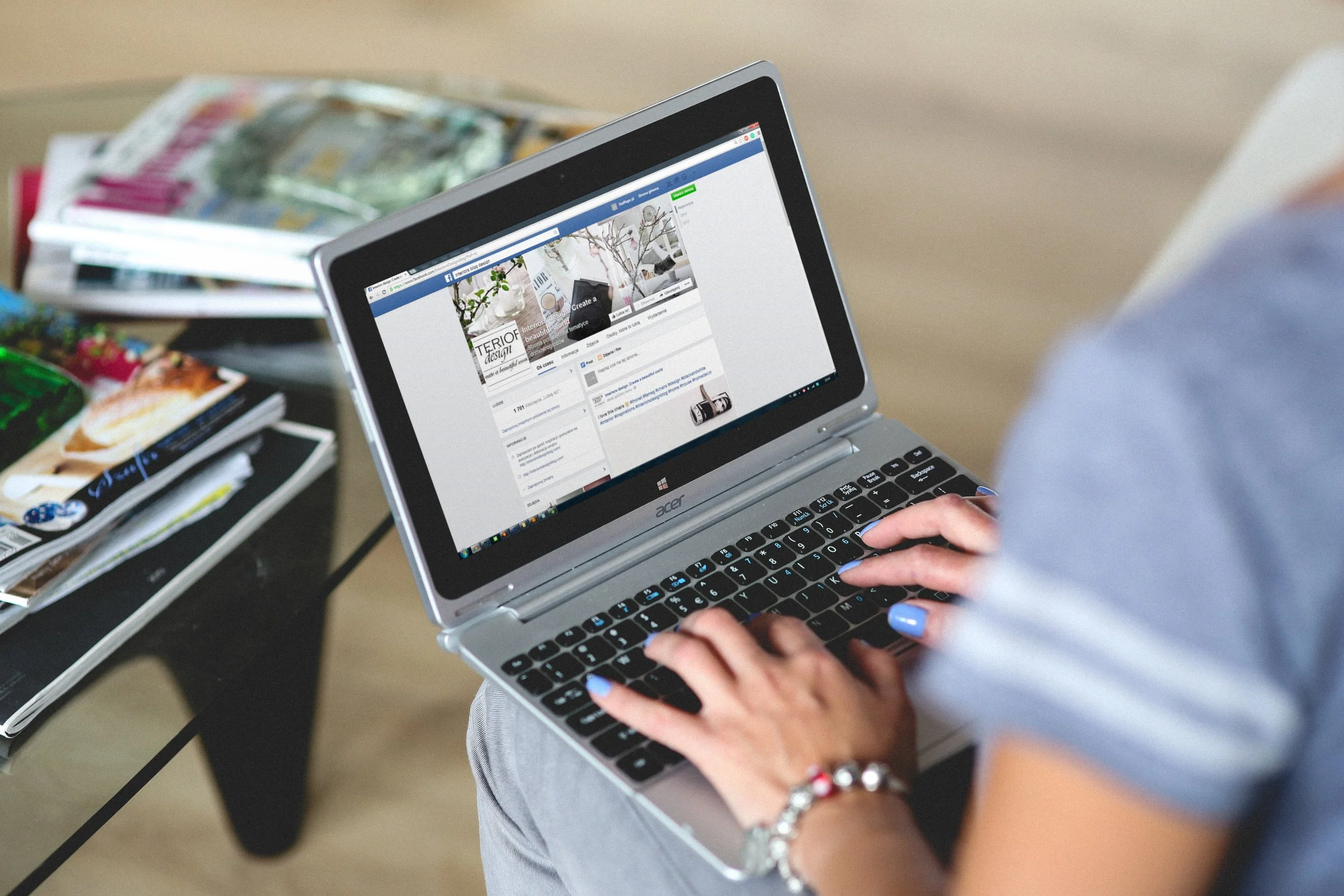
Facebook groups are a great place to find a remote job for the following reasons:
- People spend a lot of time on Facebook
- People are very responsive
- It's a good way to put a face to a name, unlike a CV or resume.
When I first started looking for remote work, I joined all the digital nomad/remote work/telecommute Facebook groups I could find. Here's a few (some are gender specific, sorry!):
1. Remote Work and Digital Nomads: 51,618 members
2. Digital Nomad Jobs: Remote Job Opportunities: 26,714 members
3. Digital Nomad Girls Community: 17,165 members
4. Freelance and Telecommute Job Leads 1, 722 members
5. Female Digital Nomads: 34, 558 members
6. Remote Jobs and Coworking for Digital Nomads: 1,691 members
8. Let's work remotely: remote jobs and digital nomad jobs: 19,723 members
9. Remote Work Hub: 5,262 members
10. Remote Work and Travel: 4,879 members
stats are correct as of August 2018
You have to be quick off the mark when applying, but scan these groups on a daily or weekly basis, and you'll soon find something that's right for you. Your dream job may feel like finding a needle in a haystack, but it is out there!
I'd love to know how social media has worked for you when creating your ideal work life.
If you'd like more specific advice in leaving your office job to become location independent, you can schedule a chat with me.
And if you'd like more resources, including a list of Youtube channels and inspiring books, check out Freedom Seekers.

The next frontier is intuition.
Humanity loves to explore unchartered territory...

Humanity loves to explore unchartered territory.
Elon Musk builds a spaceship, Usain Bolt breaks the 100m sprint record, CERN builds a Hadron collider. All marvellous physical feats.
We have explored, inspected, fragmented and dissected every piece — indeed, every atom of our ‘outer’ worlds. And yet, there is still more to discover.
But one area is only just starting to be acknowledged as a possible tool for evolution. We are only just uncovering and questioning something which is often hidden from our midst; which we can’t measure, weigh, or analyse.
Intuition.
Intuition is not used in the way modern science operates, although some organisations attempt to objectively study it. In recent times we’ve discovered that when we subconsciously spot patterns, the body starts firing neurochemicals in the brain and the gut. There is, after all, a little brain in the gut. It’s called the enteric nervous system.
But this is as far as it’s got. Neither science nor society has been able to translate that into practical experience — what it actually means for humanity.
Albert Einstein saw the beginnings of this when he was alive:
‘The intuitive mind is a sacred gift and the rational mind is a faithful servant. We have created a society that honors the servant and has forgotten the gift’.
This ‘gift’ is something that we all use, but many of us do not know how to harness it. It’s put down to one of those mysteries of human existence, like coincidences, deja vu or premonitions, but we hear people speak about it every day:
‘I don’t know why I chose her over the other woman for the job. I just had a gut feeling’
‘I can’t explain it, but I have a hunch that this is going to work out.
‘I just knew I would live here one day’
We have this explanation in the dictionary, of course:
‘Intuition: The ability to understand something instinctively, without the need for conscious reasoning.’
It arose in the mid 15th Century from late latin, and they used it to mean pretty much the same thing ‘to consider or to look at from within’.
Even the word itself ‘in-tuition’ supposes that we have some kind of inner guidance system.
Cool, our own internal GPS! But why don’t we use it more often, then?
Maybe we do for choosing romantic partners. But what if we used it for choosing the foods that we ate, the media that we consumed, the areas that we lived in and the people that we socialised with?
Why is intuition not used more in everyday life?
Because of course, our intuition can appear to be wrong. And what’s more, there is a crisis of trust which is seeping through modern day existence like a rising tide. This pervasive lack of trust also makes us doubt and question. It makes us fear.
Fear, in all of it’s forms, is antithetical to the intuition. Why? Because intuition is about sensing. It’s about feeling.
Intuition arises from listening to the body, fear comes from listening to the mind.
The other reason is that we need to be calm and relaxed in order to hear our intuition. After all, our instinctual responses seemingly arise out of nowhere -intuitions are often not sought, they arise spontaneously.
Dr. Gerd Gigerenzer, a German social psychologist and director at the Max Planck Institute for Human Development, told The New York Times that he didn’t like intuition because “it is not thought to be rational.” Plus, he added ‘it’s slow.”
If we’re really busy, we may not be really present to our life, and our intuition may well be compromised. We need to slow down in order to be present to our gut instincts. In fact, slowing down to hear my own intuition is one of the reasons why I love remote work. It allows me to ‘unplug’ from the system more.
Steve Jobs once said that intuition is more powerful than intellect, and I have to agree, because the inspiration for this article came to me through my intuition. The idea comes to me in a flash; then I have to use my rational mind to plan it out. I know it’s a good idea when I get excited about writing it.
What would the future look like if we all developed our intuition more? Who knows. Perhaps we’d have more trust in ourselves, more faith in our decisions and more understanding about what is good for us personally.
Developing our intuition is the new frontier for human evolution. Perhaps we’re at the end of what we objectively know, and now we need to start using our instincts as another way to gain knowledge. Kahlil Gibran puts it nicely:
‘When you reach the end of what you should know, you will be at the beginning of what you should sense.’