
8 Ways To Meet New People When Travelling and Working Remotely
Where do you start when remote working abroad? I’ve compiled a list of all the ways you can fill your social diary when working in another country…

Photo by Elle Hughes from Pexels
I see this post all the time on online digital nomad groups: ‘How do I meet people?’. You might think it’s fairly easy. And if you’re staying in hostels or coliving spaces, then it can be, but what if you’re flying solo without a huge network?
If you’re working on the road too, you’re not always going to have tons of time to sightsee or socialise, either.
So rather than spending hours trying to figure out where you can go and what you can do, I’ve compiled a list of all the ways you can fill your social diary, so you can kick back, settle into your new place and focus on getting work done.
1. Networking groups 🫂
If you’re doing business, why not kill two birds with one stone? You can meet new entrepreneurs. If you were in Berlin, for example, you could search ‘Berlin Networking’ and start marking your calendar with interesting events.
One good tip is to join a local Toastmasters International. It’s a public speaking organisation, and they have bi-monthly meet ups where you can hear hilarious and heart warming stories, push yourself out of your comfort zone, and get to meet new people.
If you’re staying in one place a little longer, you could also check out Internations — the online community where you can connect with new friends in over 420 cities worldwide.
2. Check out Meetup 🍸
Meetup is a great way to meet people, because there’s so many different types of meetups. Usually you can find something that will pique your interest.
From board game meetups, to cryptocurrency discussions and language exchanges, there is ample opportunity to meet someone in your new place of residence. Get that social diary booked up!
3. Local Events 🥾
Most local events are on Eventbrite. You will be able to find them by simply filtering.
In just 30 seconds, I discovered that there’s a hiking group in Malta that meets every Sunday, and organises guided hikes for groups for just 12.50 EUR every week. Nice.
As an aside, I find hiking a really good way to meet people. In the UK, I’ve tested out The Yes Tribe meetups and Freshwalks.
Photo by Helena Lopes from Pexels: https://www.pexels.com/photo/three-men-standing-while-laughing-1049317/
4. Facebook Groups ⛰️
By far the best way is to simply search the name of the place you’re staying, and then ‘Digital Nomads’.
For example ‘Digital Nomads Croatia’. This will be full of country -specific events and meetups.
If a place is particularly thriving with remote workers, don’t just search the country name — it’s always worth looking at the place you’re staying, too. For example, in Portugal you have Digital Nomads Lisbon, Digital Nomads Porto, Digital Nomads Lagos, Digital Nomads Ericeira…
If you’re female, you could also join the fantastic Digital Nomad Girls network, or for both genders, check out the general Digital Nomads and Remote Workers groups.
5. Bumble BFF 👭
Bumble BFF is a highly personalised way of meeting new people. You can join for free, and pay a premium if you want to message people quicker.
You can personalise your profile for male or female friends, and the app asks interesting questions such as ‘Who would be your ideal dinner guest?’ and ‘What tv show or film do you quote from the most?’
It’s good because you’re more likely to meet someone that matches your interests. You swipe left or right, and when you’re matched, you have 24 hours to start chatting to each other for free.
6. Browse local advertisements 👀
You could also simply go on a walk, and check out the flyers and posters around town. Places like bookshops often have flyers scattered around, and independent cafe shops can also showcase upcoming events — a local yoga retreat, or a music event.
Take a walk with the sole aim in mind of collecting flyers. Or, just frequent public places — such as the local library, tourist office and art gallery.
I was in an art gallery at the weekend, where I picked up the below flyer — looks pretty interesting!
7. Search function on socials 🔍
Communities online will invariably share events that are coming up — fetes, local festivals, places of interest, open days, art exhibitions — the choice is endless.
I’d recommend doing a search of the place you’re staying and looking at the pages. You might want to type ‘What’s on in Bansko’ for example, and see what pages or groups come up on Facebook. You can do the same with hashtags on Instagram and Twitter too.
Usually, you’ll find interesting things that pique your curiosity, and you’ll end up following a nice coworking spot or a new bar you want to try.
I’ve found Facebook to be the best in terms of events. You can filter it by date, too. So you could search ‘Bansko’ and filter it by ‘this month.’
By joining ‘Brighton Girl Dance Group’, I’ve just booked my first free class to dance like Beyonce next week to ‘Break My Soul.’ Win.
8. Nomad List 👨💻
Of course, I couldn’t write this article without mentioning Nomadlist — created by one of the world’s most knowledgeable nomads (and a personal inspiration of mine, Pieter Levels).
Nomadlist gives you access to tons of digital nomads around the world, including detailed information on the top remote working spots around the world. There are lots of meetups in some of the most frequented hotspots for remote workers.
If you’re bored of where you are or need some travel inspiration, why not have a browse of the site to decide your next destination? They do charge an access fee, which is around $200.
Create your own! 🗓️
Of course, if you’re super stuck — you can’t find things you like to do or people to do it with, you could just make your own and advertise it on all of the places listed above.
I created a couple of ‘beach day’ meetups in Gran Canaria as there’s really nothing better than sunbathing, listening to music and having snacks with some awesome people!
But you can create whatever takes your fancy — dinner at the restaurant you want to try, a comedy night, a shopping trip.
If you’re interested in learning more about creating an alternative lifestyle, check out Freedom Seekers

How To Work Like a Lion and Take Most of The Week Off
Naval Ravikant has some advice on high octane work sprints…

Why Naval Ravikant suggests high octane work sprints
“We’d like to view the world as linear, which is, I’m gonna put in eight hours of work, I’m gonna get back eight hours of output, right? Doesn’t work that way. Guy running the corner grocery store is working just as hard or harder than you and me. How much output is he getting?…Outputs are non-linear based on the quality of the work that you put in. The right way to work is like a lion.” — Naval Ravikant
Minimum effort, maximum reward. That’s the holy grail, isn’t it? The gold we are all searching for as entrepreneurs.
As someone who is interested in the idea of energy conservation, I definitely don’t want to be slogging my guts out for 9 hours a day when I can get better results and make just as much money in 3 hours. I bet you do too.
I admit it — I’m lazy. I love writing, and I love working, but I don’t want to do it all the time. I live up to my star sign, the Leonine Lion of the zodiac.
Lions don’t work often
“From morning to late afternoon, when the African sun is hot to the point of unbearable, lions can be found lounging and relaxing. Lions may rest about 20 hours a day” — AnimalsMom.com
As Naval says, perhaps we have got the concept of work all wrong. Perhaps what we really need to do is be more focused with our energy, rather than our time.
Just like a Lion, perhaps it’s actually possible to spend most of your day napping, if you want.
But society isn’t really set up that way. We don’t all think like Naval — in fact, our culture is the opposite.
Maybe the first thing to really do is believe that it’s possible. Perhaps to believe that you can earn £10k a month for working 3 hours a day.
Once the idea is planted in your mind, you’ll start to look for opportunities as to how this can show up in reality.
How to get the lion’s share of ROI
This approach is nothing new. You might have heard of a concept called the Pareto principle, which is the observation that 80% of consequences come from 20% of causes.
To get the lion’s share is to firstly determine the hunt.
You are looking for those things that will drive your results — either in terms of community building, or solid ROI.
So in order to get focused, it’s wise to really look at what drives those outcomes. Track back and research how your clients found you, and what services or products you really should be paying more attention to.
What are those tasks that are the equivalent of a lion’s dinner — those that provide sustenance and value long after you’ve initially engaged?
James Clear makes this point about concentrated focus:
(1) Make a list of the 10 things you spend the most time on.
(2) Circle the two that truly drive your results. Do more of those.
(3) Look at the others. Eliminate ruthlessly. Automate or outsource what you can. Press pause on the rest.
(4) Repeat
— James Clear
Carve out specific ‘hunting’ time
We all know that in order to stay sane in our digitally overloaded work, we need to minimise distractions. That means setting clear boundaries.
If you work a 35 hour week, it’s entirely possible that a radically focused, high octane 20% of that time could yield massive results — if you’re focused on the right things.
How much does that 20% equate to? Just 7 hours a week. That’s just one solid day of going all in.
Perhaps you set an out of office. Perhaps you completely switch off your phone. Whatever it is, try and become indistractable, like Nir Eyal advocates.
No gossiping with your colleague whilst you’re in your 20%. No ‘cheeky scroll’ on Instagram.
Just like a Lion, when it’s time to hunt, it’s time to hunt. There is no protecting cubs, washing themselves or mating.
Their eyes are nowhere else. Their minds are single-pointed in the pursuit of their aim — dinner.
A hungry lion never loses sight of its target
For that 20% of your time, let your mind be completely filled by what you are looking to create.
Naval calls the target a ‘desire’. He says “Pick one desire, and one desire only. The universe will help you get it. Let go of everything else.”
It could be something like ‘I want to earn $2000 a month from Medium writing, and I will write there solidly for two hours a day’.
Napoleon Hill said a similar thing — that we need a ‘definite chief aim’.
“What is a definite chief aim? It is a singleness of purpose. It is about finding a burning desire, a dream or a goal that propels you to action. Just thinking about it gets you excited.” — How Developing A Definite Chief Aim Has Changed My Life
This focuses both the conscious mind and the subconscious, as it is something you keep on referring back to.
You then give your mind a very clear picture of what your ‘dinner’ (note: success) looks like, and spend that 7 hours or whatever time you choose completely consumed in action, whilst you’re relaxing the rest of the time.
Go all in for a small amount of time
Once you’ve figured out the right things to work on, Naval encourages us to work as hard as you can:
“It’s more like a lion hunting and less like a marathoner running. You sprint and then you rest. You reassess and then you try again. You end up building a marathon of sprints.” — Naval
And that means that your 20% is when you are on fire. It is when you have lit the figurative match underneath your ass and you are sprinting, like the lion, towards your goal.
Of course, this high octane way of working actually makes you quite tired. It burns a lot of energy in a short space of time, because you’re firing on all cylinders — and giving the very best of yourself to your work.
You may not make bank straight away. But that’s not the point — the momentum of sprinting is.
Remember, Lions don’t stress about a failed hunt. In fact, a lot of their hunts are unsuccessful. Lions can only hunt successfully on their own up to 17% of the time.
But they are laser focused on getting that snack, and so try again the next day.
Take a cat nap- you’ve earned the active rest
The period after high octane work is about active rest, a term mostly used by athletes.
Active rest is all about having mental freedom from your target or goal.
Put simply, you mentally ‘let go’ of what you want to achieve and just focus on nice stuff instead.
It doesn’t always have to mean you lay horizontally for the next 16 or 28 hours, either — it can mean going for a walk in nature, reading a book, spending time socialising — anything that gives you energy.
“Lions take active rest periods that enable them to rapidly exert their energy reserves in the moments when an opportunity presents itself. These animals are the epitome of lassitude during most of the day. However, they still manage to hunt prey that is multiple times faster than them.
The key to achieving this lies in their overt laziness through most of the day. It is precisely this skill, which is oftentimes vastly undervalued in our society which encourages us to deprive our energy reserves every single day.” — Serafin Lion Engel, entrepreneur
It’s your business. It’s your life. Why not break the mould and try periods of overt laziness, just like a lion?
Conserve your energy so you can pounce on big opportunities when they arise.

How To Achieve The ‘Flow State’ More Often
How do you tap into the elusive flow state more often? I explore that gorgeous feeling of flow, when you’re just ‘in the zone’…

Hint: It’s easier than you think
Tapping into Flow
You sit down to write. Your desk is clean and clear. It’s Monday morning, you are looking out the huge window at a beautiful tree. You feel sharp, focused, energised.
What feels like a glossy waterfall flows through your fingertips, and as you’re typing, you glance up to look at the clock after finishing your coffee.
Two hours have passed, and it was a breeze. In fact, you didn’t think you’d been writing that long. You’ve pretty much finished what you needed to do.
The Flow State
You were in the ‘flow state’ — which means you were seriously in ‘the zone.’
Flow States have been gaining so much attention in the media as of late, even well-known DJs Above and Beyond have joined the movement, producing tracks to induce the flow state.
Named by Mihály Csíkszentmihályi, the flow state is defined as:
“the mental state of operation in which a person performing an activity is fully immersed in a feeling of energized focus, full involvement, and enjoyment in the process of the activity. In essence, flow is characterized by complete absorption in what one does, and a resulting loss in one’s sense of space and time”.
Specifically, the principles of the flow state are a merging of self and experience- whereby we become so merged with the present moment, we are simultaneously action and awareness.
In short, then, our being and doing become one. We become writing, or, we become the dance, we become the golf swing, we become the climb — or whatever it is that gets us into this optimal ‘flow state’ of mind.
How to get in the flow state more often
Low grade physical exercise
Steven Kotler says your prefrontal cortex turns off in flow — this basically means your ‘monkey mind’ is at rest, your brain is switched off.
To help stimulate creativity and induce a flow state, it can literally be as simple as pulling on our sneakers and going for a walk — something that research has termed ‘exercise induced transient hypofrontality’.
‘You can walk yourself into a low-grade flow state…it’s a great reset. If you’re doing something creative and you didn’t get into flow and it was frustrating, this is a way to reset and start over”
Steven Kotler speaks to Joe Rogan on flow
Meditation as a gateway to the flow state
Sura Kim, a Meditation Teacher who left the hustle and bustle of Wall Street to study the power of mindfulness and meditation, believes that meditation is a gateway to the flow state:
“Flow is truly a state of consciousness, and I would say it’s a state of consciousness that feels like you — like your true self. You don’t feel like you have to hide, or be someone else, or say the right things — it’s being your truest most vulnerable self, engaging in those things that you love. It’s a state of consciousness where you’re completely engaged, immersed, absorbed- you’re connected fully as your whole self… you tap into a state of oneness and unity” — Sura Kim, taken from my interview with her on synchronicity and the flow state
Sura believes that the flow state is a place of immense power — because there is no separation between us and the experience — we become one in that moment.
There is no thought; only presence.
Love takes us into the present moment
So in order to get into resonance with the flow state, it makes sense then, that we should at least somewhat enjoy what we are doing, or who we are being.
That’s going to get us attuned into the now.
If we’re feeling good, we’re feeling in a state of love about the task at hand.
So what about when it comes to work? It’s quite simple, really.
Enjoy what you are doing to induce flow states
Anything that brings us into loving awareness with the moment can induce a greater receptivity for a flow state experience.
In some of the Positive Psychology literature, a flow state is the hack to enlightenment, and is compared to a state of love.
In fact, Leo Babuta ranks ‘doing what you love’ as number #1 on his list of 9 steps to achieving flow and happiness.
Find your individual flow state
I think one of the best ways to encourage flow is to keep a flow diary — when did you last feel really ‘in the zone’? When did time ‘slip away’? When did you last feel fully immersed in what you were doing, and didn’t feel bored or like your mind was elsewhere?
These are all keys to your own personal experience of the flow state. By charting them and making lifestyle changes, you’ll have a much better understanding of what flow means to you.

Avoiding WFH Burnout
Feel like your life is an endless loop of Zoom calls, cups of coffee, walks in the park and Netflix?

Avoid Work From Home Burnout
Feel like your life is an endless loop of Zoom calls, cups of coffee, walks in the park and Netflix?
You’re far from alone. Many people are finding working from home during the pandemic somewhat stressful. Although recent research by Microsoft suggests we are largely happier from home (that’s a huge 87% of us), many employees feel stretched in what they need to deliver.
More than 69% of us report feeling burnt out or exhausted from managing our workload at home during the pandemic.
Studies also show that if you’re a parent, it can be even more challenging.
An ITV poll found that 45% of WFH parents feel burnt out, 26% feel like bad parents and 30% often feel lonely.
So, how do you combat those feelings of work from home burnout?
Tip 1: Set Clear Boundaries
Don’t blur the lines of home and work. Working all hours of the day and night is a recipe for burnout. Shut your ‘bedroom office’ door at 5pm, switch off your work phone at weekends, and turn off any email notifications after 7pm.
Forbes suggests: “When someone tries to push back and schedule a late-night meeting, don’t be afraid to stand in your values: “I am unavailable during this time. How does [insert alternative date(s) and time(s)] work for you?” There is no need to explain yourself and dive into the details.”
Tip 2: Use a Timer for Work
When working from home, it’s easy to get caught up in bad habits, leading to back and neck problems. This can add to feelings of burnout or emotional stress.
Why not try a work timer? Many remote workers have had success by using the Pomodoro technique. This means you work in sprints of 25 minutes, separated by short breaks which can help keep your energy levels high.
Tip 3: Spend More Time In Nature
Studies show that being in greenery can lower our levels of cortisol, the stress hormone.
Since COVID-19 hit, many employers are looking into biophilic workplace design — the concept of using more plants in the workplace to help us feel happier, and more relaxed. Surround your home office with plenty of natural light and plants.
Tip 4: Embrace The Unexpected
When in a confining situation, it’s important to get creative.
Make a list of local places you’ve never been to before- a quick scout on Google Maps can offer some inspiration. Even taking a walk down different streets will activate new pathways in your brain, helping with neuroplasticity and cognitive flexibility.
You’ll feel better if you manage to insert some novelty into your working day on a regular basis.
Tip 5: Don’t Forget To Laugh
The pandemic has been a heavy topic for us all. But finding the funny side of life can be like a soothing balm when we’re feeling frazzled.
Seek out funny videos or some comedy to watch at the end of the working day.
Humour can make us more resilient, resourceful and creative — much needed resources in these testing times.

How A ‘Writers Hour’ Can Keep You Accountable
The process is simple; we set our writing intentions and open up whatever we’re working on. We then mention what we’re working on in the chat box, with the rest of the other writers.

Small actions, repeated daily, yield the best results
I don’t know how I found The Writers Hour, perhaps it found me.
From November - March, I logged on almost daily to a Zoom call with upwards of 300 writers, and I haven’t wanted to stop.
The process is simple; we set our writing intentions and open up whatever we’re working on. We then mention what we’re working on in the chat box, with the rest of the other writers.
One of the hosts reads an inspirational quote to get the creative juices flowing. It might be something like this:
“From the day my husband told me he was leaving, I was writing — a lot. I wanted to make something of my altered life, to break into song, to cry out on paper. Reminding myself that no one else would ever see what I wrote — with my ballpoint pen in my wide-ruled spiral notebook — helped me be less censored and less afraid. Later, I could decide to show or not, because whether anyone ever read it was not the most important thing.
Writing or making anything — a poem, a bird feeder, a chocolate cake — has self-respect in it. You’re working. You’re trying. You’re not lying down on the ground, having given up. And one thing I love about writing is that we can speak to the absent, the dead, the estranged and the longed-for — all the people we’re separated from. We can see them again, understand them more, even say goodbye.”
–Sharon Olds (chosen by April)
It really makes you think, and gives you that inner fuel for the next 60 minutes. Around half of the attendees have their camera on (it’s optional, but it does show presence), and we all raise a cup in unison, toasting the beginning of the next fifty minutes.
We write in silence together, until 5 minutes to the hour.
Writing in this way serves to keep you accountable in a few ways:
It’s regular
Three scheduled writing sessions daily, Monday to Friday, means there’s no excuse for missing an 8am morning sesssion. If you’re someone that struggles with setting a habit like me, having some regularity in your diary will help you forge a writing routine.
You’re visible
No one is making you show up — it’s your choice. But you soon find that the rewards of showing up and belonging are far greater than hiding away in a corner to write. You don’t have to use the camera, but there’s something very cohesive about seeing a gallery of faces, all deep in thought.
Opportunity to get in flow
Every session is different. Sometimes, you might only be able to scrape together a few hundred words. Another time, you may find that steam is coming off the keyboard — over 1000 words down and they keep flowing. The hosts gently whisper you back to the room, although if you’re in flow you’re encouraged to keep going — they don’t mind.
It makes you feel like a writer
As Benjamin Hardy says, if you want to change your life you need to change your identity. And as James Clear says, if you want to change who you are then work on your daily habits. I’m not ashamed to admit there was a frisson of inner excitement when Janet Street Porter was once writing on our Zoom call. There are other well respected writers attending the sessions, and theres something edifying about writing alongside them.
Writing can be an immensely lonely endeavour — especially so under government lockdown. There is something quite beautiful about writers pulling together and showing up, no matter how they’re feeling, knowing that showing up is half the battle.

Dear Sugar, we're breaking up
Dear Sugar,
You’re sweet. (So, so sweet). And I love being around you - a bit too much, actually.

Dear Sugar,
You’re sweet. (So, so sweet). And I love being around you - a bit too much, actually.
In fact, I love being around you so much that I never stopped to think whether you were actually good for me. I might have even been a bit addicted to your presence in my life.
But it’s time to be honest. I don’t think you’re doing me any favours when it comes to my health.
And, as much as I love you, I am going to have to put strict boundaries in place when it comes to you and I.
I can see you, but only very infrequently now. Because I’ve realised that I’m actually healthier without you.
What does this mean?
Sorry Sugar, it means we are breaking up.
I’ll miss you, this will be so hard, but I need to do it for myself. xx
If I could write a letter to Sugar, it would be something like this.
I recently saw this post on my Pinterest about sugar that made me laugh:

Why the vitriol against sugar, I hear you ask?
Well, for a number of reasons, really. Sugar has absolutely no nutritional value, and yet wreaks havoc on the body. Consuming a lot of sugar is your best route to an early grave, essentially.
Hidden in plain sight
The thing about sugar is that it is so delicately woven into the modern Western diet that extricating yourself from it is pretty challenging. Take our love of coffee shops, for example. Coffee is a great aid for the liver, but these shops are also like crack dens for sugar lovers.
So many are oblivious to exactly how much sugar goes into just one latte.
“The "venti" (a pint) Starbucks Signature Caramel Hot Chocolate made with oat milk but topped with whipped cream had the most.
It contains 23 teaspoons (93.7g) of sugar and 758 calories, which Action on Sugar says is as much as three cans of Coca-Cola or four white chocolate and strawberry muffins.”
Okay, so maybe this particular syrupy offender is pretty obvious. But the thing I find astonishing is that when you go round your local supermarket, you’d be hard pressed to find products that aren’t loaded with sugar. Even things that you think wouldn’t be sugary, or wouldn’t need sugar, have some sugar in them.
Because the sweeter the food is, the more it sells.
“in 1800, an average American would have lived and died never having encountered a single manufactured candy, let alone the array of sugar-sweetened yogurts, snacks, sauces, dressings, cereals, and drinks that now line supermarket shelves. Today, that average American ingests more than nineteen teaspoons of added sugar every day” - New Yorker
It’s addictive
The insidious nature of sugar is that once you’ve had it for a while, you start to crave it.
Check out this Ted talk, Sugar is not a Treat.
What does processed sugar do to the body?
Well, a lot actually. Whilst I’m not here to become an anti-sugar evangelist, there’s ample studies to suggest that too much sugar can contribute to:
poor liver health
diabetes
low mood
poor energy levels
insulin resistance
poor gut health
inflammatory conditions
acne
weight gain
If you take just one of these conditions listed above, we are talking millions of people whose symptoms may improve through reduced intake of sugar. Loading our body with sugar is like putting diesel in a petrol car - our bodies are just not made for it.
I’ve never been massively healthy until recent years. I was brought up on frozen foods and ready meals, and my family always have a stash of sugary treats somewhere in their house. I remember when my nan was ill once, she had a stash of cake bars by her sick bed for sustenance, as I gently tried to encourage her to replace them with fruit.
As with all these kinds of health topics, the proof is in the (sugar-free) pudding. Gradually reducing your intake and swopping with healthy alternatives (think cinnamon on top of porridge instead of honey), will help your body to transition.
One thing I’ve noticed is that when you start to consume less sugar, you notice more when things are really sweet - your palette can change as you gradually become accustomed to eating healthier (choosing an organic tomato soup, for example, instead of a tinned one with added sugar).
So Sugar, it’s time we created some serious distance between us - I’m afraid you do more harm than good.
This content is not intended to be a substitute for professional medical advice, diagnosis, or treatment. Always seek the advice of your physician or other qualified health provider with any questions you may have regarding a medical condition.
Note: This article contains no affiliate links

5 Wellness Products I'm Loving: Nourish Your Body
In pandemic times, it's important to look after your wellbeing.
Here's my pick of natural health products I've been enjoying so far this year.

This content is not intended to be a substitute for professional medical advice, diagnosis, or treatment. Always seek the advice of your physician or other qualified health provider with any questions you may have regarding a medical condition.
Note: This article contains no affiliate links
If there’s one thing I love, it’s trying new wellness and natural health products.
After having a car crash in 2014, being hospitalised with Guillain Barre Syndrome in 2016 and an operation to remove Endometriosis in 2017, my body’s been through the wringer a bit, to say the least!
Ever since, I’ve been on a healing journey.
I’m experimenting with my diet (I’m sure a blog post will come on that one!), working out how to balance my hormones (more on this too!), and how to replenish some of the lost vitamins and minerals I’ve lost through illness and poor gut health.
What I do know, is that everything is connected. The micro affects the macro.
That stress you feel ends up affecting your gut. It ends up disrupting your cortisol, which in turn leads you to gain weight. An imbalance of the gut microbiome through sugary foods can contribute to brain fog, tiredness, poor digestion... and... well, it’s a complex pattern to unravel with so many factors.
But the one thing that has worked for me, on a consistent basis, is trying products that are as close to nature as possible.
I believe that we have become so disconnected from the natural world that our body and mind are reacting. We are deeply sick as a species, in mind, body, and soul. A lot of us are unhealthy - with low energy, high stress levels, poor sleep and a disrupted gut. My opinion is that in order to be the healthiest we can be, we should really be living with our feet on the bare earth, getting plenty of sunlight and exercise, drinking fresh spring water and eating organic foods. But in most modern countries, that’s not always possible.
So as we're confined and going out just once a day, it's important to nourish ourselves in these pandemic times. I love experimenting with different natural products and wellness treats.
Here are the items I’m finding helpful at the moment.
My friend gave me this to try and I love it. I spray it on the soles of my feet before bed. Transdermal absorption always works better, especially so if you’ve just had a bath because your pores are open. I get into bed, wrap myself in my duvet like a little burrito and spritz my tootsies. It’s lovely. Magnesium helps you sleep better and it's also great for sore muscles and any tension.
What the research says: The jury's out on this one - whilst there are hundreds of anecdotal reports, there's also many research papers that say transdermal absorption isn't actually a thing. However, Cardiff university has studied the effects of transdermal magnesium, and The Journal of Integrative Medicine has found it significantly improves symptoms of fibromyalgia in one research study.
Yes, another magnesium product. But I love it! I could wax lyrical all day about how beneficial Epsom Salt baths have been for me. When all my nerves were damaged after GBS, the only thing that would make me feel better was to soak in about 1kg of Epsom salts. It seems to revive you, somehow. It also makes you super relaxed, perfect if you get neck and shoulder tension like me. Read up on it before trying though- you can't use if you have low blood pressure.
What the research says : Whilst there are few studies to back it up, feeling rejuvenated after an Epsom salt bath could just be attributed to the placebo effect. But hey, that's fine if it works for you - the placebo effect is a very real phenomenon.
I harp on to anyone that'll listen about just how good these tablets are for your digestion. Allicin is a compound from garlic that's been crushed, and these are the synthesised form of it. They've been amazing when I picked up a number of different tummy bugs from travelling in Asia.
A lot of people know how pharmaceutical antibiotics can really mess with your gut health. If you have to take them for anything, it can be a real struggle getting your digestion back working effectively, leading to bloating issues. If you have anything like this, you feel you're fighting a losing battle, especially if you consume gluten, dairy, sugar or alcohol on a regular basis (and lets face it, it's hard to cut out all of these!)
What the research says: The research for Allicin in its pure form is positive, with one stating that 'Allicin in its pure form was found to exhibit i) antibacterial activity against a wide range of Gram-negative and Gram-positive bacteria, including multidrug-resistant enterotoxicogenic strains of Escherichia coli; ii) antifungal activity, particularly against Candida albicans; iii) antiparasitic activity, including some major human intestinal protozoan parasites such as Entamoeba histolytica and Giardia lamblia; and iv) antiviral activity.'
I could probably write an entire post on the benefits of castor oil in general (and it’s incredible hair thickening properties!) but I use it mainly for reproductive health and to break up any fibrous tissue I may have after ovulation. Creating a castor oil pack is fairly simple and easy to do, and it’s really nice to just lie there with a warm belly whilst you chill out and watch something for half an hour. All you need is the oil, a muslin cloth, some clingfilm to secure it, a hot water bottle to place on top, and a towel to lie on.
What the research says: Castor oil packs have been used for centuries. Research says it is effective for digestion, and a number of studies suggest it is a potent cathartic aid.
I have only this year found out about the amazing benefits of black strap molasses.
You can get them cheaply from your local health food store, and they’re a sticky, gooey like black substance that looks a little like molten tar! It smells of bonfire toffee, too.
I got a jar because it’s fantastic for building iron in the body. It’s made from the practice of sugar cane refining processes, but is jam packed with nutrients, unlike refined sugar. I think we will be seeing this in our foods and drinks in hipster cafes in the years to come! I drink a tablespoon in hot water, it’s not too bad in terms of the taste.
Research says: If you're looking for an alternative to refined sugar, black strap molasses have been found to have the highest level of antioxidants.
So that’s my top health and wellness products I’m loving at the moment.
Prioritising wellness is one of my top values. I think we should all be treating our body with gentleness, respect and kindness. It is our temple, and does so much for us. It is a life generating organism that we just can’t take for granted!
Stay tuned for more wellness and health blogs from me.
If you’d like me to write about your natural health product, please get in touch.
#wellness #health #naturalhealth #organic #wellnessproducts #wellbeing #naturalmedicine #ecommerce

Letting the light in: micro wellness tips to get through lockdown
When the world feels like it’s fallen over, and you’re confined to the same four walls 24/7, finding the energy to do anything can feel incredibly difficult at the moment (if you’re living in the UK in the midst of winter)…

Photo by Ricardo Esquivel from Pexels
When the world feels like it’s fallen over, and you’re confined to the same four walls 24/7, finding the energy to do anything can feel incredibly difficult at the moment (if you’re living in the UK in the midst of winter).
Maybe you’ve only got enough energy to binge eat Kettle chips and lay on the sofa watching Netflix — and that’s okay.
After working remotely for almost six years now, some of which when I was pretty unwell, I had to find tiny ways to feel more energised when everything felt bleak. I was isolated, and without social contact — it was easy to get down. When my body was healing, I had to just stay indoors and hope for the best.
It’s not your time that matters; it’s your energy.
Without energy, you can’t create. So at the moment, as things feel like they’re crumbling around us, many of us are turning inwards and going into energy conservation mode.
Here’s a few ways I’ve found that bring a little bit of light and vibrancy into your day.
Introduce nature into your space
Never underestimate the power of some fresh cut flowers or plants to brighten you up if you’re feeling down. If you’re living in a concrete jungle, creating a space that feels close to nature is inherently energising, according to biophilia research.

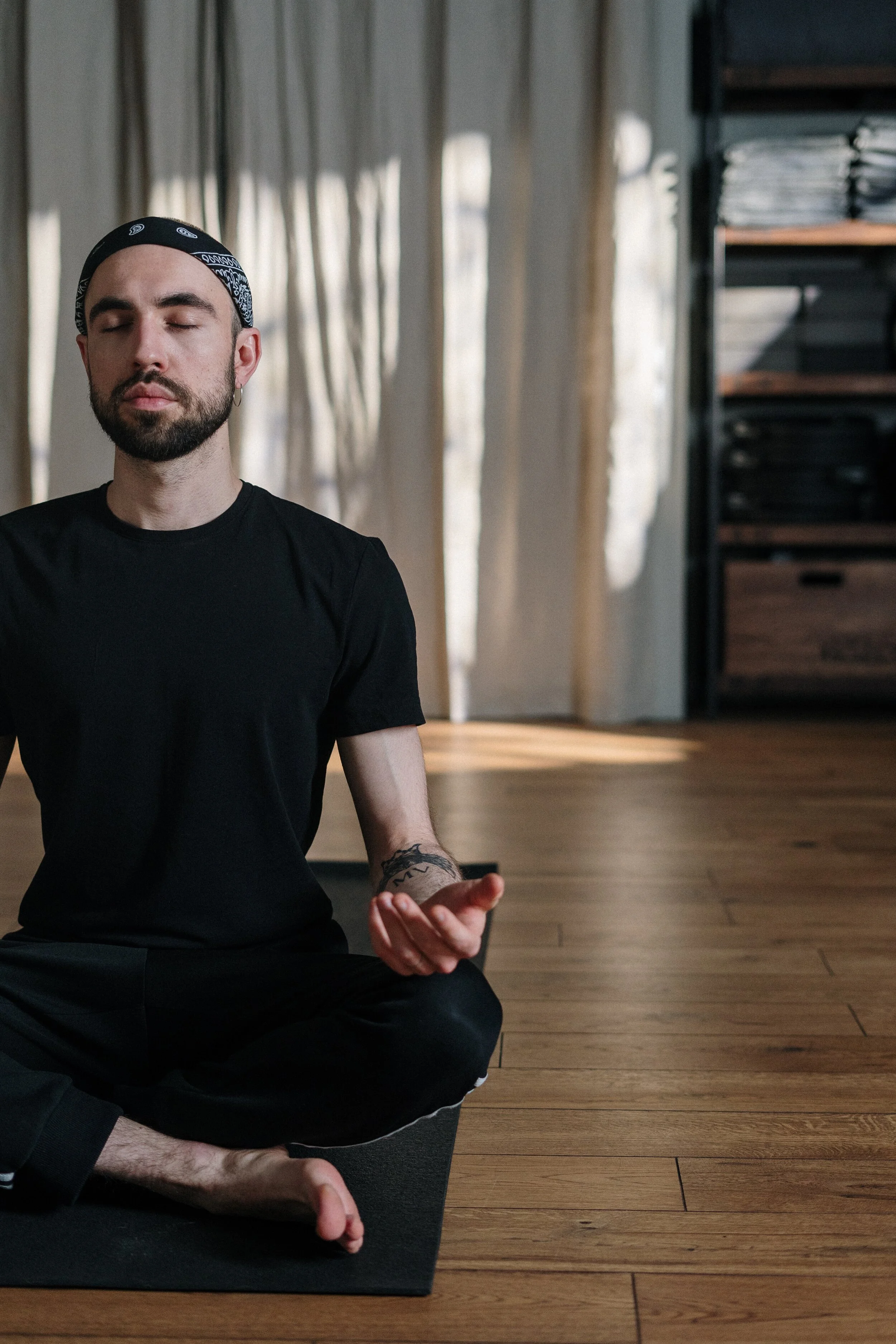
Photo by cottonbro from Pexels
If you’re feeling especially frazzled after a long day of back to back Zoom meetings, a meditation session can bring you back into the present and give you a boost of energy before the evening.
To raise your energy, frequently clear the mental decks. Give your brain a rest. Clear all of those mental thought cookies, and clear the cache of your overstimulated brain.
Walk in beautiful spaces
If the sun is shining, a walk in nature is the best prescription. Let the sunlight fall on your face. Let it warm your skin.

Photo by Miriam Espacio from Pexels
If you can head near trees, do that. Breathe in the oxygen they give off. Look at the leaves. Feel your toes crunching on the frosty ground.
Look up at the sky. Notice the patterns of the clouds. See the tiny droplets of dew on the grass.
Notice the beauty.
Make a point of seeing how much beauty you can pay attention to in a 30 or 60 minute walk.
Let go of worry
If being in nature is one of the most energising things we can do, worry is one of the most draining. It literally saps us of our life force. We can see it on our faces. Our bodies scrunch and tighten. We get more aches and pains.
It’s not easy to let go of worry, especially in today’s world, but we can try to reframe our thoughts and realise we have a choice about what story we choose to tell ourselves.

Source: https://www.teacherspayteachers.com/Store/Wholehearted-School-Counseling
If you can’t control it, you deserve freedom from thinking about it.
Breathe
I found a fantastic YouTube channel recently, called Take A Deep Breath. Obviously since Wim Hof’s popularity has exploded in recent times in the Western World, many are using breathwork to experiment with raised energy.
Deep breathing is SUCH an energiser, and it’s a really exciting and fascinating area of exploration for the wellness field. (Not to mention it’s potentials for increased arousal).
When you’re feeling murky and low on energy levels, try setting aside 20 minutes for deep breathing. I love deep breathing whilst watching something on Youtube or tv. I usually try something similar to the box breath — in for five, hold for five, out for five, hold for five.
https://www.youtube.com/watch?v=v7F4P45I7Xo
Set boundaries on draining activities
I was on a workshop the other day, when people were talking about what gave them the most distractions and drained their energy.

Photo by Jess @ Harper Sunday from Pexels
Out of over 200 people, the chat window was buzzing with the same comments -
‘My phone’ ‘Social Media’ ‘Notifications’ ‘Doom scrolling’
Just like any unhealthy activity, person or situation, you’ll know that it’s unhealthy by how you feel afterwards.
Is it sucking the life out of you?
Pumping you full of fear and stress?
Do you feel better restricting it to very small doses? Then do that.
After all, doomscrolling is so 2020.
Clean your space
Nothing is more stress-inducing than piles of laundry and lots of dirty dishes. When you’re fed up, bored and just want to GO OUT, I get that the last thing you want to do is to have a cleaning session.
But to have things sparkling clean will energise you. To have your space refreshed will make you feel better, even just a tiny bit.

Photo by Tatiana Syrikova from Pexels
Why not mix up your furniture? Move your bed somewhere else, like you used to as a kid? I’ve found that physical change always brings renewed energy and a fresh perspective.
Introduce scents and new textures
Adding scents can really change the mood of the same four walls. I haven’t QUITE got the spare funds for a Moodo, yet there’s something intensely captivating about trying different scents to give you a bit of extra pep. Frangipani to remind me of Bali. A Neroli face oil. Lavender on my pillow. A zesty lemon to use first thing in the morning.

Photo by Jess Vide from Pexels
The smell of cut grass. Your morning coffee. You can get just about any scent bottled these days, so if you’re climbing the four walls under lockdown, try experimenting with your olfactory senses.
Textures are also a good shout. Think Hygge like atmosphere — fluffy socks, a weighted blanket, an orthopedic pillow.
Whatever feels nourishing and supportive.
Feel
Lastly, If you just need to spend a day in bed feeling sad, take the time to do that. Crying can actually be good for you. Don’t resist or numb your feelings, feel what you need to, even if that is feeling rather sad right now.

Photo by Ksenia Chernaya from Pexels
What you resist persists, so acknowledging what you’re feeling can actually help you feel energised in the long term — you’re not spending all your energy running from those uncomfortable feelings.
Remember, we’re all in this together — no matter how big or small, we’re all feeling the collective grief.

The importance of journaling in a pandemic
How morning pages can be a helpful way to process the craziness of the world right now…

Photo by Edwin Hooper on Unsplash
This is going to be a different kind of post. One where I don’t think too much, and just let the words flow.
Last week, I joined the fabulous Writer’s Hour every morning at 8am-9am. I decided that instead of writing an article or attempting a novel, I was going to try morning pages. Something I had heard about before, but not really engaged in.
If you’ve never heard of it, morning pages is essentially journaling, first thing in the morning.
It is allowing the words to flow out of you and onto the page, it doesn’t have to be anything especially exciting or groundbreaking.
It could be reflections on something you’ve watched on TV, how you’re feeling about lockdown, or just a description of your day and the things going on around you.
I have to admit, I really love this kind of writing. There’s something really freeing about sitting down and just allowing your stream of consciousness to just flow out onto the page.
Every morning, I had a really focused hour - and my fingers really didn’t stop tapping the entire 60 minutes. My word count was up to about 1600, which is pretty good for an hour.
The main thing with morning pages is to release yourself from judgement- don’t worry about if the words are coming out wrong, or you think ‘why should I write about that? No one will find it interesting’ - that’s not really the point.
The point is to be fully present in the moment and allow whatever comes out to come out. Much like taking the lid off a bottle, and just seeing what’s inside.
This week, I’ve temporarily moved, so I didn’t join the writers group at all this week - I’ve been pretty exhausted. I plan to next week, but having a week off has been really beneficial to reflect on the benefits of morning pages, or journaling.
It’s fair to say we all have a lot on our plates right now. As I write, my grandma has had pneumonia, and is just out of hospital. My sister is also off work self isolating, my nephew is being homeschooled, and my stepmum is working from home - all because they have been in a building where someone has had the virus.

That’s a lot to process in one week. That’s just my personal news - the top headlines in my life this week. Coupled with that, the news has been dramatic every day. In my town there is a Bookshop and cafe that refuses to close and is quoting the Magna Carta. In today’s Metro, they report on a young woman who has compiled a ‘My Little Crony’ data visualisation of all the government ties to corporates, friends and family during the pandemic. Oh, and Biden won the US election.
What can writing all of this do for us? I feel it can offer us an outlet, a way to process the uncertainty of the current moment, especially as things are changing on such a rapid basis.
We too, are changing with every new piece of information. We are making micro decisions that shape our life and the lives of others. We are living through a time like no other.
Regardless of how much or how little you have on your plate, journaling is a really valuable exercise that can help you make sense of the crazy year that is 2020.

Holding Better Boundaries: Protecting Your Emotional and Mental Health In A Pandemic
Feeling apathetic and unmotivated? You’re not alone.
This year has left us all a bit dazed and confused. We were going about our lives on one path, and then the world plunged into chaos, taking things in a brand new direction….
Feeling apathetic and unmotivated? You’re not alone.
This year has left us all a bit dazed and confused. We were going about our lives on one path, and then the world plunged into chaos, taking things in a brand new direction.
2020 could have forced you to rethink many things - your work life, your home life, your relationships, your health. When shit hits the fan in our daily life, it can shake up our routines and habits massively.
So with the landscape ever evolving on a daily basis, how do we hold onto good mental health, and emotional wellbeing?
Things can feel wildly out of control right now, and COVID-19 fatigue is a real issue, so the only thing we can do in chaotic times is turn our attention towards taking more care of ourselves.
What are you letting in?
This week, we sympathised with a despondent Joe Wicks, as he discussed how, six months on from the start of the pandemic, the media and government handling of the situation is taking a toll on his mental health, making him feel ‘powerless.’
The Body Coach, famed as a pillar of positivity through the lockdown months is beginning to feel weary - a common theme, as intense emotions from the pandemic are now reverberating throughout every aspect of life.
In the last few weeks, many witnessed Dr Hillary’s impassioned plea to rethink the potential suspension of cancer treatment, Bradley Walsh’s tears for a mother and son separated due to care home rules, and the frustrations for plans across the hospitality sector, which Sacha Lord called ‘a disgrace’.

It’s affecting us all in different ways, because there’s only so much we can take.
What you emotionally absorb on a daily basis affects who you become.
Boundaries are the answer
When you’re struggling, or even if you feel your mental health slipping a little bit - it’s important to review your boundaries in order to regain strength.
I learned this the hard way. Even though I thought I was pretty healthy, my inability to say no and set limits meant I emotionally took in too much of what wasn’t good for me.
Protecting our wellbeing is not just about what we do, it’s also about what we don’t do.
Because unless we can identify and recognise those things that are harmful or detrimental to our wellbeing, we’ll keep focusing our energy and attention in that direction, absorb it, and then wonder why we feel so low, demotivated and drained.
Sounds a little woo-woo, but if we take in everything and let it affect us- like absorbing the news on a rolling 24/7 basis, we become a porous sponge and we ‘leak energy’. It’s similar to drinking sugary cans of coke all day and then wondering why you feel a bit crap.

Photo by Kai Pilger on Unsplash
It’s normal to feel exhausted by the pandemic
If you know the news makes you angry or despondent right now, consuming it non stop is only going to make you feel more powerless and frustrated.
“Amidst this protracted public health emergency, one that has forced people to live with uncertainty and disruption for many months, these levels of fatigue are to be expected” - Dr Kluge, World Health Organisation
In order for us to be able to help others, we need to look after ourselves, and that is especially needed in a crisis situation like a global pandemic.
At times, you might have felt a little pulled in all directions - Do I go and take some shopping to my relative who is self-isolating? Is it safe to meet a friend in the park now? Is it my responsibility to organise that Zoom meeting for the conference next week?
Just the mental processing of an event of the pandemic scale is exhausting, nevermind having the rules change so fast.
The way we do life has changed, and it’s changed at the drop of a hat.
It’s confusing, and disorientating.
Know your limits
The first step to looking after ourselves is to know our limits.
This comes through trial and error. It’s okay to get it wrong when you’re figuring out your boundaries.
After all, we all don’t realise that the last slice of pizza was a mistake until we’re laying sprawled on the sofa, clutching a painful burgeoning gut as we struggle to get comfortable.
Often, we only realise in hindsight that what we were doing wasn’t very good for us.
It’s only when we stop our two hour commute to work that we realise it was making us knackered, meaning we were snapping more at our spouse.
Your limits are personal to you. We’re all different as to how much load we can bear.
Define your ‘ that’s enough work for today’ switch
According to research by Ellen Ernst Kossek of Purdue University, effectively managing work-life boundaries can reduce role conflict and enhance the well-being of employees, teams, and organizations.
It can also reduce stress, prevent burnout, and enhance mental and physical health.
So when we’re confined to our living quarters, how do we separate work life from home life?
Find ways to physically disconnect. One worker I know goes for a daily hour walk at 6pm, taking her dog into the green fields - a clear demarcation to announce the start of ‘home life’. If you’re working in a back room office, physically shut the door when you finish.
Time batch: Use a calendar to batch your time, and turn off all distractions. For example, you could block out two hours to write that next presentation. It just allows you to clear and cleanse your mind, if only for a short while. That way you can truly switch off once you’ve blocked out the calendar time.
Give yourself permission to be unproductive at times - Check in with yourself throughout the day. Is it time to stop altogether? Or just take a breather? Of course, it depends on your employer, but allow yourself the mental space to emotionally process from time to time.
Back in March, forward-thinking company Buffer kindly let their employees do just that.

How do you know you’ve got good boundaries? You’re able to switch off effectively.
A recent study from the University of Illinois at Urbana-Champaign found that having control over our boundary is sufficient to buffer the spikes in stress so often caused by work life balance issues, such as insomnia and negative rumination.
Be open with where you’re at
In a time when we’re all a little frazzled, it’s OK to be less available. (You don’t need to get back to your mate straightaway, they’ll understand).
Check in with yourself - today, how much have you ‘got to give?’
I love that Brene Brown and her husband Steve can quantify their energy levels and communicate that:
“What we do is we quantify where we are, so if Steve comes home and is like I’ve got 20 (in terms of energy, patience and kindness levels) I’ll pull the 80,” Brené explained in her chat with Tim Ferriss in his podcast The Tim Ferriss Show.
Quantifying how much energy we have on a given day is all pretty new to us, so it’s important to be kind to yourself when figuring it out.
It can be even harder to communicate that in a healthy and respectful way to others, and hope they understand where you’re at. Your boundary shouldn’t feel like a barbed wire.
According to California-based relationship coach Silvy Khoucasian, it’s important to strike that delicate balance between being honest and compassionate:
“People might be more prone to feeling rejected or abandoned when we set a boundary. So it’s important to let friends know that a communication boundary isn’t something personal and it’s not because they did something wrong ” - Allure magazine
In such head-wrecking times, how do we focus on self-care?
Get better at saying ‘no’: Know that it’s totally natural to want to curl up under the duvet and sleep right now. In the words of bestselling author Matt Haig ‘Anyone else too tired to do anything except lie down and wait nervously for 2021?
Ask for what you need: Those family members that we have always been a pillar of strength for might be used to relying on you. But if your tank is running on empty, communicate your love and that you’ll be back in touch shortly when you’ve switched off for a few days.
Learn how to have better conversations: It’s hard telling our family member that we can’t deal with their political rants right now. Or that we just don’t have the bandwidth to organise a slap up Christmas meal this year. Again, no one is perfect at this, so research experts like Brene and others can help.
Nourish yourself
The truth is, none of us have ever been in this situation before - we’ve never lived through a global pandemic of this scale.
And we’ve never lived through a pandemic at the frenetic pace of modern life either, when there’s car insurance to sort out, and the dishwasher to fix, and your kids school shoes to buy…
So nourishing ourselves becomes critical. If we feel sufficiently energised, we can give back to others and show up in a way that is beneficial, rather than detrimental to them.
If you are drained and exhausted, irritable and burnt out - you can’t help anyone. Resiliency comes from knowing where your limits lie.
However, you don’t need to isolate yourself completely or totally give yourself in service to others.
We need to find that sweet spot of balance - too rigid boundaries, and we become inflexible and unwilling to change.
As Healthline says: ‘Don’t draw your boundaries in permanent ink. It’s good to think about them occasionally and reassess”.
It’s okay to make mistakes when it comes to figuring all of this out and practising it - it’s a heavy mental load to bear.
I don’t have all the answers. I’m still learning, failing, and learning some more.
But when it comes to identifying how much you can handle and navigating this 2020 shitstorm, one cheesy insta-quote comes to mind...